The Silicon Pulpit: Why the Tech Elite’s Messianic Pivot is Facing a Moral Reckoning

In the hushed, stone-vaulted corridors of the Vatican, a collision of worlds recently took place that may define the trajectory of the 21st century. As artificial intelligence continues to dominate the global discourse, the intersection of technological ambition and ancient moral philosophy has become an increasingly crowded space. Last fall, Notre Dame philosopher Meghan Sullivan participated in a high-level, closed-door summit at the Vatican, bringing together religious thinkers, academics, and the architects of our digital future. What transpired there, and in the months that followed, suggests that the "AI revolution" is no longer just a matter of code and hardware—it has become a matter of faith.
The Morning in the Pews: A Crisis of Values
As Sullivan detailed in a recent newsletter, the summit began with an optional Catholic Mass in one of Rome’s ancient basilicas. Amidst the flickering candles and the architectural echoes of centuries of tradition, she spotted an unexpected participant: a prominent technology leader, a man typically seen in the uniform of the Valley—black t-shirt and chinos—now uncharacteristically dressed in a brown suit and tie. He sat quietly, absorbing the morning light, a picture of contemplation in a sanctuary of silence.
When the service concluded, the two struck up a conversation. The tech executive, who is not Catholic, offered a candid, if chilling, rationale for his presence. "We’re building something that is going to change life as we know it," he confessed. "I want to make sure I keep in touch with what humans have always cared about. This is a place that takes care of those values."
For observers of the industry, this interaction serves as a poignant microcosm of the current state of Silicon Valley. It reveals a cohort of engineers and CEOs who recognize that their creations are no longer mere products—they are existential interventions. Yet, the question remains: is this a genuine search for grounding, or is it a symptom of a dangerous form of technological hubris?
Chronology of a Tech-Theological Shift
The transformation of tech executives into modern-day prophets did not happen overnight. It is a trajectory that has been building for the better part of a decade.
- The Early Years (2015–2020): AI development was framed primarily through the lens of utility—optimizing logistics, improving search algorithms, and enhancing consumer convenience.
- The "P(Doom)" Era (2021–2024): As Large Language Models (LLMs) gained traction, the narrative shifted from utility to existential risk. Industry leaders began presenting themselves as the sole guardians of a "digital god," oscillating between warnings of human extinction and promises of a post-labor utopia.
- The Vatican Summit (Fall 2025): The formalization of the dialogue between AI labs and the Vatican signaled a new chapter. The realization dawned that technology, if left unchecked by philosophical frameworks, risks losing its tether to the "common good."
- The Pushback (Spring 2026): With the release of Pope Leo XIV’s encyclical, Magnifica Humanitas, the tide began to turn. Simultaneously, industry titans like Jensen Huang and Sam Altman began to publicly walk back their more alarmist predictions, signaling a potential cooling of the "prophetic" tone.
The "Tower of Babel" and the Encyclical of 2026
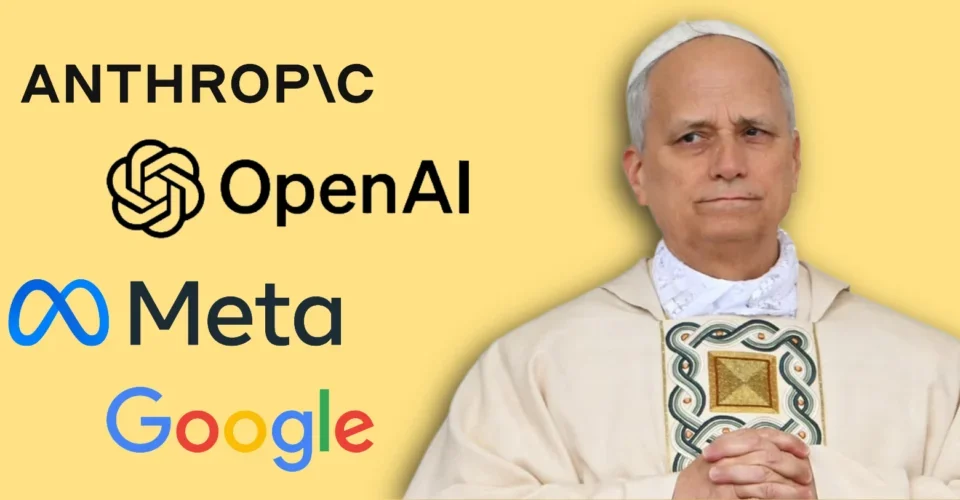
Last week, the publication of Pope Leo XIV’s 42,000-word encyclical, Magnifica Humanitas, sent shockwaves through both the halls of theology and the boardrooms of Big Tech. The document represents perhaps the most robust religious critique of the AI age to date.
In his address, the Pope issued a direct challenge to the inevitability of current AI trajectories. He famously cautioned, "With the heart of a shepherd and a father, I ask everyone to abandon the construction of yet another Tower of Babel and to join forces in building up the common good, so that humanity will never lose its beauty, and the world once again will come to recognize the human heart as the place where God desires to dwell."
The metaphor of the Tower of Babel is pointed. It suggests that the current obsession with "General Artificial Intelligence" is a form of collective arrogance—an attempt to reach for divine levels of intelligence without the moral foundation to sustain it. The Vatican’s stance is clear: technology must remain a tool, subordinate to human dignity, rather than an end in itself.
Supporting Data: From Hubris to Pragmatism
The recent "pivot" in executive rhetoric is not merely a philosophical shift; it is a response to a changing market and social climate. For years, the industry was buoyed by the narrative that AI was an unstoppable force that would fundamentally replace human labor.
However, the empirical reality has been more nuanced. Nvidia CEO Jensen Huang recently broke rank, calling the "AI-driven layoffs" excuse "lazy" and a "way for them to sound smart." This was a significant admission—that the "inevitability" of mass automation was, in part, a manufactured narrative designed to bolster market valuations.
Furthermore, Sam Altman’s recent admission that he had been "pretty wrong" regarding the speed and scale of job automation is a watershed moment. If the primary proponents of the "AI takeover" are beginning to doubt their own prophecies, what does that mean for the billions of dollars currently being poured into the sector? The shift appears to be a realization that while AI is a powerful tool, it is not a replacement for the complexities of the human economy or the human spirit.
Official Responses and the PR Strategy
Critics argue that these shifts in tone are largely performative—a "PR damage control" exercise intended to appease regulators and concerned citizens. The "solemn x-risk sage" act, which many CEOs perfected over the last three years, has begun to wear thin.
The concern, as noted by industry analysts, is the "p(doom) genie." By spending years preaching about the catastrophic potential of their own products to build brand prestige and secure government funding, tech leaders have successfully cultivated a level of public anxiety that will be difficult to extinguish. The challenge for these firms is now to pivot back to being "builders of tools" without losing the investor confidence that was built on the promise of "transforming life as we know it."
Implications: Reclaiming the Human Heart
The core implication of this shift is a necessary return to basics. Technology companies should focus on utility: solving tangible problems, increasing accessibility, and fostering human flourishing. When the industry tries to occupy the dual role of priest and prophet, it fails both the consumer and the technology.
The "brown suit" incident in the Vatican serves as a warning. The tech executive’s desire to "keep in touch with what humans have always cared about" is a noble sentiment, but it highlights a profound disconnect. If those building the future are looking to external institutions—be it the Vatican or government regulators—to provide the moral compass for their creations, it suggests a lack of an internal, ethical framework within the tech industry itself.
As we move forward, the relationship between AI and society will likely be defined by a tension between the "Tower of Babel" approach—where tech is pushed to its absolute, often destructive, limit—and the "Common Good" approach, which seeks to integrate technology into the existing tapestry of human values.
The era of "AI religion" is hopefully coming to a close. In its place, we need a return to rigorous, grounded engineering that respects the boundaries of the human experience. The technology is undoubtedly powerful, but it is not divine. It is time for the builders to stop playing prophet and start, quite simply, building things that actually improve the human condition.
The "p(doom) genie" may take a long time to return to its bottle, but the first step is recognizing that the future of humanity is not a code to be optimized, but a life to be lived. The "common good" is not found in a data center; it is found in the very things that the tech executive was observing in the quiet, morning light of that Roman church: the persistence of beauty, the value of connection, and the quiet resilience of the human heart.