
The Great Platform Fallacy: Why Your Community Migration Strategy Is Likely Failing

In the high-stakes world of digital community management, organizations often fall into a trap that can cost them years of productivity and hundreds of thousands of dollars. The process is almost always the same: a company decides it is time to migrate its community to a new platform. Stakeholders are consulted, a massive Request for Proposal (RFP) is drafted, and the document is sent out to vendors. Within days, the responses flood back, each one claiming to satisfy every requirement on the list.
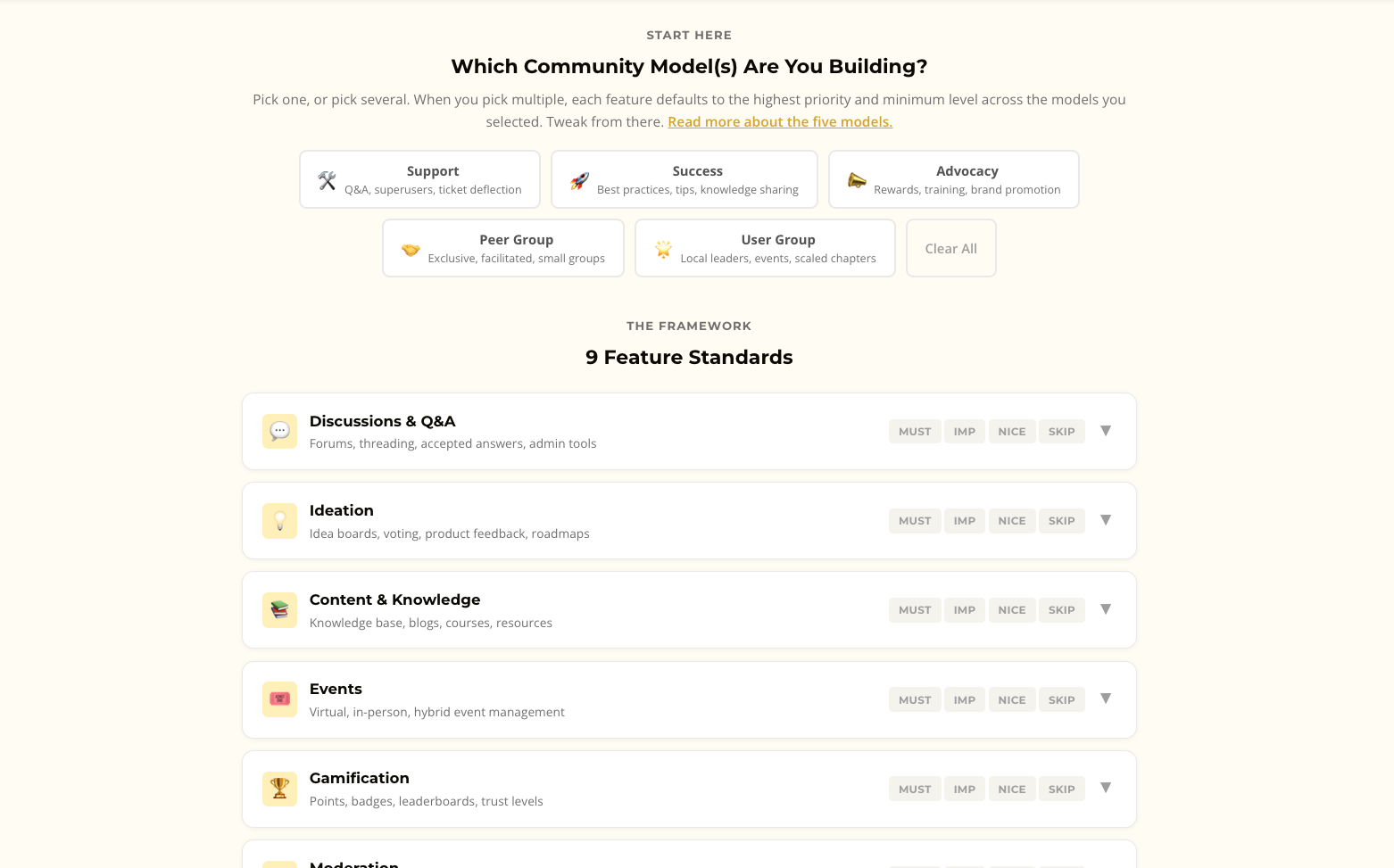
The organization selects a vendor, signs a multi-year contract, and begins the migration—only to realize, months later, that the "features" they paid for are either unusable, poorly designed, or entirely misaligned with their actual community needs. Richard Millington, founder of FeverBee, calls this the "gaping void" between a vendor’s marketing promise and the reality of day-to-day functionality. To address this persistent industry failure, FeverBee has released a new Community Platform Feature Selection Tool, designed to shift the focus from surface-level checklists to deep, functional outcomes.
The Anatomy of a Failed Migration
The typical migration process is often flawed from its inception. When non-community stakeholders—such as IT directors, marketing leads, or customer support managers—take the helm, they often define "success" through the lens of their specific departmental goals rather than the health of the community itself.
The RFP Illusion
An RFP is, by design, a static document. It creates a false sense of security by turning complex, human-centric community behaviors into a binary checklist. A vendor might claim to offer "Gamification," for example. On a 200-row spreadsheet, this is marked as a "Yes." However, the functionality of that gamification—how intuitive it is, how it drives actual engagement, and whether it integrates with the user experience—is rarely captured in a spreadsheet cell.
The "Locked-In" Nightmare
Once a platform is chosen based on these superficial metrics, the organization is typically tethered to it for a three-year contract. As the community grows, the limitations of the platform become glaringly obvious. Features that were promised as "out of the box" require expensive, bespoke development. The user interface may prove to be outdated, or the moderation tools may be so clunky that they actively discourage staff from managing the community effectively. When these technical debts accumulate, the organization is left with two equally undesirable choices: pay an exorbitant amount to "fix" the platform or abandon the project entirely, losing the social capital and data they spent years cultivating.
Chronology: How We Got Here
The evolution of the community platform market has created a "perfect storm" for decision-makers.
- The Era of the Legacy Giants: For decades, a few large, expensive platforms dominated the landscape. They offered comprehensive, albeit cumbersome, feature sets that were the industry standard.
- The Rise of the Disruptors: In recent years, a new generation of nimble, lightweight platforms has emerged. These startups promise equivalent feature sets at a fraction of the cost, challenging the "old guard."
- The Feature Parity Myth: This competition has led to a market environment where every vendor claims "feature parity." Because the bar for what constitutes a "feature" has been lowered to the lowest common denominator, it has become increasingly difficult for organizations to discern the difference between a mature, high-functioning tool and a new, unproven one.
- The Present Day: We are currently in a period of extreme buyer confusion. Organizations are struggling to distinguish between platforms that look similar on paper but behave radically differently in practice.
Supporting Data: Why "Features" Are Not "Functionality"
To understand why migrations fail, one must differentiate between feature set and functional quality.
The Feature-Functionality Gap
Data from community management audits suggests that while 90% of platform vendors can point to a specific feature that meets a client’s request, less than 40% of those features are described as "highly effective" by the community managers who use them daily.
The disconnect often lies in the following areas:
- UX Friction: A feature may exist, but if it takes five clicks to execute a task that should take one, the community will not adopt it.
- Scalability: Many platforms handle small, active communities well but fail when they hit the 50,000+ member threshold.
- Community-Led Design: The most successful platforms are designed with the community experience at the forefront. When platforms are designed purely for administrative convenience, the "vibe" of the community suffers, leading to decreased participation and increased churn.
Expert Perspectives: A New Standard for Selection
Richard Millington argues that the industry must move toward a more rigorous evaluation process. "The problem right now is that it’s very difficult to tell the two apart because people aren’t even sure what to ask for," Millington notes.
When FeverBee consults with organizations, they emphasize that the goal should not be to find a platform that "does everything," but to find a platform that does the most important things exceptionally well. This requires internal stakeholders to prioritize community-building goals—such as fostering peer-to-peer support or increasing member retention—over IT-centric requirements like single-sign-on integration or specific CSS customization capabilities.
Implications for the Future of Community Strategy
The launch of the new FeverBee Platform Feature Selection Tool represents a significant shift in how companies approach digital infrastructure. By providing a framework that forces organizations to go "granular" with their functionality requirements, the tool aims to reduce the number of failed migrations and wasted contracts.
The Strategic Shift
For organizations, the implications are clear:
- Stop Leading with IT: While security and integration are vital, they are secondary to the community experience. Ensure that community managers have the final say on the platform’s usability.
- Test for Real-World Scenarios: Instead of asking "Do you have this feature?", ask "Show me how a moderator handles a spam attack on this platform" or "Show me how a new user earns their first badge."
- Prioritize Long-Term Vibe over Short-Term Cost: A platform that costs 20% more but saves 50% in administrative time and significantly increases member engagement is, in fact, the cheaper option.
Closing the Void
The "gaping void" between vendor claims and reality will continue to exist as long as buyers rely on check-box RFPs. However, by adopting a more critical, function-focused approach to selection, organizations can protect themselves from the "locked-in" syndrome.
The digital community is the heart of an organization’s customer-facing strategy. As the market continues to evolve and new players enter the fray, the ability to distinguish between superficial feature parity and genuine, high-quality functionality will be the single most important skill for a community leader. The new tool provided by FeverBee is an essential first step in reclaiming that power and ensuring that the platform serves the community, rather than the other way around.
Moving Forward
As we look to the future, the integration of AI-driven moderation and predictive analytics will further complicate the platform selection process. If your organization is currently in the middle of a migration or considering one, it is time to throw out the old spreadsheet and start having the "tricky internal discussions" about what functionality truly matters for your members.
By prioritizing quality, usability, and community health, you can avoid the common pitfalls of the platform migration trap and build a foundation that supports, rather than hinders, your community’s growth.