
The Ghost in the Machine: Reclaiming the Sacredness of Speech in the Age of Generative AI

The opening chapters of Genesis offer a foundational myth that has shaped Western consciousness for millennia. When the text describes the Creator forming Adam from the dust of the earth and breathing the "breath of life" into his nostrils, it marks the genesis of the human story. Yet, as scholars have long noted, the definition of what exactly that "living being" entails has been subject to profound theological and linguistic debate.
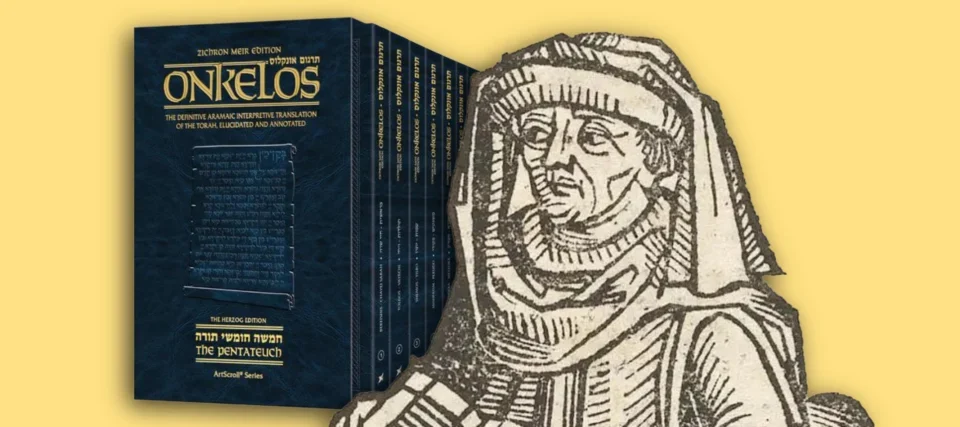
In his acclaimed work, The Heart of the Torah, Rabbi Shai Held highlights a transformative interpretation of this creation narrative by Onkelos, a first-century Roman nobleman and Torah scholar. Onkelos translates the Hebrew phrase for "living being" as ruach memalela—an Aramaic term best understood as "a speaking spirit." This interpretation suggests that speech is not merely a tool for survival, but the very constitutive element of humanity. To be human is to possess the capacity for meaningful, intentional communication.
As we stand at the precipice of the generative artificial intelligence revolution, this ancient insight feels more urgent than ever. We are witnessing the emergence of machines that can mimic the cadence, vocabulary, and even the emotional resonance of human speech. But in doing so, we are forced to confront an uncomfortable question: If speech is the "speaking spirit" that defines our humanity, what happens when that spirit is simulated by an algorithm?
The Evolution of the Word: From Breath to Binary
To understand the current tension, we must look at the history of human communication. The development of language was the original "technological" leap. It allowed for the alchemy of internal states of mind to be converted into vocalized phonemes or written letters, which could then be decoded by another mind. This is, in essence, a form of biological telepathy.
The transition from oral tradition to the democratization of literacy through the rise of alphabets in the ancient Near East fundamentally altered the human experience. Literacy did not just improve trade or record-keeping; it fostered the concepts of human dignity and universal justice. By encoding laws and moral principles in a medium that could be studied and questioned, humans created a framework for accountability.
Medieval commentators, such as Rashi, reinforced this view, arguing that speech is the primary marker of human uniqueness. Alone among all of God’s creations, the human being is tasked with the stewardship of the word. In this tradition, language is inherently sacred because it is the medium through which we form relationships, create covenant, and understand the divine.
The Generative Disruption: A Crisis of Authenticity
In the modern era, we have arrived at a point where the "speaking spirit" is being decoupled from the human subject. Generative AI models—large language models (LLMs) built on complex neural networks—now churn out text that is syntactically perfect and contextually aware.
When an individual interacts with a chatbot, there is a visceral sense of unease that many describe as a "transgression." While we rationally understand that this lexical fluidity is an illusion—the result of massive matrix multiplications and the autoregressive prediction of tokens—our instinctual response suggests something deeper. We are speaking to a "golemic" entity: a construct of clay and code that mimics the breath of life without the presence of a soul.
This discomfort stems from the realization that we are offloading a fundamentally human ritual to a machine. When we allow AI to draft our emails, write our poetry, or act as a digital companion, we are participating in a process that feels, to many, inherently profane. It raises a central inquiry for the 21st century: Is there a threshold of "human-ness" that, when breached, diminishes the value of the communication itself?
Digital Ethics: The New Bioethics
The field of digital ethics is currently navigating the same turbulent waters that bioethics navigated in the 1970s. Just as medical technology forced us to define the boundaries of life, death, and bodily autonomy, generative AI is forcing us to define the boundaries of agency, intent, and authenticity.
Historically, the development of bioethics was spurred by specific technologies—ventilators, organ transplants, and genetic sequencing—that challenged traditional understandings of human biology. Today, we are in the "pre-regulatory" phase of digital ethics. We are currently observing a rapid, market-driven deployment of AI tools by industry leaders like Sam Altman of OpenAI and Dario Amodei of Anthropic. While these leaders argue for the inevitability of this progress, the ethical community is increasingly calling for a "technological pause" or, at the very least, a rigorous examination of what we are willing to sacrifice.
Official Responses and the Burden of Proof
There is a growing divide between the Silicon Valley accelerationists, who view AI as an inevitable evolution of intelligence, and the philosophers, ethicists, and religious scholars who argue that we are losing the "spirit" in the speech.
Government bodies and international organizations have begun to signal concern. The European Union’s AI Act, for instance, represents an attempt to categorize AI systems by risk, though it largely focuses on safety and transparency rather than the metaphysical implications of machine speech. Tech companies have responded with "alignment" protocols, attempting to encode "human values" into these models. However, the irony remains: we are asking machines to simulate the very values—empathy, honesty, and moral judgment—that are rooted in the human experience they seek to replace.
Implications: The High Cost of Convenience
The implications of outsourcing our "speaking spirit" are profound. If we allow machines to become our primary conversation partners, we risk a "hollowing out" of the human experience. Communication is not merely the transmission of information; it is the vulnerability of two consciousnesses meeting in the medium of language.
When a chatbot generates an apology, a sermon, or a love letter, the "receiver" experiences a form of deception. The words are there, but the intent—the fundamental requirement for human speech—is absent. If we normalize this, we risk degrading our own capacity for deep, authentic connection.
As we move forward, society must address several critical questions:
- The Sovereignty of Speech: Should we legally or culturally demarcate "AI-generated" content from "human-generated" content to preserve the sanctity of human authorship?
- The Golem Dilemma: To what extent should we allow AI to act as a surrogate for human companionship, especially for the elderly or vulnerable?
- The Erosion of Shared Truth: If speech becomes entirely fluid and untethered from human experience, what becomes of our ability to build a shared moral reality?
Conclusion: Reclaiming the Human Voice
We are not merely users of technology; we are the guardians of a tradition that elevates speech as the highest expression of our existence. Before we blindly embrace the next iteration of generative software, we must engage in a broader, more rigorous societal discourse.
The work of digital ethics is not just about avoiding "hallucinations" or data bias; it is about protecting the integrity of the human spirit. We must decide which aspects of our lives are too intimate, too sacred, or too human to be delegated to a machine.
As we stand at this juncture, the words of the ancient scribes remain a vital warning. Speech is not just data; it is the breath of life. It is the mechanism by which we define ourselves and one another. In our rush to innovate, we must be careful not to build a world where we have forgotten how to speak to each other—or worse, forgotten why it matters. The revolution of generative AI is inevitable, but the surrender of our humanity is a choice. It is time to determine what we are truly willing to accept.