
This story is from an installment of In the Loupe, our weekly insider newsletter about the best of the watch world. Sign up here.
Even in the heart of summer, the Malibu coastline possesses a deceptive chill, a reminder of the Pacific’s unpredictable temperament. It was a crisp, wind-whipped Friday in late June when I arrived at Villa Dume, an $18.5 million modernist masterpiece perched on the cliffs of Point Dume. This architectural marvel, a sanctuary for elite homeowners and surf-culture aficionados alike, served as the backdrop for Hublot’s inaugural "Big Bang Summer" event in California.
Since 2017, this annual migration has touched down in the world’s most coveted coastal playgrounds—from the sun-drenched hedonism of Mykonos to the chic shores of Saint-Tropez. While the aesthetic pedigree remains consistent, the California edition offered a distinct, uniquely West Coast cadence. Amidst a tableau of pastel-hued chronographs displayed against the backdrop of a sprawling pool and the infinite blue of the Pacific, the event signaled a broader shift in the horological industry: the formal reclamation of summer as a high-stakes, high-style season for luxury watchmakers.
The Anatomy of the Event: A Study in Fusion
The gathering was an exercise in the brand’s signature "Art of Fusion" philosophy, translated into a lifestyle experience. As guests navigated the sun-drenched grounds, they were greeted by the unexpected: servers clad in modern chain-mail gloves, meticulously shucking oysters to order. Despite the old-world adage that shellfish should only be consumed in months containing the letter "R," the allure of fresh-shucked oysters—topped with everything from delicate Champagne mignonette to daring splashes of mezcal—proved irresistible.
The guest list was as curated as the displays, featuring a vibrant cross-section of culture and commerce. Special guest Patrick Mahomes, the NFL icon and watch enthusiast, offered a brief but pointed reflection on the brand’s ethos. "This is Hublot to me," Mahomes remarked, gesturing to the vibrant, ceramic-cased timepieces. "This is creativity, this is boldness." Alongside him, prominent collectors like L.A. restaurateur Jesse Gomez moved through the crowd, underscoring the event’s dual role as a social nexus for those who view timepieces not just as tools, but as markers of a specific, high-octane lifestyle.

A Chronology of Innovation: From Vanilla-Scented Rubber to Ceramic Boldness
To understand the significance of this summer pivot, one must look back at Hublot’s disruptive origins. Founded in 1980 by Carlo Crocco, the brand fundamentally altered the DNA of luxury watchmaking by marrying a solid gold case with a natural rubber strap—a choice that was initially met with derision by the Swiss establishment. At the time, rubber was the domain of flip-flops and bottle stoppers, not the wrists of the European aristocracy.
Yet, visionaries like King Juan Carlos of Spain recognized the genius in the pairing. The rubber strap offered corrosion resistance, extreme comfort, and a subtle, proprietary vanilla scent that became a hallmark of the early Hublot experience. It was a masterclass in challenging the status quo. By the mid-1990s, the industry had capitulated; rubber became a staple of luxury sport lines. Patek Philippe’s 1997 introduction of the Aquanaut, their first model on a rubber strap, served as the ultimate institutional validation of Crocco’s initial gamble.
The brand reached a secondary inflection point in 2005 with the launch of the Big Bang. Under the stewardship of then-CEO Jean-Claude Biver—a legendary figure in watch marketing—the Big Bang became a laboratory for material experimentation. By fusing gold, ceramic, Kevlar, carbon, tungsten, and tantalum, Hublot created a watch that felt entirely of the future while respecting the mechanical rigor of the past. As Biver famously stated in a 2007 New York Times profile, "When tradition meets the future, then you are progressing and that’s how you keep the art alive."
Supporting Data: The Rise of the "Summer Watch" Category
The concept of a "summer watch" has evolved from a marketing gimmick into a legitimate sub-sector of the luxury market. It is a design language defined by color, lightness, and a deliberate departure from the austere, monochrome palettes of traditional horology.
Hublot’s current 42 mm Big Bang Titanium Peach Ceramic serves as the perfect case study. Beneath its whimsical, sorbet-toned exterior lies a serious, high-performance engine: the self-winding Unico flyback chronograph movement. It is a perfect synthesis of technical excellence and seasonal playfulness.

This trend is not isolated to Hublot. The industry at large has begun to lean into the seasonal shift:
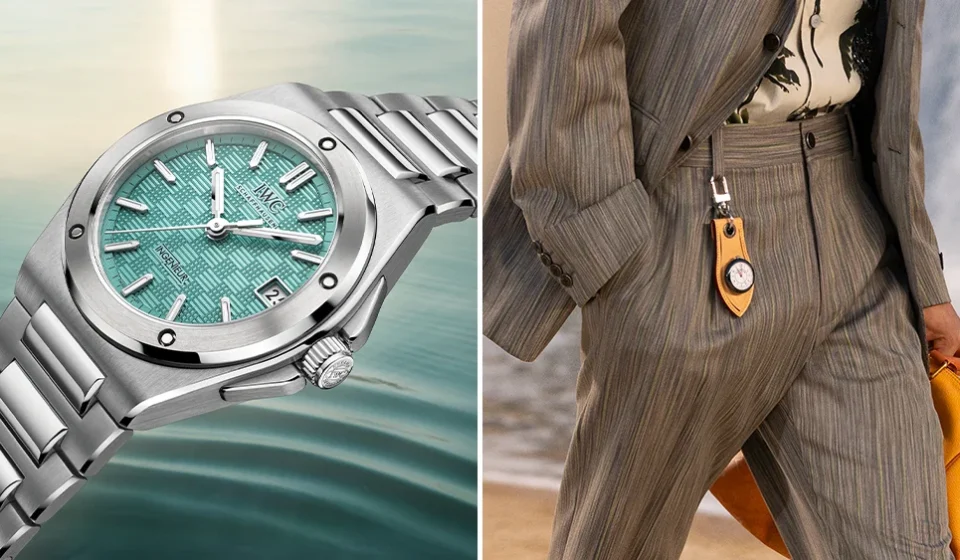
- IWC Schaffhausen: The brand’s new Ingenieur Automatic 35, featuring a "pool blue" dial, embraces the vibrant, chromatic language of the summer season, proving that even heritage-heavy brands are finding space for seasonal whimsy.
- Louis Vuitton: Their recent pivot with the Monterey ceramic watches—showcased at the Men’s Spring/Summer 2027 fashion show—reimagines the 2025 re-edition of the house’s first wristwatch. By transforming the gold, Grand Feu enamel-dialed timepiece into modern, colorful ceramic variants, the brand is successfully repositioning high-end watchmaking as a modular fashion accessory.
Official Perspectives: The Philosophy of the Seasonal Shift
During his welcome address, Franck Suznjevic, president of Hublot in the Americas, articulated the strategic reasoning behind these events. "We like to mix unexpected materials and unexpected cultures for the sake of creating something unique," Suznjevic noted.
This philosophy extends beyond the watch case itself; it encompasses the environment in which the watch is presented. By moving away from the sterile environment of the trade show booth and into the residential, experiential setting of a Malibu estate, Hublot is creating a "state of mind." They are selling an experience—a summer escape where technical mastery is not hidden behind closed doors but is instead worn as a badge of personality.
Implications for the Future of Luxury
The implications for the watch industry are profound. We are witnessing the democratization of "high-concept" luxury. The era of the "one-watch collection" is rapidly fading, replaced by a desire for timepieces that reflect the wearer’s environment.
As climate patterns shift and luxury consumers seek more personalized, experiential interactions with their favorite brands, the "Summer Event" model will likely become the industry standard. Brands are no longer just competing on the basis of caliber accuracy or heritage; they are competing for the consumer’s attention during their most precious time—their vacation.

Ultimately, the lesson of the Malibu event is that luxury in the modern age requires a delicate balance. It requires the technical gravitas to satisfy the collector, but also the lightness of touch to embrace the season. When a brand like Hublot manages to pair a complex flyback chronograph with a peach-toned ceramic case, they aren’t just selling a device that tells time. They are selling a permission structure—the freedom to be technically sophisticated without having to take oneself too seriously.
As we move deeper into the 2026 season, the message is clear: the most serious watchmakers are the ones who know how to throw the best parties. And in the world of high-end horology, it seems the sun is just beginning to rise.