
By Industry Correspondent | July 17, 2026
For the global spirits aficionado, the last decade has been a tumultuous journey through the Japanese whisky landscape. Ten years ago, the category reached a fever pitch of popularity that outpaced production capacity, leading to a "whisky drought" that saw iconic age-statement bottles vanish from shelves and secondary market prices soar into the stratosphere. Today, however, the tide is turning. In a move that signals a stabilizing market and a renewed commitment to transparency, Nikka Whisky has officially announced the return of its storied Miyagikyo Single Malt 10 Years Old.
This release is more than just a product launch; it is a symbolic restoration of the distillery’s heritage, marking a decisive shift away from the era of non-age-statement (NAS) whiskies that defined the mid-2010s.
Main Facts: A Return to Form
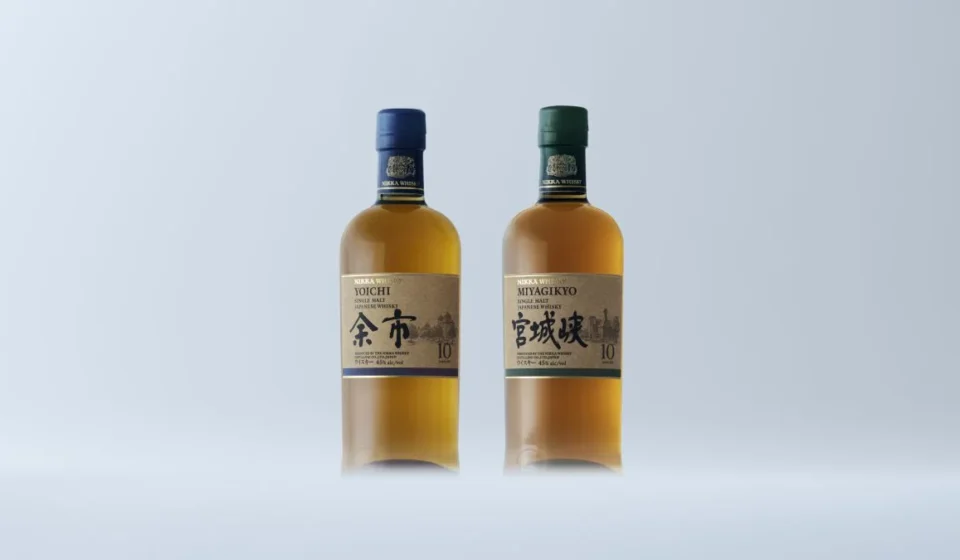
The new Miyagikyo 10-Year-Old is a testament to the maturation process and the patience required to produce world-class single malt. Bottled at 90 proof (45% ABV), the release is an exercise in restraint and elegance.
According to Nikka’s official tasting notes, the expression is designed to elevate the distillery’s signature flavor profile. Fans of the brand will recognize the hallmark "apple-like fruitiness" and "silky mouthfeel" that have become the calling card of the Miyagikyo distillery, located in the lush, green valleys of Sendai. However, this 10-year iteration adds layers of complexity drawn from a decade of aging in a combination of sherry casks and new American oak barrels.
The packaging has undergone a sophisticated transformation to match the spirit within. The label is now crafted from traditional Japanese washi paper, and the brand has shifted the aesthetic color palette from the previous rose hue to a deep, earthy green—a nod to the pristine, forested landscape surrounding the distillery.
A Chronology of the Japanese Whisky Drought
To understand the significance of this release, one must look back at the volatile history of the Japanese whisky market.
2014–2016: The Great Shortage
The mid-2010s were characterized by a "perfect storm." A massive surge in global demand, coupled with the long-term nature of whisky production (where spirit must age for years before it can be labeled), left major producers like Suntory and Nikka with depleted stocks. As older barrels ran dry, distilleries faced an impossible choice: either stop selling their flagship products or remove the age statements entirely to blend in younger, more readily available stocks.
2017–2021: The NAS Era
During this period, the market was flooded with non-age-statement (NAS) expressions. While many of these were high-quality, the lack of an age identifier frustrated purists and collectors who prized the consistency and maturity that come with a specific age-statement label. Prices for the remaining "legacy" bottles on the secondary market began to reach speculative, record-breaking levels.
2022–Present: The Recovery
The first signs of recovery emerged in 2022, when Nikka began a strategic reversal of its NAS policy with the relaunch of the Yoichi Single Malt 10 Years Old. This move, followed by the current release of the Miyagikyo 10-Year-Old, confirms that production levels have finally caught up with the distillery’s maturation schedule.
Supporting Data: Scarcity and Market Dynamics
Despite the return of age statements, the market remains highly constrained. The Miyagikyo 10-Year-Old is being released in an exceptionally limited run: only 1,572 bottles (700ml each) are allocated for the national market.

- Retail Price Point: $175 per bottle.
- Production Constraints: The scarcity of the release suggests that while stocks are recovering, they are not yet abundant.
- Secondary Market Impact: Industry analysts are watching closely to see if the retail price will act as a ceiling or if secondary market demand will drive prices significantly higher. Given the current valuation of bottles like the Yamazaki 50, collectors are expected to treat the Miyagikyo 10 as a "must-have" asset.
Official Responses: Crafting the Future
The philosophy behind this release, as articulated by Nikka leadership, focuses on balancing the brand’s history with modern innovation.
"With the 10-year-old expression, we wanted to reveal a new dimension of Miyagikyo’s signature character," stated Emiko Kaji, Nikka Whisky’s education global PR leader. "The result reflects both a decade of maturation and our vision for Miyagikyo’s future—honoring the distillery’s heritage while showcasing the confidence and craftsmanship of a new generation."
Kaji’s comments highlight that this is not merely a nostalgic rerelease; it is a demonstration of how the distillery has evolved its wood-management techniques over the last decade, particularly with the integration of new American oak alongside traditional sherry casks.
Implications for the Industry
The re-emergence of the 10-year-old age statement carries several significant implications for the broader spirits industry:
1. Rebuilding Trust with the Consumer
By returning to age statements, Nikka is signaling transparency. For consumers, a "10-year" label acts as a guarantee of time and process, which is critical in an industry often clouded by marketing ambiguity. This move is likely to force other producers to reassess their own portfolios and potentially return to older, more transparent labeling practices as their stocks permit.
2. A Shift in Collector Mentality
The rise of the Japanese whisky collector—who treats bottles as financial instruments rather than beverages—has changed how distilleries communicate. With the Miyagikyo 10-Year-Old, Nikka is catering to the connoisseur. The limited production run ensures that the brand maintains an air of exclusivity, even as they attempt to satisfy the demand for quality.
3. The Future of Older Age Statements
While the return of the 10-year-old is a milestone, the question remains: will we see the return of the 12, 15, or even 20-year-old expressions that once defined the Japanese category? Industry experts suggest that if the current trend continues, it is not "far-fetched" to expect these older expressions to return to the market in the coming years. The industry has effectively "cleared the bottleneck," and as the maturation of 2016-era barrels continues, the availability of older, more complex whiskies will likely increase.
Conclusion
The launch of the Miyagikyo 10-Year-Old is a victory for the patient enthusiast. It serves as a reminder that in the world of fine whisky, there are no shortcuts to quality. As Nikka continues to balance its storied past with the demands of the modern global market, this release stands as a beacon of stability.
For now, collectors and casual drinkers alike will be scrambling to secure one of the 1,572 available bottles. Whether this marks the start of a broader return to age-statement dominance or remains a boutique offering for the ultra-dedicated, one thing is clear: the Japanese whisky industry has successfully navigated its most difficult decade and emerged, glass in hand, ready for the next.
For further updates on the evolving Japanese whisky market, stay tuned to our continued coverage.