
The Return of the Titans: London’s Ultra-Prime Property Market Stages a Billion-Pound Resurgence

London’s status as the ultimate global playground for the ultra-wealthy is not just surviving—it is thriving with a renewed, aggressive vigor. After a period of relative stagnation, the British capital’s ultra-luxury real estate sector has roared back to life, fueled by a influx of new-money titans, shifting economic tides, and a strategic hunger for trophy assets.
According to a comprehensive new report by luxury brokerage Beauchamp Estates, the first six months of 2026 have served as a watershed moment for the city’s high-end market. The data paints a picture of a city that, despite geopolitical and macroeconomic fluctuations, remains the preferred residential destination for the world’s financial and technological elite.
The Data: A Staggering Surge in Wealth Movement
The figures released by Beauchamp Estates are difficult to ignore. During the first half of 2026, 34 residential properties with price tags exceeding £15 million ($20 million) successfully changed hands. These transactions represented a collective volume of £1.24 billion ($1.6 billion).

To understand the scale of this recovery, one must look at the year-over-year comparison: this represents a 79 percent increase in total transaction value compared to the same period in 2025, which saw £694 million ($926 million) in sales. The volume of transactions also climbed by 26 percent, signaling that this is not merely a result of a few anomalous, high-ticket outliers, but a broader, structural strengthening of the market.
Perhaps most revealing is the shift in the average sale price. A year ago, the average ultra-prime transaction sat at £25.7 million ($34.5 million). Today, that figure has ballooned to £36.5 million ($49 million), indicating that buyers are not just returning to the market—they are shopping for significantly larger, more prestigious, and more expensive footprints.
A New Demographic: The Silicon Valley and Private Equity Influx
The primary catalyst for this rebound is a fundamental shift in the buyer profile. For decades, London’s luxury market was dominated by traditional wealth and regional players. Today, the demographic is younger, more tech-forward, and decidedly American.

Americans now command 30 percent of all ultra-prime home purchases in the capital, a sharp rise from the 20 percent recorded at the close of 2025. These buyers are largely drawn from the ranks of artificial intelligence pioneers, fintech disruptors, and high-level private equity partners. Alongside the American contingent, Middle Eastern buyers continue to maintain a strong foothold, accounting for another 25 percent of the market. Combined, these two groups are now responsible for more than half of all ultra-prime activity in London.
“Since April 2026, we have completed five significant deals, all involving American buyers who were specifically hunting for homes in London’s most storied addresses,” says Jeremy Gee, managing director of Beauchamp Estates. This trend underscores a broader migration of global capital; as these tech-wealth individuals seek to establish a European hub, London’s legal stability, cultural cachet, and concentration of professional services make it the only logical choice.
Chronology of the 2026 Power Moves
The first half of 2026 has been marked by a series of headline-grabbing transactions that have set the tone for the rest of the year.

- Q1 2026: The market saw a steady, albeit cautious, return of confidence. As interest rates began to stabilize, prospective buyers who had been sitting on the sidelines throughout late 2025 began to finalize their search strategies.
- April 2026: This marked the inflection point. The influx of American capital became undeniable, with a cluster of high-profile acquisitions in Mayfair and Belgravia.
- Mid-2026: The "trophy asset" race reached its peak. The sale of Providence House in Chelsea stood out as the undisputed crown jewel of the year. The property, sold by developer Nick Candy to Quadrature Capital co-founder Suneil Setiya, commanded a staggering £275 million ($367 million).
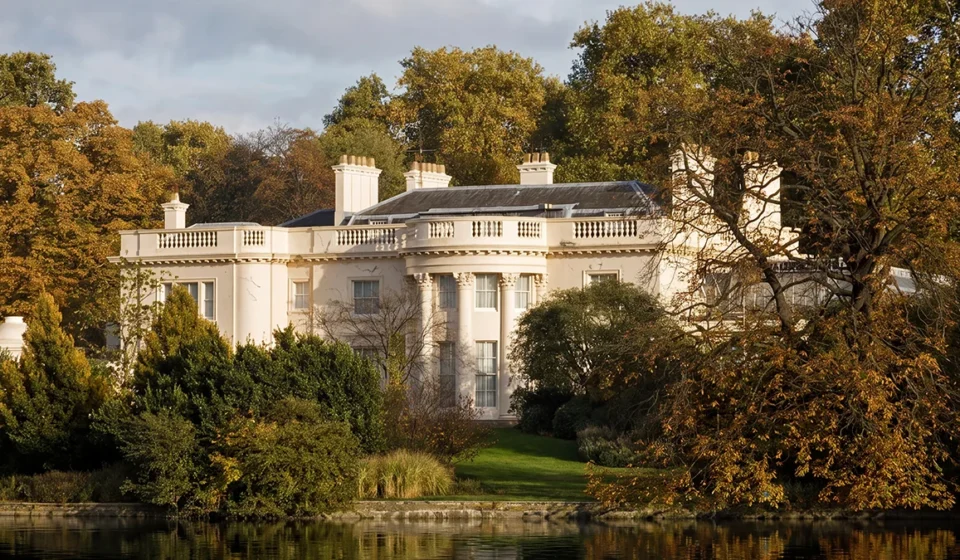
- The Regent’s Park Landmark: Shortly thereafter, The Holme, the historic mansion once associated with the Saudi royal family, traded for £195 million ($260 million), further cementing the reality that scarcity and history are the ultimate commodities in the current climate.
The Geography of Luxury: Where the Elite Reside
While London is vast, the ultra-prime market is intensely concentrated. Belgravia has reclaimed its crown as the most sought-after district, recording nine sales above the £15 million threshold. The neighborhood’s enduring appeal—defined by its white-stucco terraces and proximity to the royal parks—continues to attract the most discerning global buyers.
Chelsea, St. John’s Wood, and Mayfair follow closely behind. Mayfair, in particular, is experiencing a renaissance as the neighborhood of choice for the new American tech elite. Its proximity to the burgeoning tech and private equity hubs in the city center makes it a practical, as well as aesthetic, choice for those who want to be at the nexus of European commerce.
Implications: Is London a "Bargain" for the Global Elite?
Perhaps the most surprising finding in the current market analysis is the perception of value. Despite the astronomical prices of individual homes, the Beauchamp Estates report suggests that London is currently viewed as a "relative bargain" by the global elite.

Prices for prime London real estate remain more than 20 percent below their 2014 peak. For international buyers holding US dollars or other strong currencies, the current exchange rate, combined with the relative discount compared to historic highs, presents a rare window of opportunity.
This creates a dual-incentive structure:
- Investment Arbitrage: Buyers are entering the market at a valuation that still has room for long-term capital appreciation as the market corrects toward its historical ceiling.
- Lifestyle Anchoring: For the "landmaxxing" billionaire, the current market allows for the acquisition of sprawling townhouses and mansions that would be impossible to replicate or find in other global hubs like New York or Singapore.
The Future: A Shift Toward Turnkey Luxury
The nature of the assets being sought is also evolving. While grand mansions with private gardens remain the gold standard, there is a marked rise in demand for "turnkey" luxury. Buyers from the tech and finance sectors are increasingly time-poor; they are gravitating toward sprawling penthouses in managed, hotel-style developments. These properties offer the security, anonymity, and white-glove amenities—such as concierge services, private spas, and world-class dining—that this demographic has grown accustomed to in their primary residences elsewhere.

Conclusion
The 2026 surge in London’s ultra-prime real estate is more than just a momentary spike in activity. It represents a fundamental recalibration of where the world’s most successful individuals choose to anchor their lives. By combining historical prestige with what many investors now perceive as an undervalued entry point, London has successfully revitalized its appeal to the global elite.
As the year progresses, all eyes will be on whether this momentum can be sustained. With the American and Middle Eastern influence showing no signs of waning, and the supply of truly "trophy" homes remaining finite, the narrative for the remainder of 2026 seems clear: the titans are back, and they are buying London.