The Architecture of Experience: Why Strategic Pre-Production Defines Modern Event Success

When a live event runs with clockwork precision, attendees are rightfully captivated by the keynote speaker’s charisma, the immersive stage design, the sophisticated lighting cues, and the seamless flow of the overall experience. They marvel at the production value, yet they remain blissfully unaware of the months of painstaking, often invisible labor required to eliminate technical friction, resolve scheduling conflicts, and mitigate the costly, last-minute surprises that haunt event planners.
For the modern meeting professional, this behind-the-scenes orchestration is not merely a logistical task—it is the primary determinant of whether an event succeeds or spirals into chaos. As events grow in complexity, planners are forced to navigate an increasingly volatile landscape defined by compressed timelines, shifting attendee expectations, fragmented stakeholder demands, and mounting budgetary pressures. In this high-stakes environment, audiovisual (AV) support has evolved from a utility—the simple delivery of gear—into a strategic necessity. Today’s event leaders require more than just equipment; they require strategic partners capable of anticipating challenges and architecting conditions for flawless execution.
The Paradigm Shift: Moving Beyond Equipment
In the traditional procurement model, evaluating AV proposals often descends into a spreadsheet comparison of line items: screen dimensions, projector lumens, lighting packages, LED wall specifications, and sound system brands. While these hardware elements are the most tangible components of a budget, they are fundamentally insufficient for creating a successful event.
Technology is merely the delivery mechanism for the event’s objectives. A high-resolution LED wall is worthless if the content feed is unstable or if the sightlines are blocked by poor rigging decisions. The most impactful production partnerships do not begin with a catalog of gear; they begin with the fundamental questions of intent. Why are we gathering? What is the core message? Who is the audience? By prioritizing these objectives, technology transitions from being the sole focus of the conversation to being a calibrated tool in a broader strategic solution.
The Chronology of Success: The Pre-Production Lifecycle
The lifecycle of a high-impact event is built upon a foundation laid long before the first road case hits the loading dock. To understand why some events feel "effortless" while others feel "strained," one must examine the chronology of professional pre-production.
Phase 1: Conceptualization and Feasibility (T-Minus 6–12 Months)
During this phase, the production team acts as consultants. They analyze venue floor plans, assess power requirements, and evaluate internet bandwidth capabilities. This is the stage where "the impossible" is identified—such as a rigging point that cannot support a massive LED wall or a loading dock that lacks the clearance for critical equipment. Early intervention here prevents catastrophic changes on-site.
Phase 2: Technical Design and Systems Engineering (T-Minus 3–6 Months)
Once the venue is vetted, the technical design phase begins. This involves CAD drawings, sightline analysis, and signal flow diagrams. It is here that the "architectural" integrity of the event is established. Engineers verify that the audio coverage is uniform throughout the room and that video processing systems are redundant.
Phase 3: Operational Logistics and Labor Scheduling (T-Minus 1–3 Months)
Execution is a function of labor and timing. Successful production includes rigorous scheduling of union and non-union labor, transportation logistics for equipment, and the creation of "run-of-show" documents that map out every minute of the event. This is where the "calm" is built.
Phase 4: Integration and Rehearsal (The Final Stretch)
The final stage is the integration of creative content with technical systems. Presenter readiness, testing of remote connectivity, and rigorous Q&A sessions for technical staff occur here. When this work is thorough, the final days before the event are spent on refinement rather than emergency troubleshooting.
Supporting Data: The ROI of Invisible Work
One of the most persistent misconceptions in the events industry is that pre-production management is an "added expense" rather than a core investment. In reality, thorough pre-production is the most effective form of financial insurance available to a meeting planner.
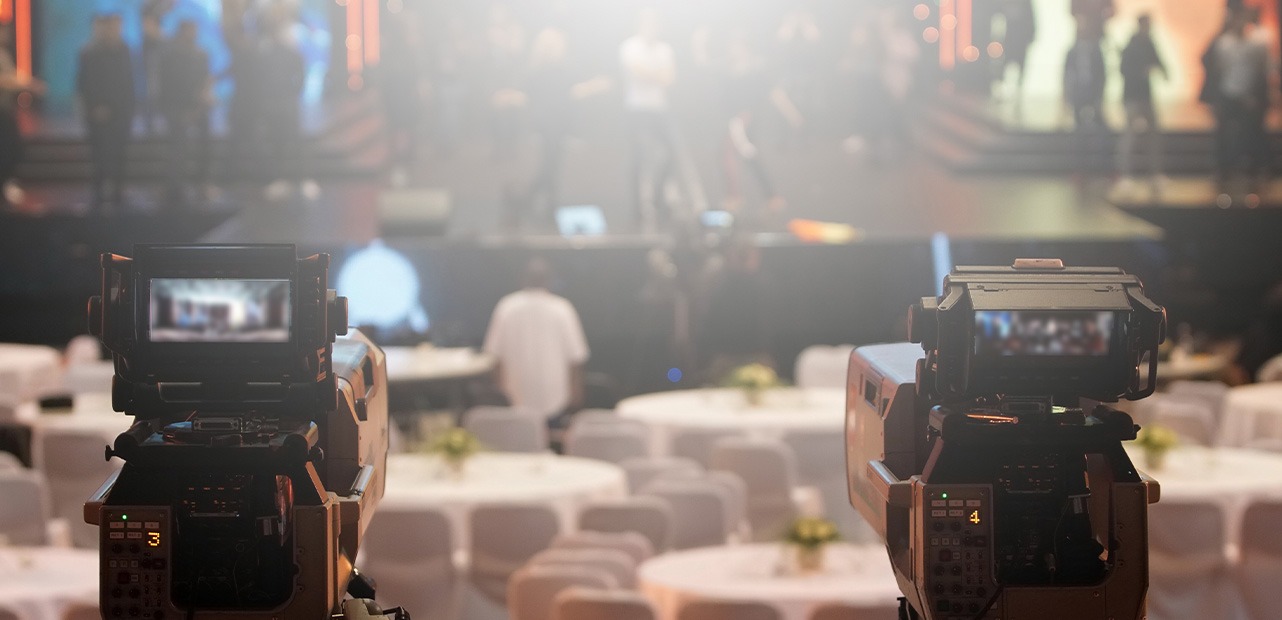
Data from production firms consistently demonstrates that for every hour spent in professional pre-production, there is a quantifiable reduction in "on-site crisis hours." Rushed planning invariably leads to the "fire-fighting" syndrome, where labor costs skyrocket due to overtime, emergency shipping fees for forgotten components, and the inevitable need to replace inadequate technology on the fly.
By investing 15–20% of the total production budget into the planning and management phase, organizations can avoid the 30–50% cost overruns frequently associated with poorly planned, high-complexity events. The return on investment is measured not in what was added to the stage, but in the costly errors, equipment failures, and presenter stress that never occurred.
Official Perspectives: The Leadership Layer
Tina Luppino, President and CEO of The AV Firm® and a veteran of more than 30 years in the industry, emphasizes that event production is essentially a form of leadership. "The most misunderstood aspect of our work is the sheer volume of human capital involved before the first attendee walks through the doors," she notes.
A professional production team is not just a group of technicians; it is a multidisciplinary unit. Depending on the scale of the event, the "invisible" team may include:
- Production Managers: The central nervous system of the event, coordinating across all departments.
- Technical Directors: Responsible for the integrity and stability of every signal, system, and hardware piece.
- Content Engineers: Specialists who ensure that graphics, videos, and presentations are optimized for the specific hardware being used.
- Logistics Coordinators: The experts managing the inflow and outflow of equipment, union compliance, and site-specific constraints.
These professionals are the backbone of the experience. Their work—while invisible—is the direct cause of the quality, consistency, and reliability that attendees perceive as "flawless execution."
Implications for Future Planners
As the events industry faces a future defined by shorter planning windows and higher expectations for attendee engagement, the role of the planner is shifting from "coordinator" to "orchestrator." The implications are clear: you cannot rely on a vendor who simply delivers hardware.
Planners must adopt a rigorous vetting process for their production partners. Before signing a contract, planners should ask:
- "How do you approach the pre-production process, and what deliverables can I expect during the planning phase?"
- "What is your strategy for mitigating technical risks on-site?"
- "How do you ensure that our event objectives drive your technical choices, rather than vice versa?"
- "Can you walk me through a time when a major challenge was avoided through early intervention?"
The answers to these questions reveal the partner’s maturity. A partner who speaks about logistics, contingency planning, and communication protocols is a partner who understands that their role is to protect the planner’s reputation.
Conclusion: The Competitive Advantage of Design
In an era where every event is being compared to the high-production values of digital streaming and global entertainment, "good enough" is no longer an option. Attendees are sophisticated; they notice when an event feels disconnected or disorganized.
The best events do not happen by chance. They happen by design. By shifting the focus from the visible equipment to the invisible strategy—by prioritizing pre-production as the "architecture" of the event—planners can reclaim control over their timelines and budgets. In the modern landscape, preparation is no longer just a procedural step; it is a distinct competitive advantage. When the planning is invisible, the success becomes inevitable.