
The global smartphone market has officially entered the era of the "foldable wars." With Apple finally breaking its silence on the long-rumored iPhone Duo, the industry has reached a fever pitch of competition. However, while Apple’s entry into the foldable space is being treated as a marquee event, the reality of the landscape is that Cupertino is arriving at a party that has been in full swing for years.
As Samsung, Motorola, Honor, and Huawei continue to iterate on their third, fourth, and even fifth-generation foldable hardware, the debut of the iPhone Duo raises a critical question: Does Apple’s brand cachet outweigh the years of engineering refinement already mastered by its rivals?
Main Facts: The Battle of the Hinges
The headline news is the announcement of the Apple iPhone Duo, which is set to hit the market next month with a premium price tag of $1,999. By positioning itself at this high-end bracket, Apple is directly challenging the established "Ultra" tier of foldable devices.
However, market analysts are already noting a significant irony: while Apple has spent years avoiding the foldable form factor, the very company that helped build its supply chain—Samsung—is currently one of its fiercest competitors in the space. Samsung is not only a rival in the retail market with its Galaxy Z Fold series, but it is also a key supplier for the display technology utilized in the new iPhone.
The current price landscape is as follows:
- Apple iPhone Duo: $1,999 (Launching next month).
- Samsung Galaxy Z Fold8 Ultra: $1,799 (Current promotional price at Amazon, down from the $2,099 list price).
- Honor Magic V6: Currently discounted in the UK from £1,999 to £1,499.
These figures suggest that consumers are currently in a "buyer’s market" for foldable technology, provided they are willing to look beyond the Apple ecosystem.
Chronology: A Timeline of Foldable Evolution
To understand why the iPhone Duo feels like a late arrival, one must look at the timeline of the foldable revolution:
- 2019: The Genesis. The original Samsung Galaxy Fold launched, plagued by hinge issues but signaling the start of a new design language.
- 2020–2022: The Refinement Phase. Competitors like Motorola revived the Razr brand with a clamshell foldable design, while Huawei and Xiaomi began testing the limits of what a "book-style" foldable could achieve.
- 2023: Global Proliferation. Foldables moved from "niche enthusiast devices" to "mainstream luxury goods." The OnePlus Open and Honor Magic series set new standards for thinness and crease-management.
- 2024–2025: Software Maturity. Manufacturers shifted focus from just the hardware (the hinge and screen) to the software, introducing advanced multitasking and AI-driven camera features.
- 2026: The Apple Pivot. Apple officially enters the fray. By this time, the market has matured significantly, leaving Apple to play catch-up in terms of both hardware utility and consumer expectations.
Supporting Data: Why the Competition is Fierce
The foldable market today is segmented into two distinct categories: the "Book-style" foldables (like the Galaxy Z Fold8 Ultra and the Honor Magic V6) and the "Clamshell" foldables (like the Z Flip8 and the Motorola Razr Ultra).
The Powerhouse Players
Samsung remains the market benchmark. The Galaxy Z Fold8 Ultra is considered the most polished all-rounder, offering an expansive ecosystem that benefits from years of multi-window optimization. For power users who treat their phones as mobile workstations, the Samsung interface remains the industry standard.
Google, meanwhile, has taken a different approach with the Pixel 10 Pro Fold. By focusing on AI-driven computational photography and a refined Android experience, Google has successfully undercut Samsung on price while maintaining a high level of software sophistication. Though the hardware may feel slightly less premium compared to the titanium-clad chassis of the competition, the user experience is arguably the most fluid in the industry.
The Innovation Drivers
Companies like Honor and Huawei are currently pushing the boundaries of physical design. The Honor Magic V6 is arguably the thinnest foldable on the market, featuring impressive IP68/IP69 durability ratings. This is a crucial metric; for years, the primary deterrent for foldable buyers was the perceived fragility of the hinge and screen. Honor has largely dismantled this argument.
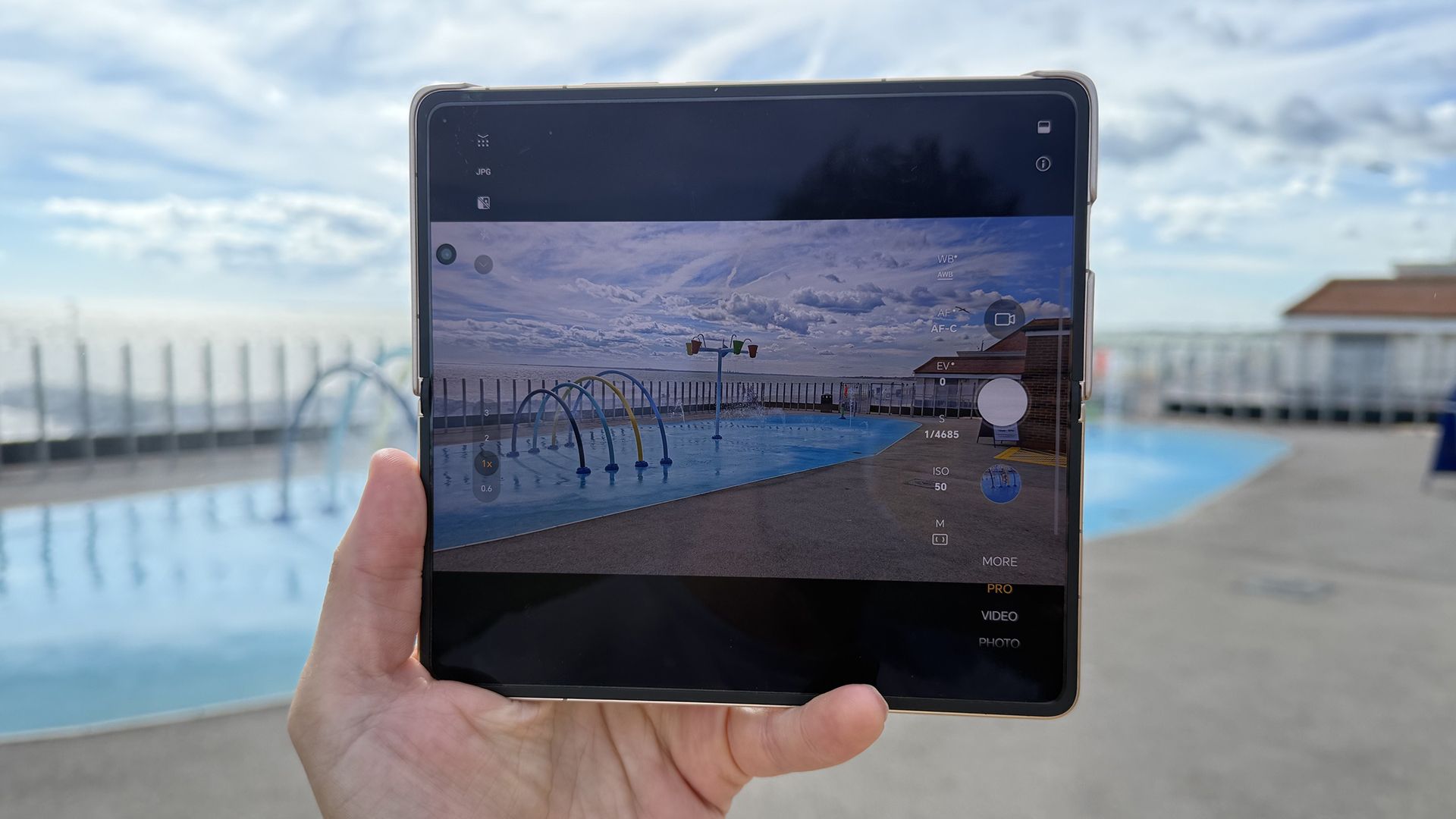
Huawei’s Mate XT Ultimate has taken the concept even further, introducing a "tri-fold" design that unfolds into a massive 10.2-inch screen. While this remains a spectacle of engineering rather than a practical daily driver for most, it proves that the industry is no longer satisfied with just "folding in half."
Official Responses and Market Sentiment
The reaction to Apple’s announcement has been a mix of excitement and skepticism. Competitors have been vocal on social media, subtly—and sometimes not so subtly—reminding consumers of their tenure in the industry. Samsung, in particular, has leaned into its dual role as both a competitor and a component provider, signaling that while Apple may have a new product, the foundational technology belongs to the established players.
Retailers are also responding to the impending Apple launch by slashing prices on existing stock. The $300 discount on the Galaxy Z Fold8 Ultra at Amazon is not an isolated incident; it is a calculated effort to capture market share before the iPhone Duo arrives on store shelves.
Implications: The Future of the "Digital Detox"
Interestingly, as foldable phones push the boundaries of "more screen, more productivity, more multitasking," a counter-movement is emerging. There is a growing segment of the consumer market that is actively seeking "dumb phones"—devices that offer limited connectivity to combat screen fatigue.
This creates a fascinating dichotomy in the tech world. On one side, we have the $2,000 hyper-connected, tri-folding, AI-integrated super-computers like the Mate XT or the iPhone Duo. On the other, we have a burgeoning interest in minimalist devices that strip away the complexity of the modern smartphone.
What This Means for Consumers
For the average consumer, the arrival of the iPhone Duo is a "win," regardless of whether they intend to buy it. Apple’s entry into the space validates the form factor, which will likely lead to increased investment in display technology, hinge longevity, and software multitasking across the board.
However, those looking for value should look elsewhere. While the Apple ecosystem is powerful, the current foldable deals—such as the $500 price drop on the Honor Magic V6—offer a much higher "specs-per-dollar" ratio.
Conclusion: The Final Verdict
The Apple iPhone Duo is a significant device, but it is not a revolutionary one. It is a product of a mature market, designed to satisfy the Apple faithful who have been waiting for a foldable option within their preferred ecosystem.
However, if you are a user who values innovation, hardware thinness, or aggressive pricing, the "non-Apple" market is currently in a state of unprecedented strength. Whether you opt for the polished multitasking of the Samsung Galaxy Z Fold8 Ultra, the AI prowess of the Pixel 10 Pro Fold, or the sleek engineering of the Honor Magic V6, you are likely getting a more battle-tested device than the first-generation Apple foldable.
As we look toward the remainder of 2026, the question is no longer "who can make a foldable phone?" but rather "who can make a foldable phone that is actually indispensable?" Apple has the answer to the first part. The rest of the industry is still fighting to answer the second.