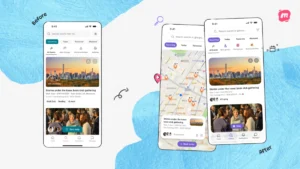

Meetup Unveils Advanced Personalized Event Recommendation Engine to Revolutionize Community Building and Member Discovery

NEW YORK — In an era defined by digital fatigue and an overwhelming abundance of online noise, connecting with like-minded individuals in the physical world has never been more vital—nor more challenging. Recognizing this dynamic, community platform Meetup has officially rolled out a sophisticated, next-generation event recommendation model. Designed to bridge the gap between curious individuals and passionate community leaders, the new algorithm leverages advanced data science to transform how users discover local experiences while supercharging the growth potential for event organizers.
The rollout marks a major technological milestone for the platform, moving away from legacy discovery frameworks and stepping into an era of hyper-personalization. For millions of users worldwide, the update promises an end to endlessly scrolling through irrelevant listings in search of a Friday night activity or a professional networking group. For organizers, it offers a streamlined, highly efficient pathway to connect with audiences genuinely invested in their content.
Main Facts: What is the New Recommendation Model?
At its core, Meetup’s newly deployed recommendation engine represents a paradigm shift from broad, generalized suggestions to deeply individualized curation.
From Broad Parameters to Hyper-Personalization
Historically, event discovery platforms relied on rudimentary metrics to suggest gatherings to users. Simple parameters such as geographic proximity and overall event popularity served as the primary drivers for visibility. While this approach occasionally worked, it frequently resulted in missed connections. A user living in a major metropolitan area might be inundated with popular events happening miles away across town, completely disconnected from their niche hobbies or professional ambitions.
The new model scraps this one-size-fits-all approach in favor of a robust, multi-dimensional framework. By analyzing a rich tapestry of individual member data—including nuanced personal preferences, historical activity patterns, past RSVP behaviors, and specific engagement metrics—the system crafts a dynamic, bespoke list of upcoming events tailored to each unique user profile.
Dual Benefits for Members and Organizers
The algorithmic overhaul is engineered to establish a symbiotic ecosystem within the platform:
- For Members: The friction of discovery is drastically reduced. Instead of sorting through dozens of irrelevant gatherings, members receive curated suggestions that align seamlessly with their personal interests, schedule availability, and lifestyle needs. This results in higher satisfaction and a more rewarding community experience.
- For Organizers: The model acts as an intelligent matchmaking service. Organizers no longer need to rely purely on brute-force marketing or external promotion to fill seats. Instead, the algorithm automatically surfaces their events to the specific segments of the user base statistically most likely to attend, driving up conversion rates and fostering deeply engaged communities.
Crucially, these technological enhancements operate entirely under the hood. Organizers reap the rewards of higher visibility and increased attendance rates organically, without needing to overhaul their management strategies or master complex new administrative tools.
Chronology: The Evolution of Meetup’s Discovery Infrastructure
To understand the significance of this latest rollout, it is helpful to examine the evolutionary trajectory of digital community platforms and the timeline leading up to Meetup’s current architectural leap.
Phase 1: The Early Days of Directory-Based Search
In the foundational years of community aggregation platforms, discovery was largely manual. Users acted as active search agents, navigating categorized directories, typing in keywords, and filtering by zip code. While effective for highly motivated users, this friction-heavy process meant that casual explorers often churned out before finding a group that resonated with them.
Phase 2: The Rise of Heuristic and Popularity-Based Recommendations
As data capabilities expanded, platforms introduced basic heuristic recommendation systems. These systems prioritized aggregate metrics: events with high view counts, rapidly filling RSVP lists, or those happening within a tight geographic radius were pushed to the top of the queue. While this helped surface trending events, it created a self-fulfilling prophecy where already-popular groups grew exponentially, while niche, specialized communities struggled to gain traction.
Phase 3: The Transition to Machine Learning and Behavioral Analytics
Recognizing the limitations of static popularity metrics, engineering teams began integrating machine learning frameworks capable of processing historical behavioral data. However, many systems remained constrained by computing power or siloed data pipelines, limiting their ability to predict micro-trends and individual shifting preferences in real time.
Phase 4: The 2025 Algorithmic Overhaul
The culmination of years of backend optimization and data science research arrived with the official deployment of Meetup’s personalized recommendation engine, finalized in early 2025. Developed to address the modern demand for hyper-relevant digital experiences, this new model continuously learns from user interactions, refining its predictive accuracy with every click, bookmark, and RSVP. The platform’s engineering and product teams spent months testing, iterating, and fine-tuning the model to ensure it could handle massive concurrency while maintaining sub-second recommendation generation speeds.
Supporting Data and Technical Architecture
While the user-facing side of the new model is elegantly simple, the underlying technical infrastructure is remarkably complex. Understanding the data architecture sheds light on why this system outperforms its predecessors.
Key Factors Considered by the Engine
When the recommendation engine compiles its daily or real-time suggestions, it evaluates a weighted matrix of data points. While exact proprietary weightings remain confidential, industry insights and platform disclosures highlight several primary factors:

- Historical Engagement Patterns: The system analyzes how a user has interacted with past events. Did they attend consistently? Do they prefer weekend workshops or weekday evening mixers?
- Explicit and Implicit Preferences: Beyond what users explicitly state in their profile settings, the model reads implicit signals—such as the types of groups they frequent, the duration of time they spend viewing specific event descriptions, and categories they frequently bypass.
- Temporal and Contextual Relevance: Recommendations are filtered through real-time contextual lenses, ensuring that suggestions are timely, seasonally appropriate, and logistically feasible for the individual.
- Community Affinity Mapping: The engine identifies clusters of users with overlapping interests, leveraging collaborative filtering techniques to suggest events that trusted peers within similar micro-communities are attending.
Early Performance Metrics and RSVP Uplift
Preliminary data gathered during the initial rollout phase has exceeded expectations. According to platform metrics, groups utilizing the new recommendation framework have experienced a measurable uplift in overall RSVP rates.
Furthermore, event creators have reported a higher quality of attendance. Rather than drawing large crowds of passive observers who frequently no-show, organizers are seeing a more dedicated demographic arriving at their doors—attendees who are fully engaged, ready to participate, and likely to return for future gatherings. This increase in retention represents a vital metric for community sustainability.
Strategic Implications for Event Organizers
Even though the new recommendation model works automatically behind the scenes, industry experts emphasize that organizers can—and should—optimize their group profiles to feed the algorithm the highest-quality data possible. To maximize visibility under the new personalized framework, organizers are encouraged to implement four foundational best practices:
1. Maintain Clarity and Richness in Event Descriptions
Algorithms rely heavily on natural language processing (NLP) to understand what an event is about. Organizers should craft detailed, descriptive titles and summaries that clearly articulate the value proposition of the gathering. Vague titles or sparse descriptions make it difficult for the model to accurately match the event with interested niche users.
2. Categorize and Tag Accurately
Proper taxonomy is critical. Utilizing precise category tags, sub-genres, and interest keywords ensures that the recommendation engine indexes the event correctly. If an event is miscategorized, the algorithm may serve it to an uninterested audience, leading to lower engagement scores that could negatively impact future algorithmic weighting.
3. Encourage Active Member Engagement and Feedback
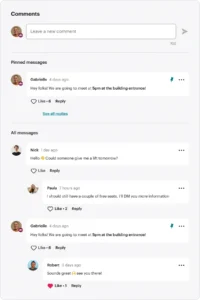
Because the model factors in community activity levels, groups that foster active comment sections, prompt RSVP updates, and post-event photo uploads signal high vitality to the system. Organizers should actively encourage their members to interact on the platform before and after events to boost the group’s overall algorithmic health score.
4. Maintain Consistent Scheduling Cadence
Consistency matters. The recommendation engine favors groups that demonstrate reliable scheduling habits. Sporadic, unpredictable event creation makes it harder for the algorithm to predict member availability and interest alignment. Establishing a predictable rhythm—such as a monthly book club meeting or a bi-weekly coding meetup—helps the system anticipate demand and position events favorably in user feeds.
Official Responses and Community Impact
The launch of the personalized recommendation model has generated considerable enthusiasm across the broader digital community landscape, drawing praise from both tech analysts and long-standing community organizers.
In internal briefings released following the rollout, the product leadership team expressed immense satisfaction with the early results. Representatives noted that the primary motivation behind the project was a commitment to nurturing genuine human connection. In a digital world increasingly dominated by passive content consumption—such as endless video feeds and broadcast-style social media—Meetup aims to differentiate itself by facilitating active, real-world participation.
"This new personalized recommendation model is all about helping members discover events they’ll love—and helping you grow your groups and events with engaged attendees," noted a representative from the development team. "We’re thrilled with the initial results and can’t wait to see how it continues to benefit our community!"
Community organizers have echoed this sentiment. Across various forums and discussion boards, early adopters of the updated system have shared anecdotal evidence of surging attendance numbers and a noticeable influx of fresh faces who fit their group’s target demographic with uncanny precision. For many small-scale community builders—ranging from amateur running clubs and local tech syndicates to creative writing circles—the algorithm has removed the heavy lifting of marketing, allowing them to focus entirely on delivering exceptional experiences.
Looking Ahead: The Future of AI-Driven Community Building
As artificial intelligence and machine learning continue to evolve at a breakneck pace, the deployment of Meetup’s recommendation engine signals a broader trend in how digital tools facilitate offline socialization. The era of static directories and brute-force advertising is giving way to predictive, context-aware platforms designed to amplify human agency rather than distract from it.
By reducing the friction of discovery and optimizing the alignment between organizers and attendees, Meetup has established a new benchmark for community platforms. As the model continues to ingest data, refine its parameters, and adapt to shifting cultural trends, the potential for deeper, more meaningful local connections has never been greater. For the millions of individuals seeking a sense of belonging in their local neighborhoods, the path to finding their people has just become significantly clearer.
Last modified on February 18, 2025.