The Architecture of Change: How Readers of Atomic Habits Are Rewriting Their Lives

By Global Lifestyle & Behavioral Science Desk
Main Facts
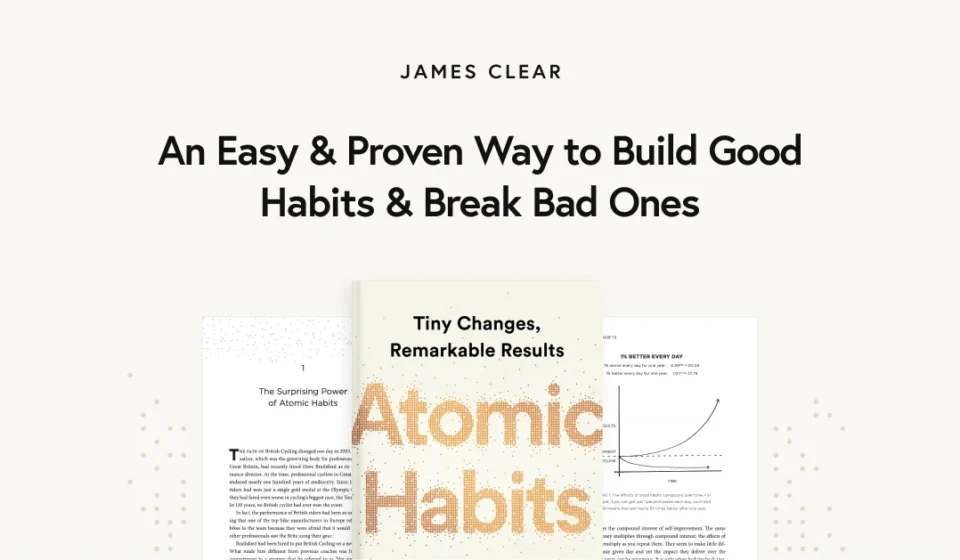
In the landscape of modern self-improvement literature, few works have achieved the cultural and practical footprint of James Clear’s 2018 bestseller, Atomic Habits. While the book outlines a rigorous, scientifically backed framework for personal transformation—focusing on small, incremental adjustments that compound over time—its true efficacy is measured not in theory, but in application.
Recently, Clear compiled a compelling dataset of real-world testimonies submitted by readers detailing how they deployed the book’s principles. Rather than relying on abstract motivation, these individuals utilized structural psychology, environmental engineering, and identity shifting to rewrite their daily routines. These submissions—distilled into concise, highly practical "one-sentence stories"—offer a rare, qualitative look into how behavioral economics and cognitive behavioral strategies function in the wild.
The core takeaway from these accounts is uniform: human behavior is rarely modified by raw willpower alone. Instead, successful habit formation requires a systematic redesign of one’s identity, physical and digital environment, and immediate behavioral triggers. From overcoming decades-long smoking addictions to mastering foreign languages and completely altering dietary profiles, the data gathered from Clear’s readership provides a masterclass in applied behavioral science.
Chronology
While the stories span various timelines of personal struggle and eventual triumph, a distinct chronological progression emerges in how individuals successfully implement behavioral change. Understanding this sequence is vital for anyone looking to transition from identifying a bad habit to permanently eradicating it.
- Phase 1: The Cognitive Pivot (Pre-Implementation). The journey invariably begins with a shift in internal narrative. Rather than setting outcome-oriented goals (e.g., "I want to lose 20 pounds"), subjects like Roland and Robert shifted toward identity-based frameworks ("I am someone who eats healthy"). This mental reframing establishes the foundation for all subsequent actions.
- Phase 2: Environmental and Cue Modification (Day 1 to Week 2). Once the mindset is established, individuals immediately alter their physical and digital surroundings to reduce friction for good habits and increase it for bad ones. Examples include placing water bottles on nightstands, logging out of social media apps, or removing computer graphics cards to curb gaming addictions.
- Phase 3: Habit Stacking and Substitution (Month 1 to Month 6). As the initial novelty wears off, readers anchor new behaviors to existing routines—such as meditating immediately after brushing teeth—or replace destructive coping mechanisms with healthier outlets, like substituting afternoon beer with flavored seltzer or swapping cigarette breaks for weightlifting reps.
- Phase 4: Quantitative Tracking and Compounding (Year 1 and Beyond). In the long term, individuals solidify their gains through visual accountability measures, such as wall calendars marked with red "X" chains or dedicated habit journals. Over months and years, these micro-actions compound into profound life transformations, leading to significant weight loss, long-term sobriety, and fluency in new skills.
Supporting Data & Case Studies
The credibility of behavioral frameworks relies heavily on empirical proof. The reader submissions categorized by Clear offer robust qualitative data demonstrating the efficacy of specific psychological interventions outlined in Atomic Habits.
Identity-Based Transformations
Behavioral psychology suggests that true change is identity change. Reader Roland struggled for years with erratic eating habits until he abandoned outcome-based dieting in favor of an identity shift: "I am someone that eats healthy and lives a healthy life." By framing his dietary choices as a reflection of who he inherently was, the resistance to eating junk food dissolved.
Similarly, Robert tackled a smoking habit by altering his linguistic framing: shifting from "I can’t smoke" (which implies painful sacrifice) to "I don’t smoke" (which implies personal freedom and investment in future well-being). Another anonymous reader reinforced a non-drinking identity by implementing a micro-reward system: transferring $10 into a clothing fund for every day successfully remained sober, ultimately leading to six years of continuous sobriety.
Environmental Design and Friction Engineering
Environmental architecture forms the backbone of Chapter 6 and Chapter 12 of Atomic Habits. The data shows that physical friction is one of the most effective deterrents to poor decision-making.
- Cyd’s Pringles Protocol: To curb late-night snacking, Cyd and her husband placed their favorite potato chips inside a locked car parked outside in the cold—introducing enough physical friction to make impulse eating practically impossible.
- Digital Barriers: Viet managed his Facebook addiction not through willpower, but by deleting the app entirely, forcing himself to manually type the URL and log in through a browser. The single extra step was enough to deter mindless browsing.
- The Alarm Clock QR Code: Daniel conquered the habit of hitting the snooze button by placing his alarm’s QR code exclusively in the bathroom, forcing him to physically leap out of bed to silence it.
Habit Stacking and Substitution
Stanford professor B.J. Fogg’s concept of "anchoring" proved exceptionally successful among readers. David integrated a 20-minute daily meditation practice directly after his morning teeth-brushing routine.
When dealing with substance cessation, substitution often yields better results than cold turkey. Mark systematically reduced his evening beer consumption over nine months by stepping down through fruit juice, iced tea, and finally sparkling water, allowing his brain to decouple the stress of the workday from alcohol.
Official Responses & Expert Perspectives
Behavioral scientists and productivity experts have long praised the foundational principles highlighted in these case stories. Dr. Wendy Wood, Provost Professor of Psychology and Business at the University of Southern California and author of Good Habits, Bad Habits, notes that human behavior is largely driven by automaticity rather than conscious choice.
"We tend to overestimate the role of sheer willpower in breaking bad habits," explains Dr. Wood in behavioral literature reviews. "The individuals who succeed long-term are those who do not fight their environment; they redesign it. By altering cues, increasing friction for unwanted behaviors, and seamlessly integrating new routines into established anchors, people bypass the exhausting daily battle of conscious decision-making."
James Clear himself frequently emphasizes that the results readers achieve are a testament to the compounding nature of small systems. In reflections on community feedback, Clear notes:
"It is deeply gratifying to see that people are not just reading these concepts, but executing them with incredible creativity. Whether it’s locking snacks in a car or using visual chain calendars, the ingenuity comes from the readers themselves. The system provides the skeleton; the individual builds the life."
Implications
The collective weight of these 30 micro-stories extends far beyond individual personal development; it carries profound implications for public health, corporate productivity, and educational design.
1. Shift from Willpower to Systems in Public Health
Traditional public health campaigns often rely on education and moral persuasion—telling people to eat better, smoke less, or exercise more. However, the success stories from Atomic Habits suggest that policy and program design should focus instead on choice architecture. By making healthy choices frictionless (e.g., placing walking paths centrally in urban planning, restricting junk food placements in workplaces) and unhealthy choices inconvenient, societies can achieve population-level behavioral improvements.
2. The Future of Digital Wellbeing
As technology companies engineer digital environments to maximize user engagement and dopamine loops, individual consumers are fighting back using environmental design principles. Uninstalling apps, removing graphics cards, and creating deliberate digital friction point toward a growing movement of "digital minimalism." This implies that future software design may need to incorporate built-in friction controls to satisfy an increasingly conscious consumer base demanding healthier relationship with technology.
3. Democratization of Personal Growth
Perhaps the most significant implication is the democratization of transformation. The strategies detailed by Clear’s readers—moving socks into a basket by the door, laying out running clothes the night before, or tracking progress with a simple wall calendar—require zero financial investment or specialized coaching. They prove that profound life alterations are accessible to anyone willing to respect the quiet, compounding power of small, deliberate adjustments to their daily environment.