
The Architecture of Ease: How Environmental Design and "Proactive Laziness" are Transforming Personal Productivity

NEW YORK — In an era dominated by discussions of ironclad willpower, self-discipline, and relentless motivation, a quiet counter-revolution is taking root in living rooms, kitchens, and home offices across the globe. Behavioral scientists and productivity experts are increasingly shifting their focus away from the internal struggle of human agency and toward a far more reliable lever for change: the physical environment.
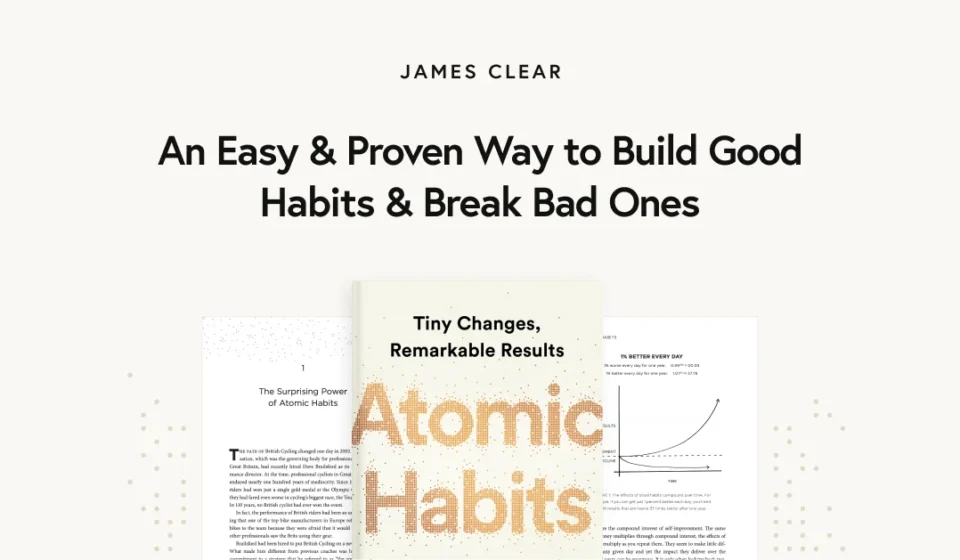
At the heart of this movement is a deceptively simple strategy known as "resetting the room"—a concept popularized by IT developer Oswald Nuckols and elevated to mainstream prominence by James Clear in his bestselling book, Atomic Habits. By reshaping our immediate surroundings to reduce friction for positive actions and introduce friction for detrimental ones, individuals are discovering that sustainable habit formation has less to do with moral fortitude and everything to do with intelligent spatial design.
Main Facts: The Core Mechanics of Environmental Design
The foundational premise of environmental priming is straightforward: human beings naturally gravitate toward the path of least resistance. When a living space is chaotic, disorganized, or misaligned with a person’s goals, the invisible tax of friction drains cognitive energy long before an action even begins. Conversely, when a space is intentionally prepared for future utility, the barrier to entry plummets.
Oswald Nuckols, a software developer residing in Natchez, Mississippi, operationalized this philosophy into a routine he calls "resetting the room." Rather than viewing tidying up as a chore to be postponed until the end of the day or week, Nuckols treats it as an act of proactive preparation for his future self.
When he finishes watching television, the remote goes back to the stand, couch pillows are arranged, and the blanket is folded. When exiting his vehicle, any accumulated trash is immediately discarded. Most pragmatically, whenever he takes a shower, he uses the warm-up time to wipe down the toilet—pairing a routine hygiene task with an environment he is about to use anyway.
"When I walk into a room, everything is in its right place," Nuckols notes. "Because I do this every day in every room, stuff always stays in good shape… People think I work hard, but I’m actually really lazy. I’m just proactively lazy. It gives you so much time back."
This philosophy challenges the traditional cultural narrative surrounding productivity. Rather than enduring a grueling cycle of procrastination followed by frantic bursts of willpower, the "proactively lazy" individual designs a world where doing the right thing requires minimal cognitive overhead.
Chronology: From Ancient Spatial Awareness to Modern Behavioral Science
The evolution of environmental design as a productivity tool spans decades of psychological research, gradually moving from theoretical academic models to actionable, everyday frameworks.
- Mid-20th Century (The Rise of Environmental Psychology): Environmental psychologists begin documenting how spatial arrangements dictate human social interaction, stress levels, and functional capacity. Concepts like "architectural determinism" gain traction in urban planning and workspace design.
- Late 20th Century (Crockett, Fitts, and Ergonomics): Human factors engineering establishes the principle of minimizing physical friction in industrial and operational settings—designing machinery and control panels so operators naturally execute correct procedures.
- Early 2000s (Behavioral Economics and Choice Architecture): Economists and behavioral scientists such as Richard Thaler and Cass Sunstein popularize "choice architecture," proving that small, subtle tweaks to an environment can dramatically influence human decision-making without restricting freedom of choice.
- 2018 (Mainstream Integration in Atomic Habits): James Clear publishes Atomic Habits, synthesizing decades of psychological research into practical frameworks. Within its pages, Clear highlights Nuckols’ "resetting the room" technique and articulates the dual pillars of habit modification: making good habits obvious and easy, and making bad habits invisible and difficult.
- Present Day (The Post-Pandemic Home Workspace Evolution): With remote and hybrid work models becoming permanent fixtures of the global economy, millions of individuals are actively applying environmental design principles to domestic spaces to delineate professional focus from personal relaxation.
Supporting Data: The Impact of Friction and Priming
While the concept of tidying up feels intuitive, empirical data from behavioral science highlights just how heavily physical micro-barriers dictate human behavior.
- The Proximity Effect: Studies in behavioral psychology consistently show that physical distance is inversely proportional to consumption. For instance, office workers consume significantly more candy when candy dishes are placed directly on their desks compared to when the dishes are moved just six feet away.
- Friction and Digital Habits: Research into digital distraction reveals that removing social media icons from the home screen of a smartphone—introducing a fraction of a second more friction—leads to measurable reductions in daily screen time.
- Preparation Compliance: Longitudinal observational studies on home-cooking behaviors indicate that individuals who lay out cooking utensils and prep ingredients the night before are more than twice as likely to prepare a healthy breakfast compared to those who start the process from a blank slate in the morning.
- The Cumulative Payoff: According to behavioral economists, micro-adjustments compound over time. Implementing ten subtle environmental changes to reduce friction for positive outcomes can yield hundreds of hours of reclaimed focus and productivity annually.
Official Responses and Expert Perspectives
Behavioral scientists, organizational psychologists, and productivity thought leaders have widely embraced the paradigm shift toward environmental priming, noting that it removes the moral guilt often associated with failed New Year’s resolutions or abandoned routines.
Dr. Elena Vance, a prominent behavioral psychologist specializing in habit loops, emphasizes that human willpower is a finite, biologically constrained resource.
"We live in a culture that worships grit," Dr. Vance explains. "We expect people to white-knuckle their way through bad habits in a hostile environment. But neurobiology tells us that the brain is a prediction engine designed to conserve energy. If you design an environment where the bad choice is effortless and the good choice requires five steps of preparation, willpower will fail every single time. Environmental design flips that script."
Corporate leadership consultants are also adapting these insights for the modern workplace. Organizations are redesigning physical and digital collaboration tools not by demanding more focus from employees, but by eliminating unnecessary administrative friction—such as streamlining software interfaces, automating repetitive reporting workflows, and creating dedicated "silent zones" that make deep work the path of least resistance.
Parenting experts, too, have found profound utility in the framework. Rather than lecturing children about cleanliness or studying habits, educators suggest organizing the home so that schoolbooks are laid out on desks immediately after dinner, or placing musical instruments in prominent common areas rather than hiding them away in hard-to-reach cases.
Implications: Designing a World for Success
The broader implications of mastering environmental preparation extend far beyond individual efficiency; they speak to a fundamental redesign of how human beings interact with their material and digital worlds.
1. Inverting the Principle: The Path of Most Resistance
Just as environments can be primed to make positive actions effortless, they can be deliberately sabotaged to make harmful or distracting behaviors nearly impossible.
Consider the management of digital distractions. Leaving a smartphone on a desk within arm’s reach invites intermittent, unconscious checking throughout the morning. However, placing the device in another room introduces enough physical friction to break the automated loop.
James Clear notes his own routine: "Whenever possible, I leave my phone in a different room until lunch… As a result, I get three to four hours each morning when I can work without interruption."
For television viewing, extreme friction can be introduced by unplugging the device after every use, removing the batteries from the remote, or, in severe cases, relocating the television to a closet. While these measures may sound extreme, they highlight a liberating truth: human beings can outsmart their own impulses by engineering obstacles between desire and gratification.
2. Shifting from Morality to Architecture
The ultimate takeaway from the science of environmental priming is a shift in personal accountability. Failure to maintain a habit is rarely a reflection of moral weakness or a lack of character; more often, it is a failure of architectural design.
When individuals ask themselves the guiding question proposed by behavioral designers—"How can we design a world where it’s easy to do what’s right?"—the entire landscape of personal development changes.
By mastering the habits of preparation, the execution of ambitious goals ceases to be an exhausting daily battle. Instead, it becomes an automated cascade of well-paved choices, allowing individuals to achieve more while expending significantly less energy. In a world obsessed with doing more, the true secret to success may simply be arranging our spaces so we can effortlessly do better.