Mastering Inventory Integrity: A Deep Dive into Loss Prevention with Wallis Cos.’ Kelsey Smith

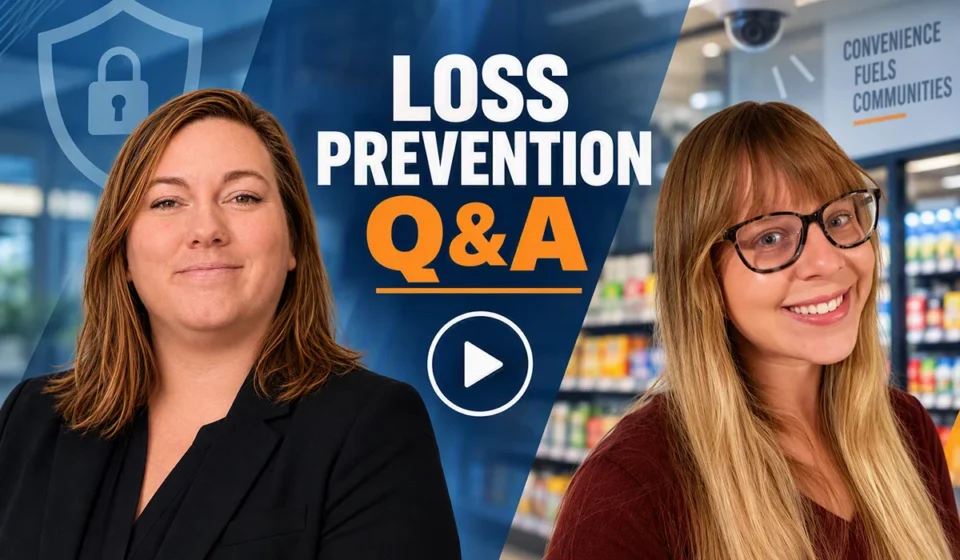
In the fast-paced world of convenience retail, the difference between a profitable quarter and a stagnant one often hinges on a single, critical metric: inventory shrinkage. As margins tighten and supply chains become increasingly complex, operators are turning their focus toward sophisticated loss prevention strategies. Recently, CStore Decisions Senior Editor Emily Boes sat down with Kelsey Smith, the inventory loss control specialist for Wallis Cos., to dissect the challenges and innovative solutions defining the modern convenience store landscape.
Wallis Cos., a powerhouse operator managing 67 locations across Missouri and Illinois, serves as a bellwether for the industry. By examining their internal methodologies and Smith’s expert insights, retailers can glean a roadmap for safeguarding their bottom lines against both internal and external threats.
The Landscape of Loss: Defining the Core Challenges
Loss prevention in the convenience sector is no longer merely about locking up high-value merchandise. It is a multi-dimensional discipline that encompasses administrative error, vendor fraud, employee theft, and organized retail crime (ORC).
For an organization the size of Wallis Cos., managing 67 distinct points of sale requires a centralized yet adaptable strategy. Smith notes that the primary challenge is the "fragmentation of data." When inventory records do not align with physical stock levels, the result is "shrink"—the silent killer of retail profitability.
The Five Pillars of Inquiry
During the interview, Boes posed five critical questions designed to illuminate the current state of loss prevention:
- The Technology Gap: How are retailers integrating AI-driven surveillance with POS data?
- The Human Element: How do you foster a culture of integrity without compromising employee morale?
- Vendor Compliance: What protocols are in place to ensure third-party deliveries are accurate?
- The Impact of ORC: How should store-level staff respond to organized retail crime groups?
- Future-Proofing: How is the role of the loss prevention specialist evolving in a digital-first environment?
Chronology of Evolution: From Manual Audits to Digital Oversight
To understand the sophistication of modern loss prevention, one must look at how the industry has evolved over the past two decades.
The Era of Manual Reconciliation (Early 2000s)
Historically, loss prevention was reactive. Managers would perform monthly physical counts, often relying on paper logs. Discrepancies were investigated weeks after the fact, making it nearly impossible to identify the root cause of the loss.
The Data Revolution (2010–2018)
The advent of robust Point-of-Sale (POS) systems allowed for real-time tracking of sales. However, this created a new challenge: data overload. Retailers struggled to synthesize sales data with inventory arrival data, leading to a reliance on "shrink averages" rather than surgical identification of theft or waste.
The Proactive Era (2019–Present)
Under the guidance of specialists like Smith, Wallis Cos. has moved toward a proactive model. By utilizing exception-based reporting (EBR), the company can flag suspicious transactions—such as excessive voids, no-sales, or unauthorized discounts—in real-time. This shift from "catching the thief" to "preventing the opportunity" marks the current gold standard in the convenience sector.
Supporting Data: The Economic Reality of Shrink
The CStore Decisions Industry Perspective highlights that shrink is not just a nuisance; it is a significant drain on EBITDA. While specific internal figures for Wallis Cos. remain proprietary, industry-wide data provides a stark context for the necessity of Smith’s work:
- Average Industry Shrink: According to the National Retail Federation (NRF), retail shrink averages approximately 1.5% to 2% of total sales. For a chain with 67 stores, a 1% reduction in shrink can equate to hundreds of thousands of dollars in annual bottom-line recovery.
- The Breakdown of Loss:
- Employee Theft: 35%
- External Theft/ORC: 37%
- Administrative/Paperwork Errors: 18%
- Vendor Fraud: 10%
- The Cost of Inaction: Retailers that fail to implement comprehensive loss prevention protocols see a 3x higher rate of inventory variance compared to those with active surveillance and audit programs.
Official Responses and Strategic Frameworks
In her discussion with Emily Boes, Kelsey Smith emphasized that effective loss prevention is 80% process and 20% technology.
Developing a "Culture of Compliance"
Smith argues that loss prevention should not be a "policing" department. Instead, it should be an operational support system. By training store managers to view inventory as an asset equivalent to cash, the company empowers front-line workers to be the first line of defense.
"When an employee understands that accurate inventory leads to better product availability for the customer, the narrative shifts from ‘watching for thieves’ to ‘managing the business,’" Smith noted.
Strategic Vendor Management
One of the most overlooked areas of loss is the receiving dock. Smith’s protocols at Wallis Cos. involve rigorous verification of vendor shipments. By auditing the "scan-based trading" (SBT) vendors and direct-store-delivery (DSD) drivers, the company has significantly reduced discrepancies that were previously written off as "unexplained shrink."
Implications: The Future of Convenience Retail
The implications of Smith’s strategies extend far beyond the walls of Wallis Cos.’ 67 locations. As the industry moves toward cashless payments and automated checkout kiosks, the nature of loss is changing.
The Rise of Digital Shrink
As convenience stores move toward mobile ordering and app-based loyalty programs, the threat shifts from physical inventory theft to digital fraud. Coupon abuse, loyalty point hacking, and payment processing errors are the new frontiers for loss prevention specialists.
The Role of Artificial Intelligence
The future of loss prevention lies in predictive analytics. Smith suggests that the next generation of software will not just report what happened; it will predict where loss is likely to happen. By analyzing variables such as peak foot traffic, local weather patterns, and even staffing levels, AI can alert management to high-risk windows, allowing them to adjust floor coverage proactively.
Policy and Community Impact
As ORC becomes a higher-profile issue, retailers are forced to walk a tightrope between protecting their assets and maintaining a welcoming environment for shoppers. The Wallis Cos. approach favors de-escalation and partnership with local law enforcement, emphasizing that the goal is the protection of the staff and the continuity of service.
Concluding Thoughts
Kelsey Smith’s insights provide a masterclass in operational discipline. For retailers looking to emulate the success of Wallis Cos., the message is clear: loss prevention is not a static task but a continuous cycle of auditing, educating, and iterating.
As Smith continues to share her expertise in CStore Decisions’ October Industry Perspective—and in the upcoming exclusive digital Part Two—the convenience retail community stands to benefit from her rigorous approach to inventory integrity. In an era where every cent counts, the ability to control loss is perhaps the greatest competitive advantage a retailer can possess.
For those interested in deep-diving into the specific technical workflows, the digital expansion of this Q&A will offer a granular look at the software integrations and audit checklists that keep Wallis Cos. at the forefront of the convenience industry. Stay tuned to CStore Decisions for the continuation of this vital conversation.
Disclaimer: This article is based on the industry insights provided by Kelsey Smith and CStore Decisions. For further information, visit the CStore Decisions portal for the full October Industry Perspective series.