Revolutionizing the Point-of-Sale: A Deep Dive into Hussmann’s FS-OB Refrigerated Merchandiser

In the competitive landscape of modern convenience retail, the "last three feet"—the area immediately surrounding the checkout counter—represents the most valuable real estate in the store. It is here that impulse buys are converted into revenue and customer loyalty is solidified. Recognizing the critical need for compact, sustainable, and high-efficiency cooling solutions in these high-traffic zones, Hussmann Corporation has unveiled its latest innovation: the FS-OB low-profile, self-contained refrigerated merchandiser.
As part of the company’s broader "Evolve Technologies" portfolio, the FS-OB is not merely a piece of hardware; it is a strategic response to the evolving demands of the global retail industry, which is currently grappling with a dual mandate: the need for superior product presentation and the urgent requirement to reduce environmental impact.
Main Facts: The Anatomy of the FS-OB
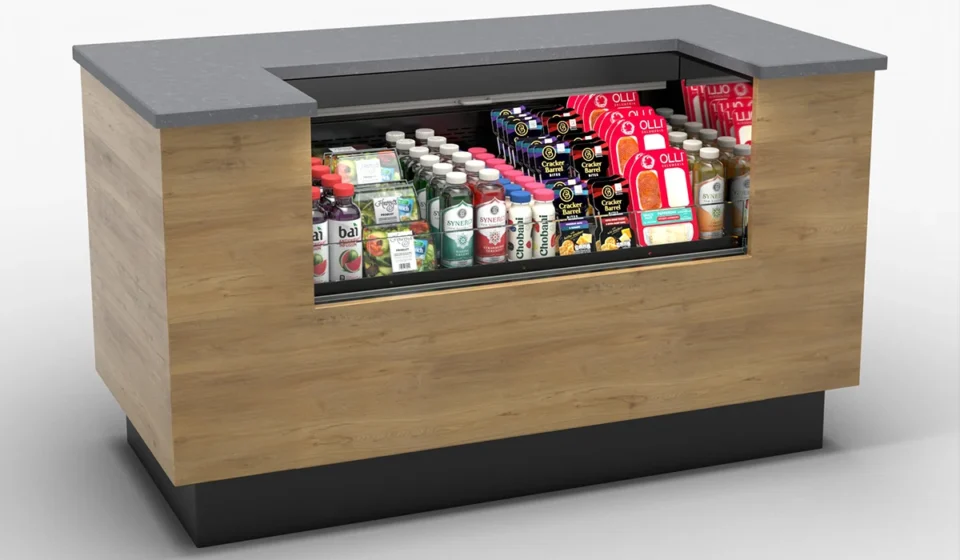
The Hussmann FS-OB is engineered to solve a specific set of retail challenges: space constraints, maintenance complexity, and energy inefficiency. Designed specifically for the checkout counter environment, this low-profile unit maximizes visibility for high-margin, grab-and-go items such as beverages, snacks, and prepared meals.
Key Technical Specifications:
- Refrigerant Technology: The unit utilizes R-290 (propane), a natural refrigerant known for its extremely low global-warming potential (GWP) and superior thermodynamic properties.
- Plug-and-Play Architecture: Designed for rapid deployment, the unit requires no complex installation, allowing retailers to integrate it into their existing checkout flow with minimal disruption.
- Integrated Condensate Management: Perhaps the most significant "pain-point" solution in the design is the integrated condensate pan. By eliminating the need for traditional floor sinks, Hussmann has liberated retailers from costly plumbing retrofits and the logistical nightmare of drainage maintenance.
- Configurability: To accommodate varying store footprints, the FS-OB is available in four lengths: three, four, five, and six feet.
- Customization Options: The unit features adjustable shelving, optional risers for enhanced product display angles, and an integrated night curtain to minimize energy loss during store off-hours.
Chronology: The Evolution Toward Sustainable Cooling
The release of the FS-OB does not exist in a vacuum. It is the latest milestone in a multi-decade progression of refrigerated display technology.
The Legacy Phase (1980s–2000s)
Historically, retail refrigeration was characterized by heavy reliance on hydrofluorocarbon (HFC) refrigerants and centralized cooling systems. These systems were effective but notoriously energy-intensive and prone to massive refrigerant leaks that contributed significantly to atmospheric warming.
The Shift to Sustainability (2010–2018)
As global regulations, such as the Kigali Amendment to the Montreal Protocol, began to tighten, manufacturers like Hussmann shifted focus toward natural refrigerants. The industry began moving away from remote, rack-based systems toward "self-contained" units that offered greater flexibility for small-format stores.
The "Evolve" Era (2019–Present)
Hussmann introduced its "Evolve Technologies" portfolio to categorize products that meet strict environmental and efficiency benchmarks. The FS-OB represents the culmination of this philosophy. By marrying the small footprint required for checkout counters with the advanced cooling capabilities of R-290, Hussmann has bridged the gap between operational efficiency and environmental stewardship.
Supporting Data: Why R-290 Matters
The transition to R-290 is the backbone of the FS-OB’s value proposition. To understand the impact, one must look at the data regarding Global Warming Potential (GWP).
- GWP Comparison: Traditional refrigerants like R-404A have a GWP of roughly 3,922. In contrast, R-290 (propane) has a GWP of less than 3. This is a reduction of over 99.9%.
- Energy Efficiency: Data from recent pilot programs suggests that self-contained units utilizing R-290 compressors consume approximately 15% to 20% less energy than older models utilizing legacy HFCs. For a convenience store chain operating hundreds of units, this represents a massive reduction in total cost of ownership (TCO) and carbon footprint.
- Operational Downtime: By integrating the condensate pan directly into the unit, the need for floor drainage is removed. Retailers report that maintenance-related downtime is reduced by approximately 30% compared to units requiring plumbing connections, as issues related to drain-line clogs are effectively eliminated.
Official Perspectives: The Industry Response
Industry analysts and retail technologists have viewed the introduction of the FS-OB as a logical progression in the "convenience-first" design philosophy.
In an official statement regarding the company’s product roadmap, Hussmann leadership emphasized that the modern retailer is no longer just a merchant; they are a facility manager. "Our goal with the FS-OB was to remove the ‘friction’ from the retail environment," says a spokesperson for the company. "Retailers shouldn’t have to choose between a high-performing merchandiser and a complex plumbing install. With the FS-OB, we’ve provided a tool that enhances the impulse-buy experience while simultaneously meeting the most stringent environmental compliance standards."
Retail technology experts have echoed this sentiment. "The integration of night curtains and adjustable shelving isn’t just about aesthetics," notes a retail design consultant. "It’s about ‘merchandising intelligence.’ By allowing the store operator to modify the shelving to fit the specific product mix—be it energy drinks, sandwiches, or specialty chocolates—Hussmann is essentially giving the retailer a tool to optimize their revenue-per-square-inch."
Implications: The Future of Convenience Retail
The introduction of the FS-OB carries profound implications for the future of the convenience sector, particularly as stores move toward smaller, more agile footprints.
1. Decoupling from Infrastructure
Traditionally, refrigeration equipment dictated store layout. You could only place a cooler where there was a floor drain or a connection to a central rack. The FS-OB breaks this tether. Because it is self-contained and manages its own condensate, retailers can move these units periodically to test different checkout flow strategies, allowing for a "dynamic floor plan" that adapts to seasonal consumer behavior.
2. The Green Competitive Advantage
As consumers become increasingly environmentally conscious, they are beginning to factor store sustainability into their loyalty decisions. Retailers that can showcase a commitment to low-GWP technologies—even at the point of sale—are signaling to the consumer that their brand is aligned with modern ecological values.
3. Economic Resilience
With rising energy costs and stricter municipal codes regarding plumbing and HVAC, the FS-OB offers a buffer. The reduced energy consumption directly translates to lower utility bills, while the "plug-and-play" nature protects the retailer from expensive and disruptive renovation costs.
4. Maximizing the Impulse Opportunity
The checkout counter is the final interaction point. If the product isn’t perfectly displayed, or if the unit is "down" for maintenance, that sale is lost forever. The reliability of the FS-OB’s self-contained refrigeration cycle ensures that products are held at the precise temperature required for food safety and optimal presentation, ensuring that the last impression a customer has of the store is a positive, professional one.
Conclusion: A New Standard for the Checkout Line
The Hussmann FS-OB is a microcosm of where retail technology is headed: toward units that are smaller, smarter, more efficient, and easier to deploy. By addressing the granular details—like the condensate pan and the GWP of the refrigerant—Hussmann has demonstrated that the most effective innovations are often those that solve the "invisible" problems of store operations.
As the retail industry continues to navigate a future defined by rapid change and heightened environmental scrutiny, solutions like the FS-OB will likely become the standard. It is a reminder that in the world of retail, the success of the business is often built on the reliability of the equipment that holds the products. With the FS-OB, Hussmann has solidified its position as a primary architect of that future, providing retailers with the tools to maximize their space, minimize their footprint, and ultimately, grow their bottom line.
For those interested in exploring how this technology can be integrated into existing or new retail layouts, Hussmann continues to provide comprehensive resources and technical support through their official channels, ensuring that the transition to sustainable, high-performance refrigeration is as seamless as the units themselves.
Related posts: