Johnnie Walker Unveils Blue Label Indian Festive Blend: A Masterclass in Cross-Cultural Whisky Craftsmanship

NEW YORK — In the rarefied world of luxury blended Scotch, few names command the immediate prestige and recognition of Johnnie Walker Blue Label. Serving as the pinnacle expression of the globe’s most ubiquitous blended scotch brand—owned by beverage behemoth Diageo—Blue Label has long operated as a canvas for master blenders to showcase the absolute zenith of their craft. Over the decades, discerning connoisseurs have witnessed a variety of limited-edition releases, structural tweaks, and cask-finishing experiments. Yet, few recent iterations have matched the specific cultural ambition of the brand’s latest release: the Johnnie Walker Blue Label Indian Festive Blend.
Priced at a suggested retail price (SRP) of $220 and rolling out to specialty retailers this month, this new expression is designed to honor and celebrate India’s vibrant festive season. More than just a liquid packed into a beautifully appointed bottle, however, the release represents a calculated dive into the culinary and cultural landscape of South Asia, bridging the centuries-old tradition of Scottish distillation with the intricate, spice-forward profile of Indian cuisine.
Main Facts: Inside the Bottle and the Partnership
At its core, the Johnnie Walker Blue Label Indian Festive Blend is an exercise in meticulous blending led by Master Blender Dr. Emma Walker. Drawing from Diageo’s staggering inventory of more than 10 million aging casks scattered across 31 active malt and grain distilleries in Scotland, Dr. Walker curated a specific recipe designed to harmonize with the rich, complex flavors found on the Indian festive table.
The formulation relies on a careful selection of component whiskies known for distinct flavor contributions:
- Port Dundas: Utilized to impart a foundation of sweet, honeyed depth.
- Clynelish: Brought in to add tropical brightness and an exceptionally silky mouthfeel.
- Blair Athol: Contributes layers of warm, inviting spice.
- Talisker: Infuses a whisper of gentle, maritime smoke characteristic of the rugged Isle of Skye.
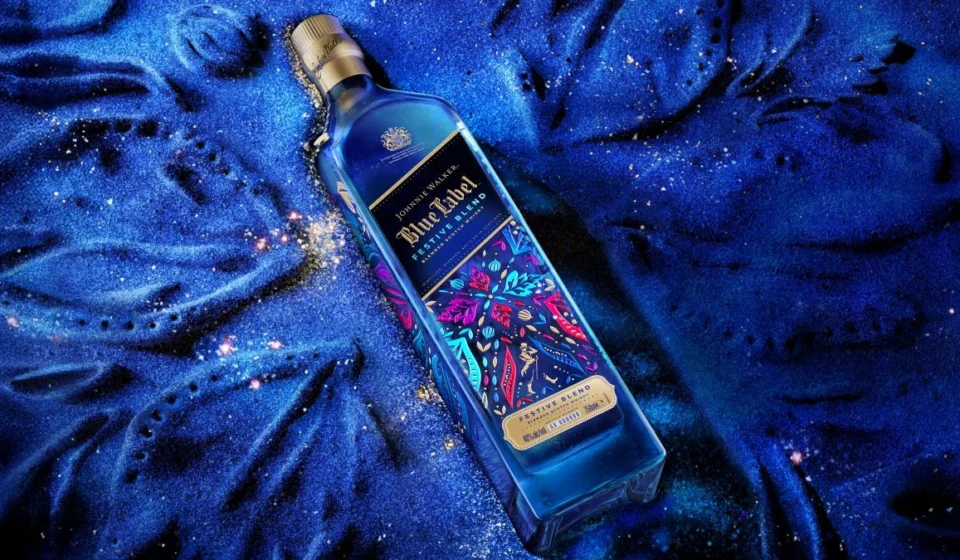
The resulting liquid is bottled at standard Blue Label strength and housed in a striking, specially designed vessel adorned with artwork inspired by India’s festive traditions. This release marks a major milestone in the second year of Johnnie Walker’s high-profile collaboration with celebrated Indian couturier Rahul Mishra, building on a partnership that initially launched roughly a year ago. To support the rollout, Diageo has announced an upcoming series of exclusive consumer experiences, immersive brand activations, and curated celebrations slated for the coming months.
Chronology: The Evolution Toward a Culturally Tailored Blend
To understand how a Scottish blended scotch became tailored specifically to the palate of the Indian festive season, it is helpful to trace the modern evolution of Johnnie Walker’s experimental portfolio.
The Foundation of Rarities
Historically, Johnnie Walker Blue Label was built on exclusivity. The brand has long maintained that only one out of every 10,000 casks in its immense inventory possesses the character, depth, and balance required to make the cut for a Blue Label bottling. This stringent selection process has frequently allowed the brand to feature rare stocks, including irreplaceable liquids drawn from so-called "ghost distilleries"—production facilities that shuttered their doors decades ago, such as Port Dundas and Brora.
The Shift Toward Regional and Culinary Collaborations
In recent years, Diageo has pivoted toward targeted, culturally resonant storytelling for its ultra-premium expressions. Rather than relying solely on the age-statement or heritage narratives of old, master blenders have increasingly looked outward for inspiration.
- Late 2022 to 2023: The brand ramps up explorations into specific cask finishes and thematic releases, including the critically acclaimed Ghost and Rare series.
- Late 2023: Johnnie Walker initiates its creative partnership with Indian designer Rahul Mishra, establishing a cultural bridge between contemporary South Asian design and Scottish whisky craftsmanship.
- Late 2024: Dr. Emma Walker finalizes the liquid formulation for the Indian Festive Blend, balancing foundational pillars like Clynelish and Talisker with flavor profiles explicitly mapped to the notes of Indian spices.
- Current Rollout (Recent Weeks): The expression officially hits shelves across the United States and select international markets at an SRP of $220, accompanied by announcements of experiential dining events and immersive retail activations designed in tandem with Mishra.
Supporting Data: Diageo’s Cask Empire and the Economics of Scarcity
To fully appreciate the mechanics behind the Johnnie Walker Blue Label Indian Festive Blend, one must examine the staggering scale of production that enables such precise blending.
The Numbers Behind the Blend
- 31 Distilleries: The total number of active malt and grain whisky distilleries owned by Diageo across Scotland, providing an unmatched palette of flavors ranging from heavily peated Islays to delicate, grassy Lowlands.
- 10 Million+ Casks: The estimated number of aging whisky casks resting in warehouses throughout Scotland at any given moment, representing a multi-generational inventory of wood, spirit, and time.
- 1 in 10,000: The notoriously strict statistical odds cited by Johnnie Walker for a standard cask to meet the exacting quality standards required for inclusion in the classic Blue Label blend.
- $220 USD: The official suggested retail price point for the limited-edition Indian Festive Blend, positioning it competitively within the ultra-premium blended scotch tier alongside other commemorative and seasonal Blue Label variants.
These figures illustrate the paradox of high-end blending: while industrial scale provides the raw materials (millions of casks), artisanal precision dictates the outcome. Dr. Walker does not simply throw rare whiskies together; she acts as an archivist and a conductor, utilizing data on wood maturation, regional terroir, and distillate character to engineer a flavor profile that speaks to a specific geographic and cultural audience.
Official Responses: Voices from the Master Blender and Design Partner
The cultural weight of the release was a central theme in statements released by the brand’s leadership and creative collaborators.

Dr. Emma Walker, whose careful stewardship of the Johnnie Walker inventory has yielded several celebrated expressions, noted that her inspiration came directly from the kitchen rather than traditional whisky bars.
"I was captivated by the artistry of Indian cuisine, the way chefs balance bold spice with harmony, elegance, and depth," Dr. Walker said in an official statement. "That sense of balance became my inspiration for this special Blue Label blend. By layering aromatic notes of cardamom, clove, and cinnamon with smooth sweetness and our signature depth of flavor, we’ve created a whisky that complements the richness of India’s festive table while remaining unmistakably Johnnie Walker Blue Label."
The culinary alignment is no accident. Traditional Scotch whisky—particularly blended expressions featuring honeyed grain and gentle smoke—has long enjoyed a robust following in South Asia. However, tailoring a luxury product to withstand and elevate the complex interplay of chili, cumin, cardamom, and clove requires a deliberate shift in cask selection. By leaning on the tropical fruit notes of Clynelish and the warming spices of Blair Athol, the blend actively seeks out points of intersection between Scottish oak and Indian spices.
Rahul Mishra, the celebrated Indian couturier partnering with the brand for the second consecutive year, emphasized the shared values of hand-crafted detail between his fashion house and the centuries-old distilling traditions of Scotland.
"Our collaboration is an exploration of storytelling through physical form and sensory experience," Mishra noted in promotional materials for the launch. "The festive season in India is a time of immense visual and culinary richness. Translating that joy into the packaging and the surrounding celebrations allows us to present a dialogue between heritage craft traditions that span thousands of miles."
Implications: What This Means for the Luxury Spirits Market
The launch of the Johnnie Walker Blue Label Indian Festive Blend carries several significant implications for the broader spirits industry, global luxury marketing, and the evolving tastes of the modern whisky consumer.
1. The Hyper-Localization of Global Luxury Brands
For decades, luxury spirits brands relied on a one-size-fits-all model of Western prestige. A bottle of Scotch marketed in New York looked identical to the one sold in London, Mumbai, or Tokyo. The release of regionally inspired, culture-specific luxury blends signals a permanent shift toward hyper-localization. By designing a product that explicitly nods to the culinary traditions of the Indian diaspora and the domestic Indian market, Diageo is acknowledging that modern luxury consumers demand cultural fluency and personal relevance from legacy brands.
2. Deepening the Intersection of Fashion, Art, and Spirits
The continuation of the Rahul Mishra partnership highlights an ongoing trend: the convergence of high fashion and high-end spirits. Brands are no longer content to sell liquid in a standard glass bottle; they are curating lifestyle objects. The intricate packaging, combined with upcoming immersive activations, turns the whisky bottle into a collectible piece of art. This strategy successfully captures younger, design-conscious affluent consumers who view their purchases as extensions of their personal aesthetic and cultural identity.
3. Culinary Pairing as the New Frontier for Scotch
Traditionally, Scotch whisky has been marketed as a standalone dram—enjoyed neat, with a drop of water, or occasionally in classic cocktails like a Boulevardier or Penicillin. By explicitly formulating a blend to complement the rich, spicy profiles of Indian festive cuisine, Johnnie Walker is pushing the culinary envelope. This encourages sommeliers, chefs, and home entertainers to experiment with pairing aged spirits alongside savory meals, expanding the consumption occasions for scotch beyond the post-dinner fireside chat.
4. Collector Dynamics and Secondary Market Interest
Given that Blue Label special editions are produced in limited quantities and tied to specific seasonal or artistic collaborations, they immediately capture the attention of secondary market collectors. At a $220 price point, the Indian Festive Blend bridges the gap between an accessible luxury gift and a collectible asset. As global interest in diverse, story-driven whisky expressions continues to surge, releases like this one reinforce the enduring viability and adaptability of the world’s most famous blended scotch.
Ultimately, the Johnnie Walker Blue Label Indian Festive Blend proves that even historic brands with centuries of tradition can successfully reinvent their narratives. By marrying the vast resources of Diageo’s ten-million-cask inventory with the delicate artistry of Indian cuisine and contemporary fashion design, Dr. Emma Walker and her team have delivered a product that is as intellectually stimulating as it is satisfying to the palate.