Navigating the Maze: Why Nonprofits Desperately Need Specialized Event Registration Software

For most organizations, hosting an event is a strategic exercise in marketing, networking, and revenue generation. For nonprofits, however, it is a masterclass in operational gymnastics. Behind every polished annual gala, community awareness walk, or donor appreciation breakfast lies a mountain of logistical complexity.
Consider the typical scenario: a single yearly fundraising gala involves tracking corporate sponsorships, coordinating tiered donor tables, handling volunteer sign-ups, issuing complimentary passes for board members, and organizing a silent auction. Now, imagine managing all of this with a lean core team of just two or three individuals who are simultaneously responsible for steering the nonprofit’s daily programs, community outreach, and donor relations.
When organizations expand their scope to include a multi-event calendar featuring educational workshops, advocacy days, and regional fundraisers, the administrative burden multiplies exponentially. Without the right technological infrastructure, staff quickly become overwhelmed by manual data entry, endless spreadsheet reconciliation, and pre-event customer support emails.
Choosing the right nonprofit event registration software can dramatically alleviate this strain. More importantly, it keeps hard-earned fundraising revenue where it belongs: directly supporting the organization’s core mission.
The Unique Registration Challenges Nonprofits Face
Standard, out-of-the-box ticketing tools are rarely built to accommodate the nuances of the charitable sector. Nonprofits operate under distinct operational and financial pressures that require specialized software solutions.

Multiple Attendee Types and Complex Pricing Structures
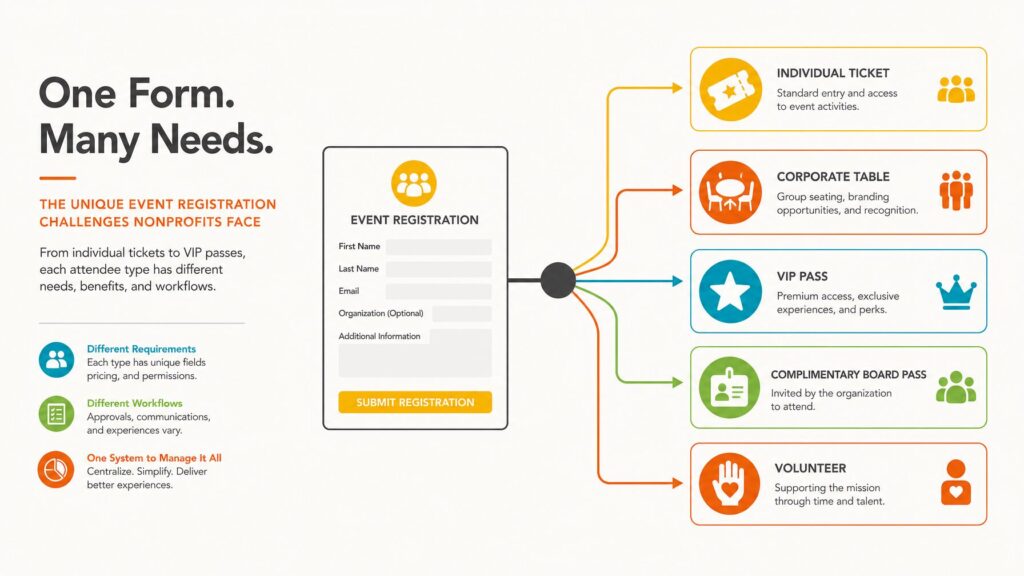
Commercial events often rely on a straightforward pricing model—General Admission, VIP, and Early Bird. In contrast, a single nonprofit event often serves a complex ecosystem of stakeholders. A fundraising dinner might need to process individual tickets, multi-seat corporate tables, VIP packages, subsidized tickets for community members, complimentary passes for board directors, and independent volunteer registrations.
Each of these categories requires distinct pricing tiers, access conditions, and data collection fields. Managing this diversity through a single, clean registration interface demands a high degree of platform flexibility.
Furthermore, many of these ticket types must remain hidden from the general public. A corporate table package or a complimentary board member pass does not belong on a public registration page. Advanced tools utilize promotional codes that unlock hidden ticket tiers, allowing nonprofits to manage delicate relationships discreetly without forcing staff to build separate forms for every audience segment.
Coordinating Volunteers Alongside Attendees
Many nonprofit events rely heavily on volunteers to run smoothly. However, capturing volunteer data alongside regular attendee registrations is a recurring pain point. While some advanced platforms allow organizers to manage volunteers and attendees within a single system using specialized ticket categories and custom fields, many basic tools force organizations to adopt fragmented workflows. When volunteers register through a separate system, staff are left cross-referencing multiple databases, increasing administrative overhead and the risk of miscommunication.
Capturing Donor and Sponsor Data
For charities, events are primarily donor cultivation tools. Registration data cannot simply collect names and email addresses; it must capture contribution amounts, seating preferences, corporate sponsorship details, and donor recognition names. This data is critical for building accurate seating charts, printing program materials, and executing post-event stewardship.
The Cost of Lean Teams and High Event Volume
Nonprofit event teams are notoriously small relative to the volume of events they manage. Every hour a staff member spends manually chasing down payment discrepancies, updating spreadsheets, or answering repetitive registration questions is an hour stolen from mission-critical work. Operational efficiency is not a luxury for nonprofits—it is an operational necessity.
Strict Budget Constraints and Fee Sensitivity
Nonprofits operate under strict fiduciary responsibilities. Transaction fees and per-ticket charges that might seem negligible to a corporate enterprise can severely dent the profit margins of a charity event where every dollar counts. Understanding the complete financial footprint of a registration platform—including subscription costs, per-ticket fees, and payment gateway processing rates—is essential. Platforms offering nonprofit-friendly pricing models, such as EventMobi’s subscription tiers with no per-ticket registration fees beyond standard payment gateway processing, ensure that fundraising dollars are preserved for the cause.
Essential Features to Look for in Nonprofit Registration Software
When evaluating software options, nonprofit leaders must look beyond flashy marketing and focus on core functionalities designed to address their specific operational realities.
1. Flexible Ticket Types and Hidden Tiers
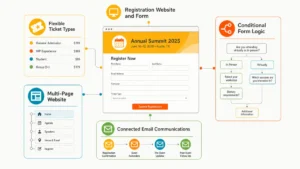
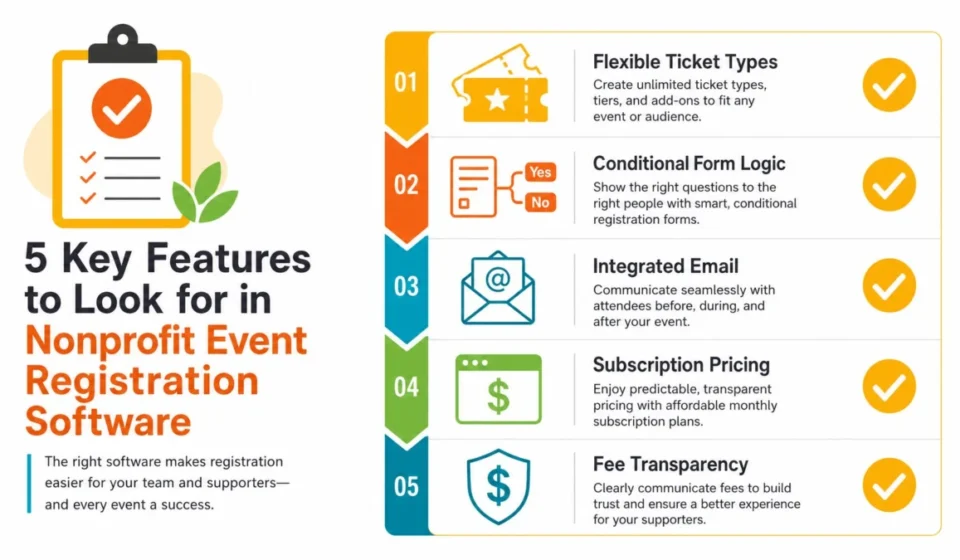
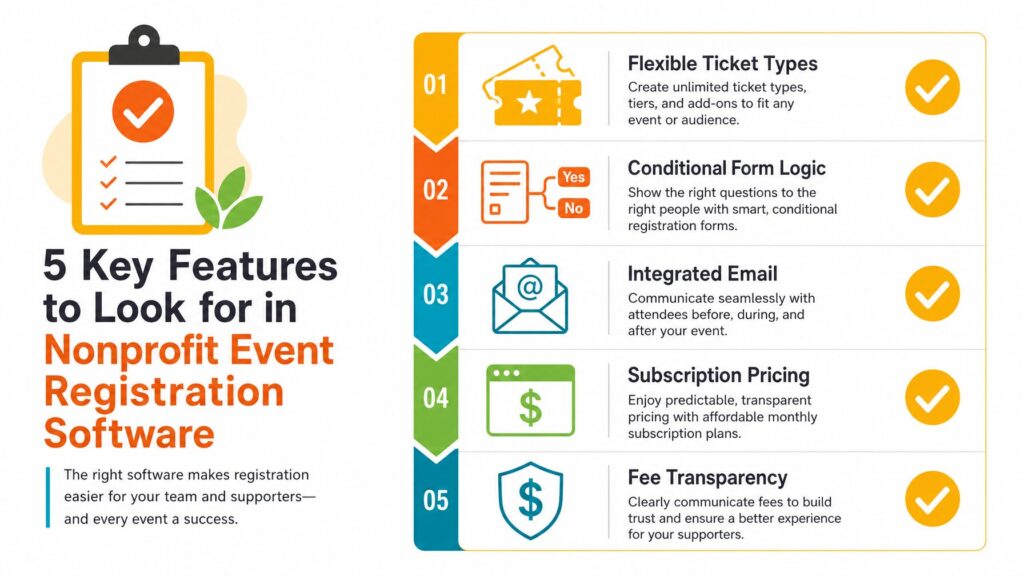
The ideal platform must support diverse ticket types within a single event framework. Look for solutions that feature promo-code-driven visibility, allowing you to hide VIP, board, or volunteer tiers from public view while keeping the registration experience centralized.
2. Custom Forms with Conditional Logic
Nonprofit registration forms need to gather specific details—such as dietary restrictions, accessibility needs, volunteer availability, and donor recognition preferences. Conditional logic ensures that form fields dynamically change based on the user’s previous selections, sparing general attendees from answering irrelevant questions while capturing deep insights from major donors and volunteers.
3. RSVP and Invitation Management
For exclusive donor cultivation events, board retreats, and private advocacy briefings, invitation-only gating is a baseline requirement. Organizers need the ability to upload curated guest lists, track responses, and prevent uninvited individuals from accessing restricted forms.
4. Integrated Email Communications
Communicating with registrants should not require exporting CSV files into a third-party email marketing tool. Integrated email systems that pull directly from registration data allow teams to effortlessly target specific segments—such as incomplete registrants, confirmed attendees, or no-shows—saving valuable staff time and minimizing human error.
5. Multi-Event Subscription Pricing
Organizations running multiple events throughout the year benefit immensely from flat-rate subscription models rather than per-event or per-ticket pricing structures. Under a subscription model, smaller community workshops or advocacy meetups can be hosted on the same platform at little to no additional cost.
6. User-Friendly Interfaces for Non-Technical Staff
Nonprofit teams often feature staff members and volunteers with varying levels of technical expertise. Drag-and-drop form builders, visual website editors, and intuitive dashboards ensure that anyone on the team can manage event logistics without relying on dedicated IT personnel.
7. AI-Powered Attendee Support
With supporters often spanning multiple time zones, lean nonprofit teams can easily become overwhelmed by pre-end inquiries. Integrating an AI registration concierge on the event website to answer visitor questions 24/7 can significantly reduce inbox volume and enhance the user experience.
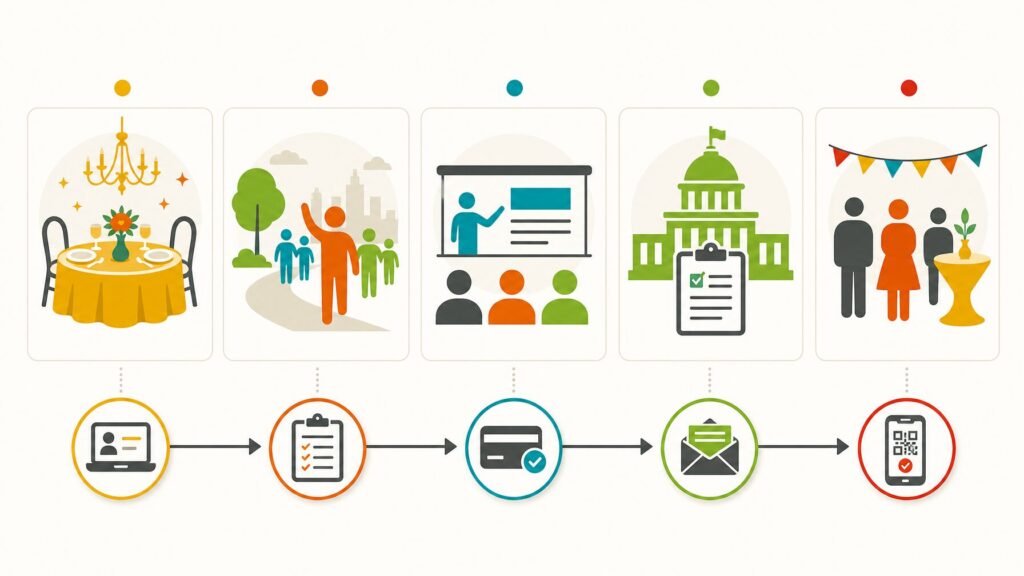
Common Nonprofit Event Registration Scenarios
To understand how these features translate into daily practice, it is helpful to examine the five most common event types managed by the nonprofit sector:
- Annual Galas and Fundraising Dinners: These flagship events demand the highest level of registration sophistication. They require multi-tiered ticket management, early bird incentives, checkout donation add-ons, volunteer coordination, and complex seating preference collection—all within a single, unified workflow.
- Awareness Walks and Community Events: Characterized by high attendance volumes and lower financial complexity, these events require robust team registration capabilities, group sign-ups, and smooth volunteer onboarding to prevent administrative bottlenecks.
- Educational Workshops and Training Seminars: These events require moderate complexity, often featuring track selections, member versus non-member pricing tiers, and custom form fields to verify professional credentials or continuing education requirements.
- Advocacy Days and Government Relations Events: Typically invite-only or member-restricted, these events demand tight access controls and custom data fields to capture complex travel and accommodation logistics.
- Donor Cultivation and Stewardship Gatherings: Intimate events for major donors and prospects that rely heavily on personalized RSVP tracking, precise guest list management, and detailed preference collection for post-event acknowledgment.
Key Questions to Ask Software Vendors
Before committing to a platform, nonprofit decision-makers should subject prospective software vendors to rigorous scrutiny by asking the following foundational questions:
- What is the total cost of ownership, including transaction fees and payment processing? Ensure you have a complete financial picture to prevent surprise fees from eating into your event proceeds.
- Does the pricing model support multiple events under a single subscription? If your organization runs several events annually, subscription models generally provide far better return on investment than per-event pricing.
- Can we manage members, donors, volunteers, and general attendees within a single form? Avoid platforms that force you to create siloed forms, which inevitably lead to messy data reconciliation issues.
- How does registration data connect to onsite tools like event apps and badge printing? For organizations hosting larger flagship events, seamless integration between online registration, mobile event apps, and onsite check-in solutions—such as EventMobi’s integrated badge printing and check-in tools—is crucial for reducing day-of chaos.
- What kind of onboarding and customer support is included? Access to responsive customer support, comprehensive knowledge bases, and structured training resources is vital for teams operating with limited internal IT support.
The Bottom Line
Nonprofit professionals are masters at doing more with significantly less. However, administrative friction should never be accepted as an inevitable cost of doing business. By investing in specialized, flexible, and cost-effective event registration software, organizations can dramatically reduce the friction of managing complex multi-audience events.
When evaluating potential platforms, leadership teams should prioritize total cost transparency, multi-event subscription value, and operational efficiency over superficial feature lists. Ultimately, the right software is the one that saves your team the most time and preserves the maximum amount of revenue for the mission that matters most.