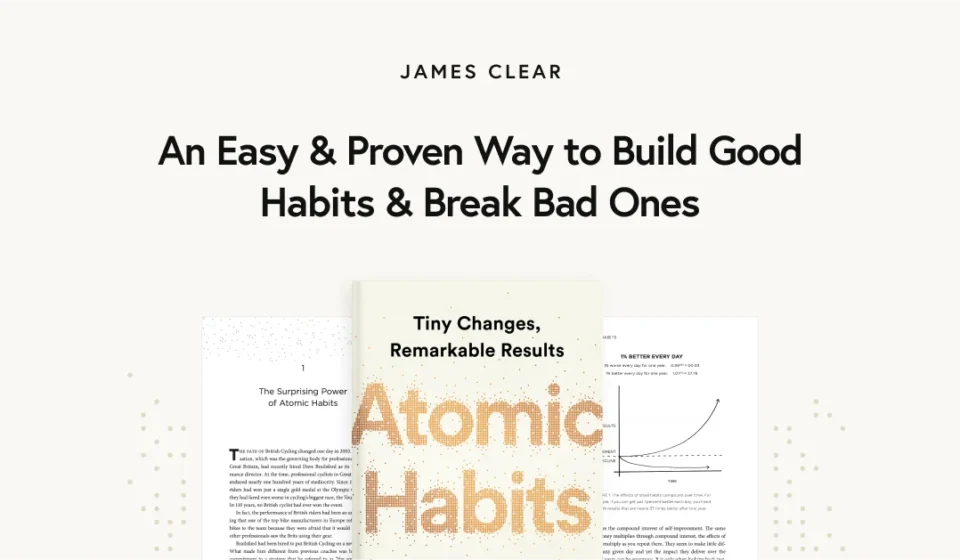
Transforming Behavior: Real-World Case Studies in the Practical Application of "Atomic Habits"

Introduction: The Anatomy of Behavior Change
In the landscape of modern self-improvement literature, few works have achieved the cultural ubiquity and sustained critical acclaim of James Clear’s Atomic Habits. While theoretical frameworks on habit formation have existed for decades within academic psychology and behavioral economics, Clear’s contribution bridged the gap between abstract academic research and actionable, daily execution.
Yet, the true test of any behavioral framework lies not in its conceptual elegance on the printed page, but in its execution within the messy, unpredictable realities of human life. How do individuals actually implement these systems when faced with fatigue, stress, professional pressures, and deeply ingrained neurological loops?
To answer this question, Clear recently turned to his readership, compiling a vast array of first-person accounts detailing how everyday people have operationalized the principles found in Atomic Habits. These "one-sentence stories"—expanded into brief case studies—illustrate the practical mechanics of building positive routines and dismantling destructive ones. Categorized across core behavioral strategies such as identity shifting, environmental design, habit stacking, and strategic substitution, these narratives offer a masterclass in applied behavioral science.
Main Facts: The Methodology of Micro-Transformations
The core thesis of Atomic Habits rests on the premise that monumental life changes are not the product of radical overhauls, but rather the cumulative effect of hundreds of small decisions or "atomic habits." Rather than focusing exclusively on macro-level goals—such as losing fifty pounds or writing a novel—Clear advocates for systems that alter identity, manipulate environmental cues, and leverage psychological friction.
When readers began applying these principles, the results varied widely in application but shared a common theoretical foundation. The submitted accounts demonstrate that sustainable behavioral transformation requires dismantling the traditional willpower-reliant approach. Instead of fighting biological impulses with sheer grit, successful practitioners redesign their surroundings, alter their linguistic framing, and systematically manipulate the cognitive triggers that precede action.
The collected stories span diverse behavioral challenges, including substance cessation, dietary modification, productivity enhancement, physical fitness, and digital detoxing. Each case study serves as a live-fire test of the book’s core tenets, proving that when the environment and identity shift, the behavior naturally follows.
Chronology: The Evolution of Reader Implementation
To understand how these habits take root, it is helpful to examine the chronological progression reported by those who successfully transformed their routines. Behavioral change rarely occurs overnight; rather, it follows a distinct temporal arc characterized by initial resistance, structural reorganization, identity adoption, and ultimate automatization.
Phase 1: Cognitive Reframing and Identity Shift
In the early stages of habit modification, individuals frequently struggle with the psychological friction of deprivation. Traditional attempts to break bad habits often rely on restrictive language: I can’t eat sugar, or I can’t smoke.
Readers who successfully altered their behavior early on began by shifting their internal dialogue to identity-based frameworks. For instance, Roland, a reader struggling with dietary choices, abandoned the goal of "stopping bad eating" in favor of adopting the identity of someone who intrinsically lives a healthy lifestyle. Similarly, Robert approached smoking cessation not as a painful sacrifice, but as a long-term investment in future well-being, shifting his internal narrative from "I can’t smoke" to "I don’t smoke."
Phase 2: Structural and Environmental Intervention
Once identity is aligned with the desired outcome, successful practitioners move quickly to restructure their physical and digital environments. This chronological phase involves introducing friction to bad habits and reducing friction for good ones.
Readers reported locking away trigger foods in cold vehicles, removing graphical processing units from gaming computers, or logging out of social media applications after every session. Conversely, individuals built positive momentum by sleeping in running gear, placing water bottles on nightstands, or automating library holds to maintain a steady stream of reading material.
Phase 3: Habit Stacking and Behavioral Anchoring
As structural changes stabilize, individuals integrate new routines into existing daily sequences—a process known as habit stacking. Chronologically, this phase leverages pre-existing "keystone" habits as anchors for emergent behaviors. David, for example, successfully integrated a 20-minute daily meditation practice directly after brushing his teeth. Others utilized linguistic exercises during mandatory daily commutes, ensuring that the new behavior piggybacked seamlessly onto an entrenched daily routine.
Phase 4: Long-Term Maintenance and Automaticity
In the final phase of the behavioral lifecycle, conscious effort gives way to subconscious automaticity. Readers who tracked their progress using visual chains or incremental adjustments reported reaching a tipping point where the new behavior required little to no cognitive overhead. Long-term sobriety, sustained physical fitness regimens, and permanent dietary overhauls were consistently reported as outcomes once the system became self-sustaining.
Supporting Data: Categorical Breakdown of Behavioral Strategies
The qualitative data extracted from reader submissions can be systematically organized into distinct behavioral categories, each reflecting specific chapters and principles from Atomic Habits.
1. Identity-Based Habits
Focusing on who you wish to become rather than what you want to achieve yields profound psychological shifts.
- Dietary Modification: Roland replaced outcome-oriented dieting ("I want to stop eating bad food") with identity-oriented philosophy ("I am someone that eats healthy").
- Smoking Cessation: Robert utilized linguistic reframing ("I don’t smoke" versus "I can’t smoke") to reframe cessation as an investment rather than a deprivation.
- Positive Reinforcement: One reader combined identity shifts with financial incentives, depositing $10 into a savings fund for non-drinking days to purchase rewarding items rather than poison.
2. Changing Cues and Environmental Design
Our surroundings dictate our actions. Manipulating physical and digital triggers is among the most reliable methods for altering behavior.
- Increasing Friction: Cyd curtailed her snacking by storing favorite snacks in a locked car parked in the cold. Chris and Daniel placed their alarm clocks and smartphones in the bathroom, forcing physical movement and eliminating the snooze-button habit. J. Money utilized an early-evening teeth-brushing routine at 8:00 PM to eliminate late-night snacking and alcohol consumption.
- Digital Minimalism: Matthew and Viet reduced mindless screen time by simply logging out of applications or deleting them entirely, weaponizing their own digital laziness against bad habits.
- Decreasing Friction: Natalie placed a laundry basket directly beside her bedroom door to eliminate the steps required to pick up stray clothes. Justin and other fitness enthusiasts selected gyms within a mile of their homes or laid out running gear the night before to ensure zero friction during morning routines.
3. Habit Stacking
Anchoring new routines to established behaviors creates a reliable scaffolding for personal growth.
- Language Acquisition: Committing to initiate a conversation with taxi drivers during daily commutes enabled one reader to achieve fluency in Mandarin over a two-year period.
- Mindfulness Integration: Anchoring meditation directly to morning dental hygiene ensured 100% compliance for daily mindfulness practice.
4. Habit Substitution
Rather than attempting to eliminate a bad habit entirely through willpower, replacing the routine with a healthier alternative often proves vastly more effective.
- Cravings and Exercise: One reader placed a weight bench in their backyard smoking area, replacing nicotine cravings with physical repetitions.
- Gradual Stair-Step Reduction: Marc and Mark successfully curtailed heavy beer consumption by systematically substituting beverages over several months—transitioning from beer to fruit juice, iced tea, and finally sparkling water—before eliminating cravings entirely.
Official Responses and Psychological Validation
Behavioral psychologists and habit researchers have long validated the underlying mechanisms highlighted in these case studies. Academic consensus supports the view that human environments are vastly more powerful than internal motivation when predicting long-term behavioral outcomes.
Dr. B.J. Fogg of Stanford University, whose work pioneered the concept of behavioral anchoring (habit stacking), has consistently emphasized that people change best by feeling successful rather than by pushing themselves through sheer exhaustion of willpower. The reader testimonials mirror Fogg’s behavior model ($B = MAP$: Behavior = Motivation + Ability + Prompt), proving that when ability is maximized by reducing friction and prompts are clearly engineered, human behavior shifts predictably.
Furthermore, clinical specialists in addiction and habit formation note that substitution strategies—such as replacing smoking with a small candy bar or replacing substance abuse with powerlifting—capitalize on the brain’s existing neural loops. The routine changes, but the underlying craving loop is satisfied in a healthier manner.
Implications: Lessons for Personal and Professional Development
The cumulative weight of these real-world examples offers profound implications for anyone seeking personal transformation, professional productivity, or organizational change.
The Fallacy of Goal-Centric Thinking
Traditional culture places an overwhelming emphasis on goal-setting. We establish revenue targets, weight-loss goals, and career milestones. However, as these case studies demonstrate, achieving a goal only momentarily changes your life. If you achieve your goal but retain the identity and systems that created your old habits, you inevitably slide back into familiar patterns. Real change is system-centric, not goal-centric.
The Power of Design Over Discipline
Perhaps the most empowering takeaway from these accounts is that failure to maintain a habit is rarely a moral failing; it is almost always a design flaw. When readers struggled with bad habits, willpower alone rarely saved them. Success was achieved only when they altered their architecture—locking away snacks, removing graphic cards from computers, placing laundry baskets within arm’s reach, or forcing themselves to walk to the bathroom to disable an alarm.
By designing environments that make good choices inevitable and bad choices inconvenient, individuals can bypass the exhausting cycle of daily decision fatigue.
Conclusion
Ultimately, the journey of habit formation is an accumulation of marginal gains. As these diverse narratives illustrate, no transformation is too small to matter, and no bad habit is too entrenched to dismantle when approached with the right systems. By focusing on identity, redesigning cues, stacking routines, and embracing micro-habits, everyday individuals have proven that sustainable self-improvement is not reserved for the uniquely gifted—it is a practical science accessible to anyone willing to adjust their environment one small brick at a time.