Navigating the Complex Ecosystem of Educational Event Registration: Why Generic Software Falls Short

As the demand for specialized, workforce-aligned learning surges across universities, academic societies, school districts, and certification bodies, event planners are facing a silent operational crisis. According to the UPCEA State of Continuing Education 2025 report, institutions are increasingly prioritizing lifelong learning, corporate training, and employer partnerships. However, the software traditionally used to manage event registration—designed primarily for simple corporate webinars, product launches, or music festivals—is buckling under the immense operational weight of the academic and professional development sectors.
Educational event registration is not merely a matter of collecting names and credit card details. It is an intricate ecosystem involving tiered pricing structures, continuing education (CE) credits, abstract submissions, multi-track agendas, and international audiences. When institutions attempt to wedge these complex requirements into generic event registration tools, the result is administrative friction, fragmented data, and frustrated attendees.
The Anatomy of a Modern Educational Event
To understand why specialized registration infrastructure is mandatory, one must first look at the sheer breadth of events coordinated by modern educational institutions.
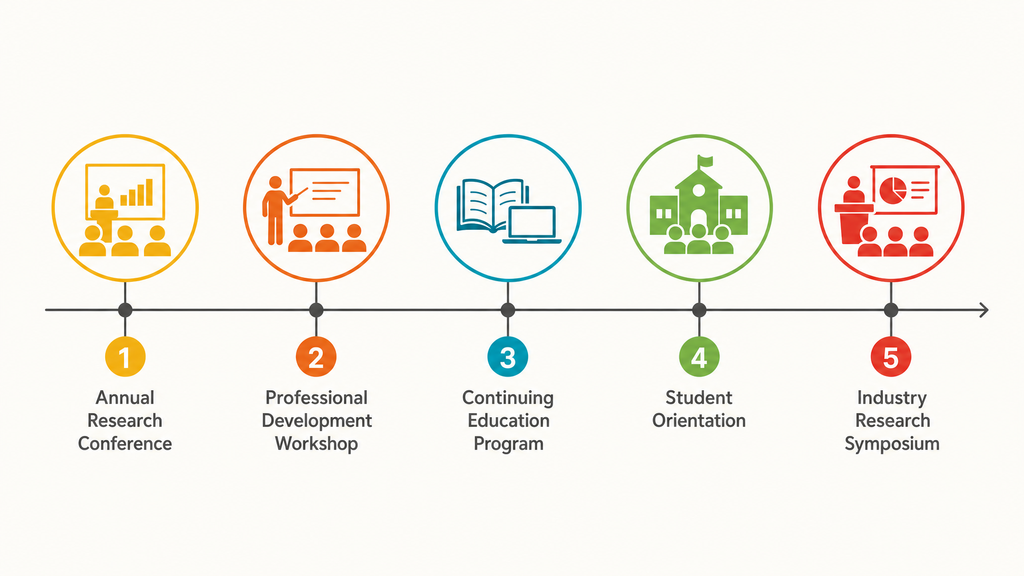
A single continuing education department might run professional development workshops on Tuesday, coordinate a multi-day certification training program over the weekend, and support an annual academic research conference next month. School districts manage leadership summits with unique stakeholder gating, while professional certification bodies track granular compliance credits for licensed practitioners.

Each of these formats demands a distinct set of workflows. Yet, administrative teams are frequently forced to stitch together disparate systems—using one tool for website building, another for abstract collection, a third for payments, and a spreadsheet for credential tracking. This fragmented approach not only drains valuable staff hours but also introduces critical data security and reconciliation vulnerabilities.
Chronology of the Shift: From Spreadsheets to Intelligent Platforms
Phase 1: The Manual Era
Historically, educational event planning relied on paper forms, manual bank transfers, and sprawling Microsoft Excel spreadsheets. While functional for small localized workshops, this model collapsed as institutions scaled their continuing education programs to meet remote and hybrid learning demands.
Phase 2: The Generic Software Patch
As online event tools emerged in the 2010s, academic institutions adopted generic SaaS event registration platforms. While these tools solved the basic problem of online ticket sales, they lacked the architectural depth required for academia. Planners found themselves unable to effectively gate student discounts, track session-level continuing education units (CEUs), or handle parallel registration workflows for speakers and general attendees.
Phase 3: The Rise of Specialized Ecosystems (Present Day)
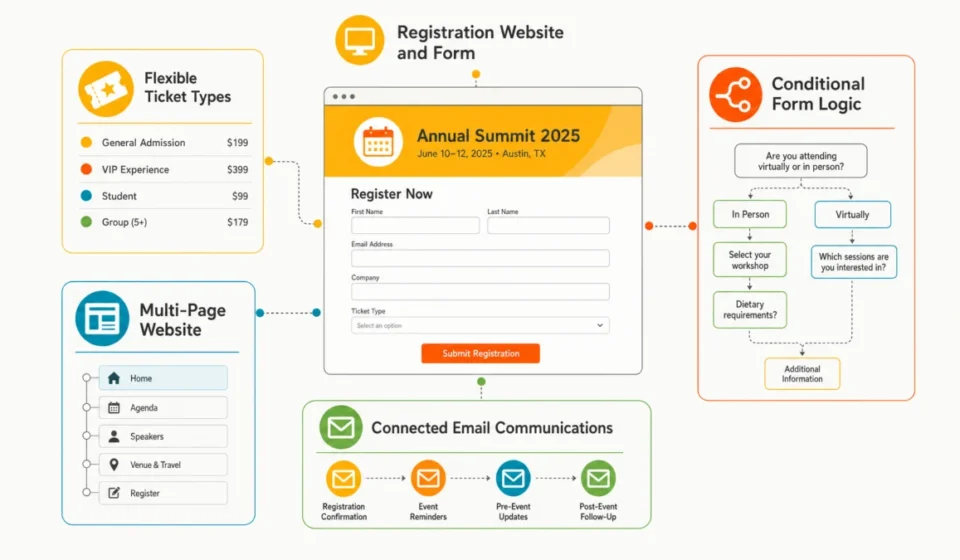
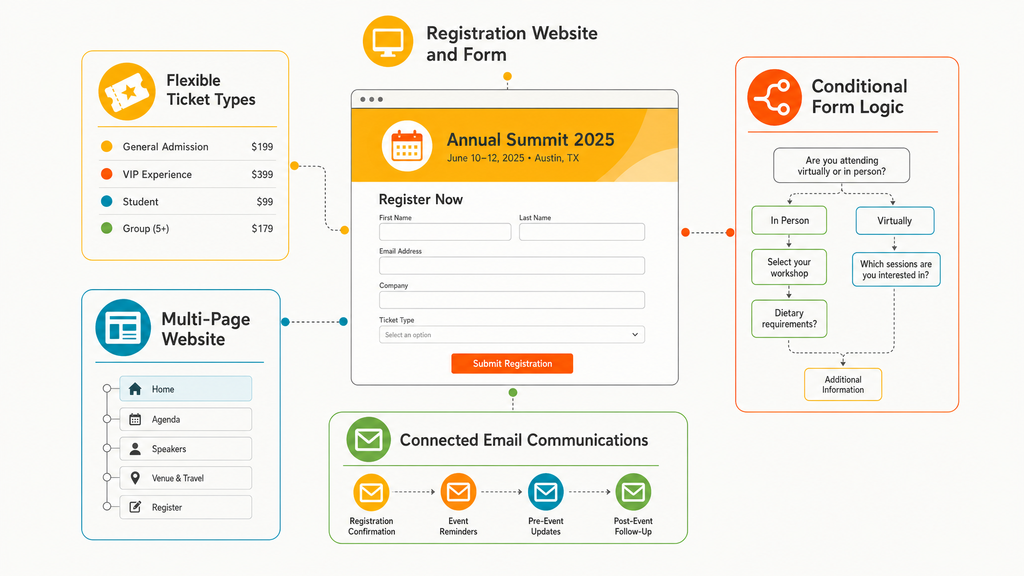
Today, the industry is transitioning toward purpose-built, highly configurable event management ecosystems. Advanced platforms now integrate multi-page website builders, conditional form logic, AI-driven international concierges, and direct data pipelines into onsite badge printing and mobile event apps.
Supporting Data & Core Challenges Faced by Educational Planners
The friction points of educational event management are well-documented by industry analysts. Data indicates that academic and non-profit event planners routinely struggle with several core structural challenges:
1. Multi-Tiered Attendee Categories and Hidden Pricing
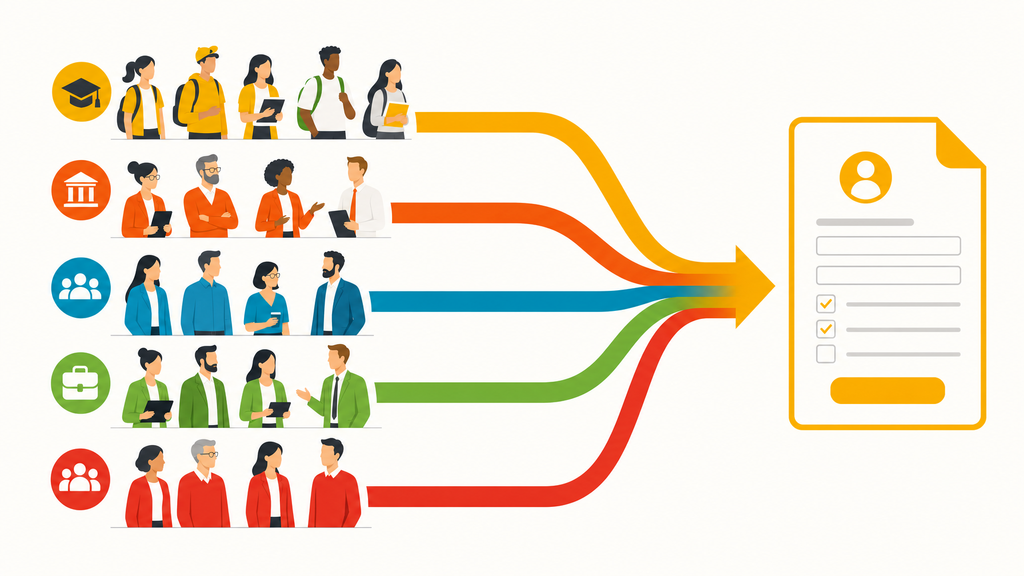
Educational events rarely feature a flat fee structure. A single conference may cater to undergraduate students, graduate researchers, tenured faculty, external industry partners, and alumni—each with unique pricing tiers, access rights, and data requirements. Without flexible ticket types and hidden access codes, institutions are forced to choose between publishing confusing public pricing tables or maintaining entirely separate, siloed registration portals.
2. Session-Level Credential and Credit Tracking
For continuing education units (CEUs), professional development units (PDUs), and industry-specific certifications, high-level event attendance is insufficient. Planners must capture precise session-level data. Attendees need the ability to select specific workshops and breakout tracks during registration, feeding structured data directly into post-event compliance reporting and certification issuance.
3. Parallel Workflows: Presenters vs. General Attendees
Academic conferences require a dual-track registration process. Presenting authors and keynote speakers operate under completely different deadlines, fee structures, and submission requirements compared to standard attendees. Managing abstract submissions alongside general ticket sales within a single platform is critical to eliminating administrative overhead.
4. Dense, Multi-Track Agendas and Website Conversion
Unlike corporate product reveals, academic gatherings are content-heavy. Attendees routinely scrutinize multi-day schedules, speaker credentials, and parallel breakout tracks before committing their time or institutional budgets. Consequently, a robust, multi-page event website with dedicated agenda and speaker subpages acts as the primary driver of registration conversion.
Official Insights: What Software Features Matter Most?
Industry experts and institutional technology directors evaluating software vendors emphasize specific, non-negotiable capabilities. Leading platforms—such as EventMobi’s Event Registration Software—have evolved to address these exact pain points through targeted technological features:
- Conditional Form Logic: Using if/then rules, a single registration form dynamically adapts to the user. A student sees student-specific funding questions, while a faculty member or industry guest encounters tailored professional fields, eliminating form bloat.
- Access Codes for Gated Tiers: Sensitive pricing structures (such as complimentary faculty passes or heavily discounted student tickets) are kept hidden from the public eye, unlocked only when an authorized access code is entered.
- AI-Powered Multilingual Concierges: To serve international research communities, tools like EventMobi’s MobiAI Reg Concierge detect a visitor’s native language and provide real-time assistance during the registration process, removing friction for global participants without requiring a fully translated website.
- Connected Onsite Tools and Event Apps: By ensuring that registration data flows natively into mobile event apps, badge printing stations, and check-in kiosks, institutions eliminate the error-prone data reconciliation phase common in large-scale academic conventions.
Implications for Institutions: Efficiency vs. Administrative Burnout
The choice of registration software carries profound implications for the operational health of educational institutions.
When organizations rely on rigid, generic software, administrative teams spend weeks manually validating credentials, cross-referencing spreadsheet rows, and answering repetitive logistical emails from international attendees. This administrative drag diverts precious institutional resources away from core educational and research missions.
Conversely, deploying a specialized, end-to-end event management platform transforms the participant journey. Attendees enjoy a streamlined, highly professional registration experience that respects their specific academic or professional identity. Meanwhile, event organizers benefit from clean, structured data exports, automated email communications powered by real-time registration segments, and seamless onsite execution.
Key Questions to Ask When Evaluating Platforms
Before committing to an event technology vendor, institutional procurement teams should demand live demonstrations of real-world academic scenarios. Critical questions to pose to software vendors include:
- Can your platform handle session-level data collection for continuing education (CEU/PDU) tracking during the initial registration flow?
- How does your form builder handle conditional logic to serve multiple distinct audiences (students, faculty, industry partners) within a single registration portal?
- Is abstract submission and speaker management integrated natively, or does it require a third-party plugin?
- How easily do registration tiers integrate with hidden access codes for institutional members?
- Does attendee data flow automatically into our mobile event app and onsite badge-printing hardware without manual CSV exports?
The Bottom Line
Educational event registration is inherently complex. It demands a sophisticated blend of audience segmentation, credential tracking, content-heavy web presentation, and secure data management. By prioritizing platforms purpose-built to handle these multi-layered realities, universities, academic societies, and training bodies can eliminate administrative friction, elevate the attendee experience, and refocus their energy where it belongs: on education and knowledge sharing.
To explore how specialized registration tools can transform your next academic conference or professional development program, visit EventMobi’s Event Registration Software or book a personalized demo.