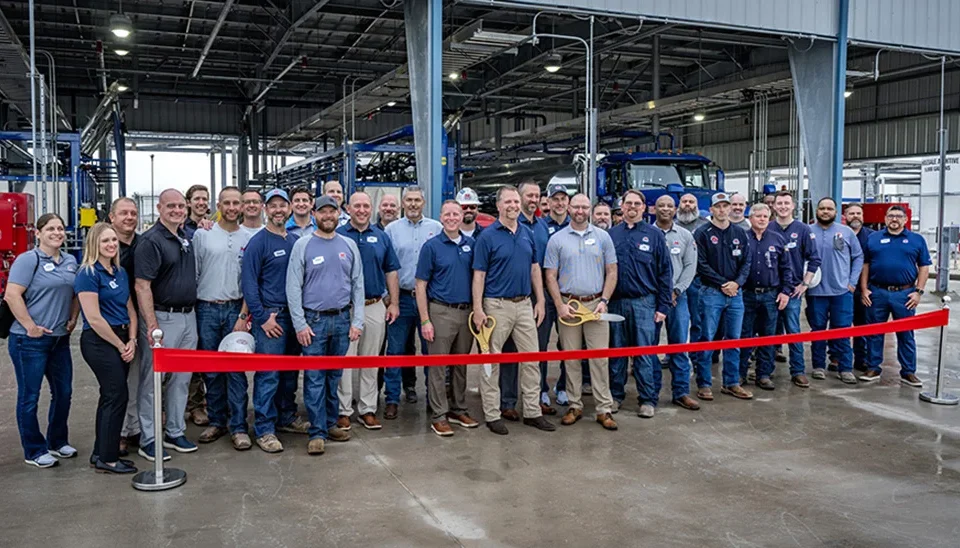
Marathon Petroleum and MPLX Bolster Gulf Coast Infrastructure with Strategic Pasadena Terminal Expansion

In a significant move to address surging energy demands in the greater Houston region, Marathon Petroleum Corporation (MPC) and its midstream partner, MPLX, have officially inaugurated a new light products truck terminal in Pasadena, Texas. This facility represents a major milestone for the company, marking its first newly constructed truck terminal in three decades. By repurposing a legacy bulk storage site into a modern distribution hub, Marathon is optimizing its logistics chain to streamline the delivery of gasoline and diesel produced at its sprawling Galveston Bay refinery.
The Strategic Necessity: Addressing Regional Market Dynamics
The decision to break ground on the Pasadena project in 2023 was driven by a clear assessment of market indicators. As the Houston metropolitan area continues to experience rapid population growth and industrial expansion, the demand for refined petroleum products has spiked.
Historically, the Pasadena site served primarily as a bulk storage location, housing existing tankage that had become underutilized in the modern era. Recognizing the potential of this company-owned property, MPC and MPLX leadership initiated a comprehensive conversion strategy. By leveraging the site’s existing footprint while integrating state-of-the-art loading technology, the companies have created a highly efficient bridge between the Galveston Bay refinery—one of the largest in the United States—and the retail and commercial end-users in the region.
Chronology of Development and Engineering Challenges
The transformation of the Pasadena site was far from a simple retrofit. It required a multi-disciplinary approach to navigate complex environmental and logistical constraints.
The Planning Phase (2023)
The project lifecycle began in early 2023 with a rigorous evaluation of the site’s infrastructure. Engineers assessed the integrity of existing storage tanks, determining which components could be refurbished and which needed to be retired. The primary objective was to install a robust loading rack capable of servicing high volumes of transport trucks daily.
Engineering Hurdles: The "Soil" Challenge
Perhaps the most significant technical hurdle involved site development. As MPLX Major Projects Engineering Manager Scott Karhoff noted, the property’s geography necessitated extensive civil engineering work. "To accommodate adequate stormwater management, detention ponds had to be built on the property," Karhoff explained.
Due to the area’s high water tables, the construction team faced a literal uphill battle. To ensure the long-term stability of the loading racks and the safety of the pond infrastructure, the entire property had to be elevated by four to six feet of imported soil. This massive earth-moving operation was foundational to the terminal’s ability to operate safely during extreme weather events, which are a persistent consideration for Gulf Coast infrastructure.
Construction and Integration
Following the site preparation, the focus shifted to the installation of critical piping, electrical systems, and the construction of four high-speed loading lanes. Additionally, an off-loading lane was dedicated specifically to ethanol and other essential fuel additives, ensuring that the terminal could handle complex blending requirements on-site.
Future-Proofing: Expansion Plans for 2027
A hallmark of the Pasadena terminal is its forward-looking design. Rather than building for current capacity alone, MPC and MPLX designed the terminal to be modular. Ryan Stobbs, MPLX Asset Development Senior Director, highlighted that the scope of the project was revised during the construction phase to account for accelerating market demand.
"Once the initial build-out of the facility was authorized, the scope had already expanded from three to four loading lanes," Stobbs noted. The company’s long-term strategy is already in motion; significant market data has confirmed the necessity of further growth. Consequently, Marathon has finalized plans for a secondary expansion that will add a fifth and sixth loading lane by 2027, ensuring the facility remains a cornerstone of the regional fuel supply chain for years to come.
Safety Excellence: The Garyville Refinery Benchmark
While the Pasadena terminal represents the future of Marathon’s distribution network, the company continues to bolster its reputation for operational excellence at its refining heart. Just weeks before the Pasadena announcement, Marathon’s Garyville, Louisiana refinery achieved a historic milestone, receiving recertification as a Voluntary Protection Programs (VPP) Star site by the Occupational Safety and Health Administration (OSHA).
A Legacy of Safety
The Garyville refinery’s relationship with VPP is historic. The facility began collaborating with OSHA in the 1980s as the program was being drafted, eventually becoming the first refinery in Louisiana to earn the prestigious VPP Star status. Holding this designation continuously since 1994, Garyville now stands as one of the longest-running VPP Star sites in the entire country.
VPP Star recognition is not easily attained; it is reserved for workplaces that demonstrate comprehensive safety and health management systems. It requires a tangible commitment from both the shop floor and the boardroom.
The Evaluation Process
The 2024 recertification process was exhaustive. It involved:
- Employee Interviews: Dozens of personnel, from contractors to long-term employees, were interviewed to assess the reality of the refinery’s safety culture.
- Refinery Tours: Inspectors conducted deep-dive walkthroughs of the facility to ensure mechanical integrity and procedural compliance.
- Program Audit: A thorough review of safety documentation and historical incident data.
The outcome was a resounding endorsement of Marathon’s safety culture: the evaluation concluded with zero findings or corrective actions required. Holly Jackson, Vice President of Refining at Garyville, credited the workforce for this achievement. "Maintaining VPP Star status for 32 consecutive years reflects the dedication of every employee and contractor who works safely, looks out for one another, and continuously seeks opportunities to improve," she said.
Implications for the Energy Market
The synergy between the operational safety at refineries like Garyville and the logistical efficiency of terminals like the new Pasadena site defines Marathon’s current trajectory. By investing in the "midstream" link—the truck terminals and pipelines that bridge the gap between crude processing and the gas pump—Marathon is effectively insulating its supply chain against local disruptions.
Economic Impact
For the Houston market, the Pasadena terminal serves as a vital economic artery. Reliable access to gasoline and diesel is a prerequisite for the region’s massive logistics, manufacturing, and transport sectors. By reducing the distance that trucks must travel to access refined products, the terminal also contributes to lower transportation costs and reduced carbon emissions associated with long-haul fuel distribution.
Operational Resilience
The emphasis on "future-proofing" the Pasadena site reflects a broader trend in the energy sector: the shift toward flexible, scalable infrastructure. As energy markets transition and demand patterns shift, the ability to expand capacity quickly—as evidenced by the planned 2027 expansion—will be a key differentiator for industry leaders.
Conclusion
The inauguration of the Pasadena terminal is more than just a capital expenditure; it is a strategic alignment of assets designed to meet the realities of 21st-century energy consumption. By transforming an underutilized storage site into a high-capacity distribution hub, MPLX and Marathon have demonstrated an ability to innovate within the confines of existing infrastructure.
Simultaneously, the continued recognition of the Garyville refinery serves as a reminder that this growth is built upon a foundation of safety and operational discipline. As Marathon Petroleum continues to expand its reach in the Gulf Coast, the combination of technological investment and a culture of safety provides a robust blueprint for sustainable growth in the energy sector. With the 2027 expansion already on the horizon, the Pasadena terminal is poised to remain a vital engine of the Texas economy for decades to come.