
A Slice of Cinematic History: Madonna and Guy Ritchie’s Former South Kensington Mews Home Hits the Rental Market

In the annals of London’s architectural history, few thoroughfares possess the charm and cinematic pedigree of Queen’s Gate Mews. Tucked away in the affluent enclave of South Kensington, this cobbled street has long served as a backdrop for high-stakes drama and cultural intrigue. Now, a residence that once served as a sanctuary for one of the world’s most high-profile power couples—Madonna and Guy Ritchie—has entered the rental market, offering a rare opportunity to reside within a property that is as much a piece of pop-culture memorabilia as it is an architectural gem.
Main Facts: The Intersection of Celebrity and Design
The property, a 1,540-square-foot residence, was once the London base for the Queen of Pop and the British film director during the formative years of their marriage. While the couple eventually parted ways, the home remains a testament to their combined aesthetic influence.

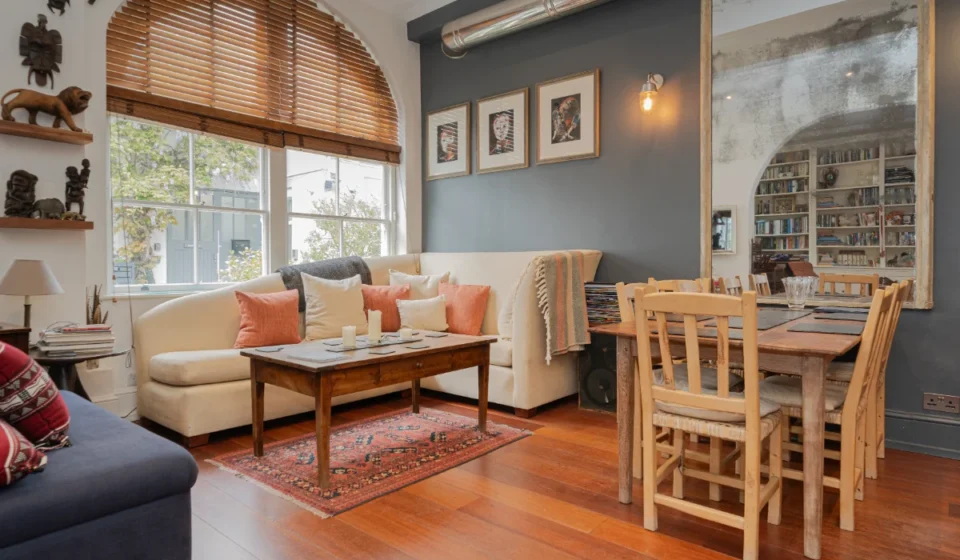
Behind an unassuming, whitewashed brick exterior that belies the grandeur within, the two-story home is a masterclass in balancing 19th-century structural integrity with 21st-century eclectic design. The residence is anchored by a spacious, open-plan main living area that utilizes dark timber flooring and industrial-inspired exposed piping to create a "cool, understated aesthetic." This vibe, famously captured in Matthew Vaughn’s 2004 crime thriller Layer Cake—which featured the home—perfectly encapsulates the gritty yet refined London energy that defined the early 2000s.
Perhaps the most compelling feature for cinephiles is the kitchen. Reputedly designed by Guy Ritchie himself, the space features a high-end stainless-steel finish, a professional-grade Falcon range, and a sophisticated stone backsplash, reflecting the director’s penchant for sharp, functional, and stylish environments.

A Chronological Journey: From Stables to Stardom
The history of Queen’s Gate Mews is rooted in the mid-Victorian era. Built in the early 1860s by developer William Jackson, the structures were originally intended to serve as coach houses and stables for the grander townhouses of the Queen’s Gate area. As the 20th century progressed, the utility of these buildings shifted, and they were gradually converted into some of London’s most desirable, tucked-away residential properties.
The Mews has a storied resilience. During the Blitz of World War II, the street sustained a direct bomb strike, yet like much of London’s architecture, it was painstakingly restored. By the latter half of the 20th century, its aesthetic—charming, secluded, and quintessentially British—caught the eye of the film industry. The street served as a primary location for the 1970 cult classic Performance, starring Mick Jagger, and later provided the backdrop for the 2008 heist film The Bank Job.

When Madonna and Guy Ritchie purchased the home at the turn of the millennium, they were effectively embedding themselves into a lineage of British creative history. During their ownership, the home became a hub for the couple’s social and professional circles. It was during this period that the home’s interior identity was forged—a blend of Victorian masonry and the edgy, masculine minimalism that Ritchie brought to his film sets.
Architectural and Interior Specifications
The layout of the residence is designed to maximize flow and utility. On the ground level, alongside the bespoke kitchen, the home features a dedicated library nook, a formal dining area, and a guest bathroom. The transition from the public-facing ground floor to the private upstairs quarters is seamless.

The upper level contains two bedrooms and a dedicated home office, a necessity for modern tenants. The primary suite is a standout, characterized by its abundance of natural light and a Juliet balcony that overlooks the historic cobbled street below. The main bathroom serves as a bridge between eras; it incorporates an original brick archway—a nod to the home’s 19th-century origins—contrasted against luxurious Carrara marble finishes and a deep, freestanding soaking tub. Furthermore, the installation of air conditioning throughout the upper level ensures that the historic home meets the rigorous comfort standards of today’s luxury rental market.
Supporting Data: Market Context and Location
The rental of such a property is not merely a transaction; it is a reflection of the enduring demand for "trophy" rental properties in London’s Royal Borough of Kensington and Chelsea. Listed through the agency Dexters, the property commands a weekly rent of £2,075, totaling approximately £12,100 per month.

For the prospective tenant, the location is as significant as the square footage. Situated within walking distance of some of the capital’s most prestigious institutions—including the Victoria and Albert Museum, the Royal Albert Hall, and the vast greenery of Hyde Park—the property offers an unparalleled lifestyle. Access to the South Kensington Underground station provides immediate connectivity to the rest of the city, yet the Mews remains a quiet, protected pocket of tranquility, shielded from the roar of central London traffic.
Official Perspectives and Real Estate Portfolio Context
While Madonna has long since moved on from this specific property, her relationship with global real estate remains a subject of intense public fascination. Her portfolio is expansive, spanning decades and continents. From the Georgian townhouse she acquired in Marylebone in 2007 to her multi-property holdings in Manhattan, the Hamptons, and Los Angeles, the star has proven to be a savvy investor. Her purchase and eventual renovation of an 18th-century mansion in Sintra, Portugal, further underscores a penchant for properties that possess deep historical resonance.

The current listing of the Queen’s Gate Mews house serves as a reminder that celebrity homes often follow a cycle. Once they are vacated, they become part of the high-end rental market, allowing the public—or at least the affluent professional class—to inhabit the same spaces that once hosted the creative architects of pop culture.
Implications: The "Celebrity Provenance" Premium
What are the implications of renting a home with such a distinct history? In the world of luxury real estate, "celebrity provenance" acts as a unique selling point. It elevates a property from a simple residential asset to a narrative experience. Tenants are not just paying for marble bathrooms and a prime South Kensington address; they are paying for the cachet of the address itself.

For the owner, this history is an insurance policy against depreciation. As long as the property retains its structural integrity and its association with cultural icons like Madonna and Ritchie, it will remain a "coveted" residence. The use of the home in Layer Cake further deepens this connection, ensuring that the property has an afterlife in the collective consciousness of film fans.
As the London rental market continues to tighten, properties like this represent the intersection of exclusivity and history. They are rare, they are refined, and they offer a glimpse into a lifestyle that few will ever experience firsthand. Whether the next occupant is an admirer of Madonna’s musical legacy or a fan of Guy Ritchie’s gritty cinematic style, the Queen’s Gate Mews home stands ready to continue its long tradition of housing those who move the needle of culture.

For those looking to secure a tenancy, the listing with Dexters offers more than just a home—it offers a chance to live in a setting where history, art, and modern luxury converge on a quiet, cobblestone street in the heart of London.