Beyond the Disco: How HOP Shops is Revolutionizing Convenience with AI-Driven Retail

In the fast-paced world of convenience retail, the battle for the customer’s time is constant. Retailers are increasingly tasked with balancing the need for rapid, frictionless transactions with the desire to maintain the personalized "neighborhood" feel that defines the industry. HOP Shops, a Kentucky-based chain celebrating its 60th anniversary this year, is proving that these two goals are not mutually exclusive. By pairing cutting-edge AI checkout technology with its already legendary, quirky brand identity, the company is positioning itself as a leader in the next generation of convenience retail.
Main Facts: The Integration of AI and Cash Automation
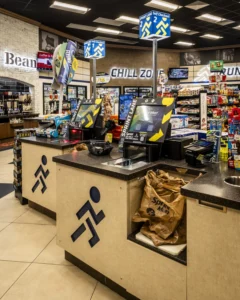
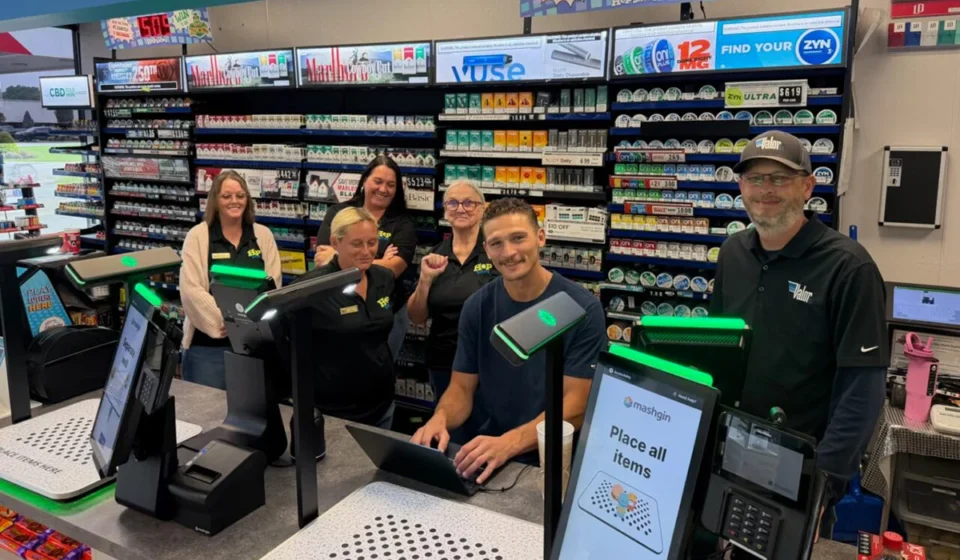
HOP Shops has officially announced the rollout of Mashgin’s AI-assisted checkout technology across its point-of-sale (POS) strategy. This implementation is not a standalone effort; it is seamlessly integrated with Glory’s sophisticated cash automation technology.
The core of this new system is simplicity. Customers can place their items—whether they are grab-and-go snacks, beverages, or other convenience essentials—onto a scanning tray. The Mashgin system utilizes advanced computer vision to instantly identify the items, tally the total, and facilitate payment via card or cash in a matter of seconds.
By automating the identification and transaction process, HOP Shops is removing the primary bottlenecks at the register. The objective is clear: to deliver an innovative solution that makes the entire in-store experience faster, easier, and more efficient. For a customer base that values speed—"get in, get what they need, and get back on the road"—this technology serves as a direct response to modern consumer demands.
A Legacy of Growth: The Chronology of HOP Shops
To understand where HOP Shops is going, it is essential to look at where it has been. Founded in 1966, the company has spent six decades building a reputation as a community staple. Now under the leadership of Josh Emmick, a third-generation member of the founding family, the company has successfully navigated the shift from traditional fuel-and-snack stops to modern, tech-forward convenience hubs.
The Evolution of the Chain
- 1966: HOP Shops is established, setting the foundation for decades of service.
- 2018: A pivotal year for the company, as Valor Oil acquired its first set of eight convenience stores in the Florence, Ky., area from Harper Oil. This acquisition served as the catalyst for a new era of aggressive expansion and operational modernization.
- Present Day: The chain has grown to 15 sites, including three full-service truck stops. This growth has been marked by a willingness to experiment, moving from standard retail operations to the adoption of high-tech and high-entertainment concepts.
The current leadership team, including Damon Bail, Vice President of Retail Operations and Marketing for Valor Oil and HOP Shops, has been instrumental in blending the company’s long-standing values with a forward-thinking, "early adopter" mindset.
Official Perspectives: Technology as an Empathetic Tool
The decision to invest in Mashgin and Glory was not made lightly. According to the company, it reflects a deep commitment to maintaining the "human" element of retail. There is a prevailing fear in the industry that automation leads to the erosion of customer service, but Damon Bail argues the opposite.
"We were looking to creatively solve competing priorities through technology, which led us to become an early adopter of Mashgin, the world’s fastest AI-assisted checkout system," Bail said. "I have a deep love for Mashgin and what it has done for our business. It allows us to serve customers faster while giving our team members more opportunities to focus on the customer experience beyond the register."
For Bail, the goal is to liberate staff from the repetitive nature of scanning barcodes, allowing them to engage in meaningful interactions with customers or focus on store aesthetics and cleanliness.
"At HOP Shops, innovation isn’t about replacing the personal side of convenience retail—it’s about using technology to make the experience better for both our customers and our employees," Bail added. This sentiment underscores a philosophical shift in retail: technology is no longer a replacement for the worker; it is a tool to elevate the worker’s role.
Supporting Data and The "Disco" Phenomenon
While the deployment of AI checkout is a serious operational investment, HOP Shops has garnered significant national attention for a much more whimsical endeavor: the "Disco Bathroom."
Approximately three years ago, under the direction of Bail, the chain introduced a concept that turned a standard, utilitarian space into an experiential marketing powerhouse. In six of their 15 locations, customers encounter a mysterious, ominous red button above a sign that reads, "Whatever you do, don’t push the button."
The "Hopper"—the chain’s mischievous frog mascot—peers down from the signage, goading the customer. When the inevitable occurs and a customer pushes the button, the bathroom transforms: the lights dim, a 224-inch diameter disco ball activates, and high-energy music begins to play.
The Power of Viral Engagement
This experiment in "experiential retail" did not rely on traditional advertising. Instead, it relied on the organic power of social media.
- Influencer Impact: When influencers began posting videos of the "Disco Bathrooms" on TikTok and Instagram, the story caught fire.
- National Exposure: The trend eventually crossed over into mainstream media, with segments appearing on The Tonight Show Starring Jimmy Fallon, The Late Show with Stephen Colbert, Late Night with Seth Meyers, and Inside Edition.
- Community Connection: The feature has become a destination for families, with parents bringing their children to record social media content, effectively turning a simple bathroom break into a core memory.
The engagement level reached a zenith when a store employee opted to hold her wedding ceremony in the disco bathroom. With the store closed to the public, the bride processed down the fountain machine aisle, and Regional Manager David Biery, an ordained minister, officiated the ceremony under the rotating lights of the disco ball.
Implications: The Future of Convenience Retail
The dual approach of high-tech checkout and high-engagement entertainment positions HOP Shops as a uniquely resilient brand. The implications of these strategies are significant for the broader retail industry.
Efficiency Meets Experience
The integration of Mashgin’s AI and Glory’s cash automation represents the "Efficiency" side of the equation. As labor costs rise and the difficulty of hiring increases, businesses that can automate the "transactional" aspects of retail will be the ones that survive. By removing friction, HOP Shops is optimizing its throughput, ensuring that the customer who wants to get back on the road is never kept waiting.
The "Third Place" Concept
Simultaneously, the "Disco Bathroom" and other initiatives represent the "Experience" side of the equation. In an era of e-commerce, physical retail stores must provide a reason to visit that goes beyond mere utility. By injecting humor, surprise, and community-building elements into the store, HOP Shops has turned its physical locations into "destinations."
The combination of these two strategies creates a powerful value proposition:
- Operational Excellence: Reduced wait times and increased throughput through AI.
- Brand Differentiation: A viral, memorable brand identity that encourages social sharing and organic growth.
- Employee Retention: Shifting staff roles from "checkout clerks" to "customer experience coordinators."
Conclusion: A Blueprint for the Next 60 Years
As HOP Shops moves past its 60th anniversary, it stands as a case study in how a legacy business can adapt to the digital age. It does not fear the march of technology; it embraces it, but it does so without losing the personality that made it a staple in the first place.
Whether it is through the lightning-fast precision of an AI-assisted checkout or the sudden burst of music and light from a disco ball in a restroom, HOP Shops is demonstrating that convenience retail is not a dying sector—it is a transforming one. By focusing on the intersection of human connection and technological efficiency, the company is not just keeping up with the industry; it is setting the pace for the next generation of convenience. As Josh Emmick leads the company into the future, the message is clear: at HOP Shops, you will get what you need, you will get it fast, and you will almost certainly have a story to tell when you leave.