Beyond the Feed: How Strategic Social Intelligence Drives Enterprise-Wide Growth

In the modern digital landscape, social media management has transcended the role of simple community engagement. It is no longer just about publishing posts or chasing “likes”; it has evolved into a sophisticated engine for business intelligence. However, despite this evolution, many organizations continue to treat social media as a siloed marketing expense rather than a core strategic asset.
For social media teams, the challenge is twofold: they must execute high-level digital strategies while simultaneously justifying the financial and human capital investment required to sustain them. To move the needle, marketers must master the art of translating social performance into the language of the boardroom. By linking social wins to broader business metrics, teams can transform their social presence into a strategy-defining framework that powers long-term corporate growth.
The Main Facts: The New Mandate for Social Teams
Effective social media management requires significant investment. Beyond the costs of content creation and community management, businesses must account for the time and tools necessary to maintain a dedicated team. For these teams to thrive, they require consistent support from executive leadership.
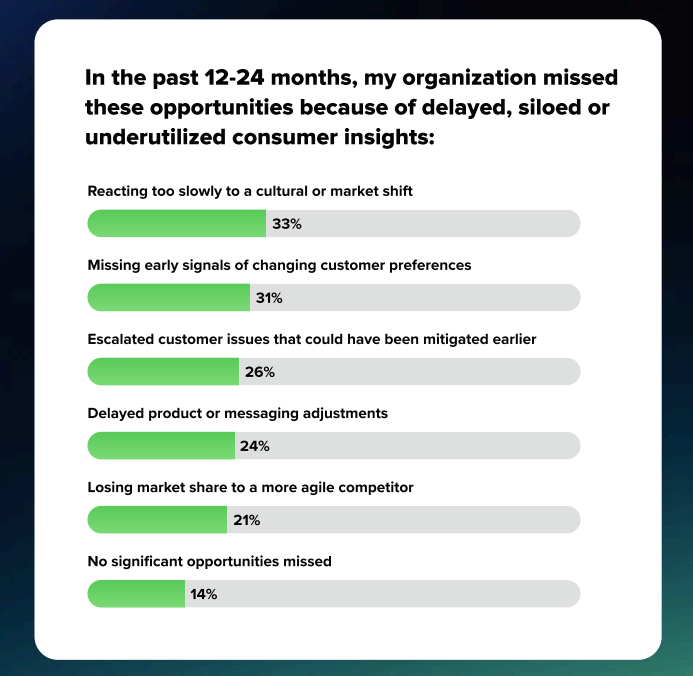
The core issue is that social media value often remains unrecognized if it is trapped within marketing-specific KPIs. When data—such as audience sentiment, competitor activity, and real-time market feedback—remains siloed, brands miss critical opportunities for innovation. Today, the most successful organizations are those that treat social intelligence as a "real-time pulse" of the market. This intelligence allows companies to act with clarity, pivot strategies based on consumer feedback, and maintain a competitive edge.
As noted in Sprout Social’s 2026 Social Intelligence Report, 67% of industry professionals now consider social intelligence to be mission-critical to future growth. Failing to integrate this data into the wider business infrastructure is not just a marketing oversight; it is a failure to leverage one of the most powerful diagnostic tools available in the digital age.
A Chronological Shift: From Vanity Metrics to Full-Funnel Impact
The history of social media marketing is defined by a transition from “vanity metrics” to “business-value metrics.”
- Phase 1 (The Awareness Era): Early social media strategy focused almost exclusively on reach, follower counts, and vanity engagement. These metrics were easy to track but notoriously difficult to link to revenue.
- Phase 2 (The Engagement Era): As platforms matured, marketers began focusing on sentiment analysis and community health. While more insightful, this data often remained confined to the marketing department.
- Phase 3 (The Intelligence Era): Today, we are in the era of integration. Advanced social teams are moving toward "full-funnel reporting." This approach tracks how social interactions influence every stage of the customer journey, from initial brand discovery to lead generation and, eventually, long-term retention.
By shifting from last-touch attribution models—which only capture the final step in a customer’s journey—to multi-touch attribution, teams are finally able to demonstrate how social touchpoints contribute to the entire sales pipeline.

Supporting Data: Why Integration Matters
The empirical case for integrating social intelligence is bolstered by consistent performance data. When companies break down silos, the benefits are felt across the entire organization.
- Cross-Departmental Synergy: When product teams gain access to social insights, they can identify feature requests or pain points directly from user comments. This reduces the time-to-market for product improvements.
- Targeted Expansion: When events or sales teams access social audience data, they can tailor their outreach based on specific niche interests identified in the social sphere, leading to higher conversion rates.
- The ROI of Sophistication: Organizations that utilize advanced social intelligence tools to unify their data see significant returns. For instance, shifting to a multi-touch attribution model has been shown to yield exponential increases in pipeline impact—in some documented cases, as high as a 5,800% increase in pipeline attribution, alongside a 529% total ROI when accounting for efficiency gains and reduced labor costs.
Official Perspectives: Expert Insights on Social Value
Olivia Jepson, Social Media Intelligence Manager at Sprout Social, emphasizes that social teams are now effectively revenue drivers. "Social teams are driving revenue, but last-touch attribution only tells part of the story," Jepson notes. "Strategic discussions about how social impacts the entire funnel—spanning top-of-funnel engagement to down-funnel demand—are essential for building a more effective reporting infrastructure."
Jepson’s experience highlights a common phenomenon: when social teams begin to proactively share intelligence, other departments naturally gravitate toward them for data. "A lot of people don’t know what they can ask for when it comes to social data," she explains. "Once I started packaging insights and sharing them proactively, more teammates started coming to me with their own requests. It got the social team’s foot in the door."
This shift in perception—from a “cost center” to an “intelligence hub”—is the primary driver for teams looking to secure larger budgets and executive buy-in.
Implementation: Five Steps to Proving Business Value
To move from a peripheral role to a central strategic function, social teams must adopt a rigorous reporting framework.
1. Set Objectives and Align Priorities
Start by working backward from company-wide goals. If the business is focused on market expansion, your social strategy should prioritize audience discovery. If the focus is on customer retention, prioritize community support metrics. Aligning your social goals with the broader corporate strategy is the first step in ensuring your work is seen as vital.
2. Define Your Metrics and Attribution
Distinguish between qualitative and quantitative metrics. Qualitative data (sentiment, brand perception) tells the story of your brand health, while quantitative data (shares, click-through rates, lead conversion) provides the hard numbers for ROI. Implementing an attribution model is mandatory; you must be able to prove which campaigns directly influenced lead progression.
3. Implement Unified Analytics Tracking
Data in a vacuum is useless. By connecting your social intelligence tools to your CRM (like Salesforce) or BI tools (like Tableau), you create a “single source of truth.” This integration allows for a seamless customer experience, where data flows from social interactions directly into the workflows of sales and customer support teams.
4. Benchmark Against Industry Standards
Performance must be contextual. Utilize industry-specific benchmarks—such as those found in annual Content Benchmarks Reports—to show your executives how your brand performs relative to the competition. A baseline of performance is essential for showing year-over-year growth.
5. Calculate and Present ROI
Finally, leverage your data to calculate hard ROI. Use dedicated ROI calculators to map your social activities to revenue generation. This is the “capstone” of your reporting; it speaks the language that CFOs and VPs value most.
Implications: The Future of the Social-First Enterprise
The implication of this shift is clear: social media is moving out of the “marketing department” and into the “corporate strategy department.”
Organizations that successfully integrate their social data will be faster to respond to market shifts, better at anticipating customer needs, and more efficient in their marketing spend. Conversely, those that continue to treat social as a disconnected channel will find themselves at a disadvantage, unable to capitalize on the rich, unfiltered customer intelligence that only social platforms can provide.
As we look toward the future, the role of the social marketer will continue to evolve into that of a data strategist. By prioritizing data storytelling, cross-departmental collaboration, and full-funnel reporting, social teams can cement their place as an essential, high-value component of the modern enterprise. The path to growth is no longer just about posting; it is about listening, analyzing, and proving the immense, measurable value of the social voice.