Beyond the Spritz: The Untold Story of How Aperol Conquered America—and the Legendary Cocktail That Made It Possible

Main Facts: The Rise of an Icon
It is nearly impossible to walk into a contemporary cocktail bar—whether nestled in the bustling avenues of Manhattan, the neon-lit corridors of Reno, or the stark, minimalist harbor fronts of Reykjavik—without spotting the vibrant, unmistakable hue of Aperol. Today, Italy’s most famous bittersweet light spirit is a foundational pillar of modern mixology. It holds an indispensable place on back-bars across the globe, serving as a primary driver for multi-billion-dollar corporate portfolios and anchoring neo-classic staples like the Paper Plane and the Naked & Famous.
Yet, the omnipresence of Aperol masks a surprisingly recent and uncertain American origin story. Long before the ubiquitous Aperol Spritz dominated sunny patios and summer Instagram feeds, introducing this lurid orange liqueur to the United States was a monumental marketing and creative challenge. In March 2006, when the brand formally landed on American shores, industry professionals and public relations agencies openly struggled with how to contextualize a flavor profile that combined vibrant citrus with medicinal rhubarb and bracing herbal bitterness.
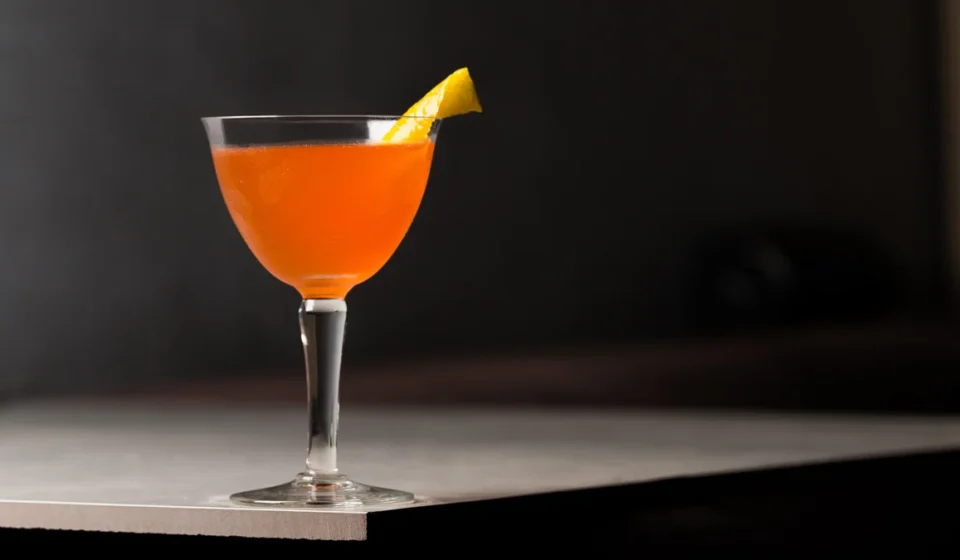
Enter Audrey Saunders, the visionary owner of New York City’s legendary Pegu Club. Recognizing the untapped potential of Aperol’s complex flavor architecture, Saunders did not simply fold the liqueur into an existing template. Instead, she revolutionized how bartenders thought about modifiers, inverting traditional cocktail structures to place Aperol front and center. Her creation, the Intro to Aperol, remains a masterclass in flavor translation—a beverage designed not to hide the liqueur’s bitterness beneath layers of sweetness and effervescence, but to celebrate its entire structural spectrum.
Chronology: From a 2006 Press Release to Global Domination
To understand the magnitude of Aperol’s modern ubiquity, one must trace its journey through the milestones of the 21st-century cocktail renaissance.
March 21, 2006: The Official "Invitation to Flirt"
On this date, a piece of corporate literature hit American media desks that reads today like a historical artifact. Titled with characteristic mid-2000s PR flair, the press release announced: "America received its official invitation to flirt this week, with the arrival of Aperol, Italy’s most popular light spirit. At last, after nearly 100 years, the social drink of Italy has arrived."
At the time, the American cocktail landscape was still shaking off the remnants of the vodka-heavy 1990s. Craft mixology was in its infancy, and bitter Italian aperitifs were largely the domain of obscure neighborhood Italian restaurants or seasoned travel veterans. The language of the press release—tethered to concepts of "flirting" and mysterious European sophistication—highlighted just how foreign the concept of a low-ABV, bitter-orange aperitif was to the average American consumer.
Mid-2000s: The Pegu Club Innovation
Shortly after Aperol’s domestic debut, Audrey Saunders acquired a bottle for her pioneering Manhattan establishment, the Pegu Club. While other bartenders overlooked the liqueur as too sweet or one-note, Saunders understood that its unique balance of sweet orange, bitter rhubarb, and herbal undertones required a bespoke vehicle.
Rather than treating Aperol as a minor dash of color or flavor, she deployed a full two ounces in a drink that inverted classic cocktail proportions. By using a modifier as the base spirit, and a traditional base spirit (gin) as the modifier, she created the Intro to Aperol. Supported by fresh lemon juice to balance the sweetness and a dash of Angostura bitters to accentuate the baking spices, the cocktail provided a comprehensive blueprint for how to taste and appreciate the liqueur.

The 2010s: The Spritz Phenomenon and the Cocktail Renaissance
As the craft cocktail movement exploded globally, Aperol found itself riding two massive industry waves. First, adventurous bartenders integrated it into modern classics, cementing its status as an essential back-bar component.
Second—and far more commercially impactful—Campari Group (which acquired the brand in 2003) unleashed the global marketing juggernaut known as the Aperol Spritz. By marrying Aperol with Prosecco and club soda, the brand successfully marketed a lifestyle: effervescent, effortless, and eternally summery. The Spritz swept across European terraces before conquering the American brunch and patio scenes, effectively turning a niche bitter liqueur into a global commercial titan.
Supporting Data: The Anatomy of a Modern Classic
While the Aperol Spritz relies on high volume, effervescence, and sweetness to appeal to the masses, the Intro to Aperol takes a vastly different approach. It strips away the Prosecco to examine the raw materials of the liqueur itself.
The Recipe and Construction
- Aperol: 2 oz
- Gin (traditionally Beefeater): 0.75 oz (functioning here as a modifying spirit)
- Fresh Lemon Juice: 0.75 oz
- Simple Syrup: 0.25 oz (optional; many modern palates prefer omitting this to lean into the dry, bitter finish)
- Angostura Bitters: 1 dash
Method: Add all ingredients to a cocktail shaker filled with ice. Shake vigorously and hard for 8 to 10 seconds to ensure proper dilution and chilling. Strain up into a chilled cocktail glass and garnish with a fresh lemon peel, expressing its oils over the surface.
Ingredient Breakdown and Evolution
- The Liqueur: While the market now boasts numerous competitors—such as Select or Cappelletti—Aperol’s distinct formulation of sweet and bitter orange, gentian, rhubarb, and select herbs remains unmatched in its ability to translate smoothly into mixed drinks. Its rise to market dominance was no accident of marketing; it is a testament to the liquid’s inherent mixability.
- The Spirit Base: Saunders specifically called for Beefeater Gin. Even through historical proof reductions by the manufacturer (shifting from 47% ABV down to 44% and eventually 40%), its punchy juniper and citrus-forward profile continue to provide the ideal structural backbone to tether Aperol’s exuberance.
- The Sweetener Dilemma: The original 2006 specification called for a quarter-ounce of simple syrup. However, cocktail tastes have shifted dramatically over the past two decades. Modern palates, accustomed to drier and more bracing profiles, generally benefit from omitting the simple syrup entirely, allowing the natural sugars in the Aperol to carry the drink without tipping into cloying territory.
Official Responses and Industry Perspectives
The legacy of Aperol in America is defined by a dichotomy: the massive commercial success of its casual, high-volume serve versus the profound, subtle reverence it commands among professional mixologists.
Industry veterans frequently point out that the Aperol Spritz, for all its cultural dominance, tells only half the story.
"The Spritz, like most popular Aperol drinks, leans heavily into its summery qualities and tries to hide the bitterness under the rug," notes contemporary spirits analysis. "The Intro to Aperol, by contrast, embraces the full spectrum of Aperol’s flavor—including its other side, the more textured, bitter, and spice-friendly side."
This duality explains why Aperol survived the shifting tides of beverage trends. It possesses a dual personality: accessible enough to convert casual drinkers via an ice-cold, orange-garnished Spritz on a scorching July afternoon, yet complex enough to satisfy the intellectual curiosity of elite bartenders crafting spirit-forward variations in the dead of winter.

Furthermore, the brand’s corporate stewards have maintained a careful balance, protecting its core identity while investing heavily in experiential marketing. By positioning Aperol as a bridge between Italian aperitivo culture and modern American socializing, Campari Group successfully transformed what started as an awkward 2006 press release into an indelible part of the global drinking lexicon.
Implications: What Aperol’s Journey Teaches Modern Mixology
The trajectory of Aperol in the United States offers a fascinating case study for the spirits industry, highlighting several key implications for how new products enter and conquer mature markets.
1. The Power of Flavor Education
When a brand introduces an entirely unfamiliar flavor profile to a market—such as the bittersweet, medicinal profile of an Italian aperitif—educating the consumer through direct, unmasked translation is critical. Audrey Saunders’ Intro to Aperol proved that forcing drinkers to confront the core characteristics of a modifier (rather than drowning it in fruit juice or excessive sugar) builds long-term appreciation and brand loyalty.
2. Structural Inversion in Cocktail Design
Saunders’ decision to use a modifier as a base spirit (allocating a full two ounces to Aperol) challenged conventional cocktail formulas. This technique demonstrated that modern mixology is not bound by rigid structural hierarchies. By treating complex liqueurs as primary building blocks, bartenders unlocked vast new frontiers of flavor combinations, paving the way for the complex modifier-driven cocktails that define contemporary drink menus today.
3. Balancing Commercial Reach with Craft Credibility
Aperol’s ascension illustrates the delicate synergy required between mass-market appeal and craft industry adoption. Without the high-volume marketing of the Aperol Spritz, the brand would likely have remained a niche darling of high-end cocktail bars. Conversely, without the early endorsement and creative framing by master bartenders at institutions like Pegu Club, Aperol might have been dismissed as a fleeting novelty. Together, these two forces created an unshakeable market position.
Ultimately, the story of Aperol in America is much more than the tale of a successful imported liqueur. It is a chronicle of cultural translation, culinary innovation, and the enduring power of bitterness in a world that so often defaults to sweet. Whether enjoyed in the blazing heat of a summer afternoon via a fizzy Spritz or appreciated in the crisp, contemplative chill of an autumn evening through Audrey Saunders’ inverted masterwork, Aperol has firmly secured its place as a timeless modern classic.