Blender 5.3 Revolutionizes 3D Workflows with Native Gaussian Splat Integration

The landscape of 3D content creation is undergoing a seismic shift, and the latest alpha release of Blender 5.3 is positioning itself at the epicenter of this evolution. Long regarded as the industry’s most powerful free and open-source 3D suite, Blender is set to bridge the gap between photogrammetry and real-time rendering by introducing native support for 3D Gaussian Splatting.
Expected to reach full release in November, this iteration marks a milestone for digital artists, VFX professionals, and game developers who have spent the last year grappling with the technical hurdles of integrating "splats" into traditional pipelines. By moving from third-party add-ons to native integration, Blender is democratizing one of the most exciting advancements in computer vision and graphics in the last decade.
The Core Innovation: What Are Gaussian Splats?
To understand why the Blender 5.3 update is causing such a stir, one must first look at the technology it supports. Gaussian splatting represents a radical departure from traditional 3D modeling.
For decades, the standard for 3D graphics has been the "mesh"—a structure composed of vertices, edges, and polygons (triangles or quads). While powerful, creating photorealistic meshes of real-world environments requires grueling hours of manual modeling, texturing, and lighting.
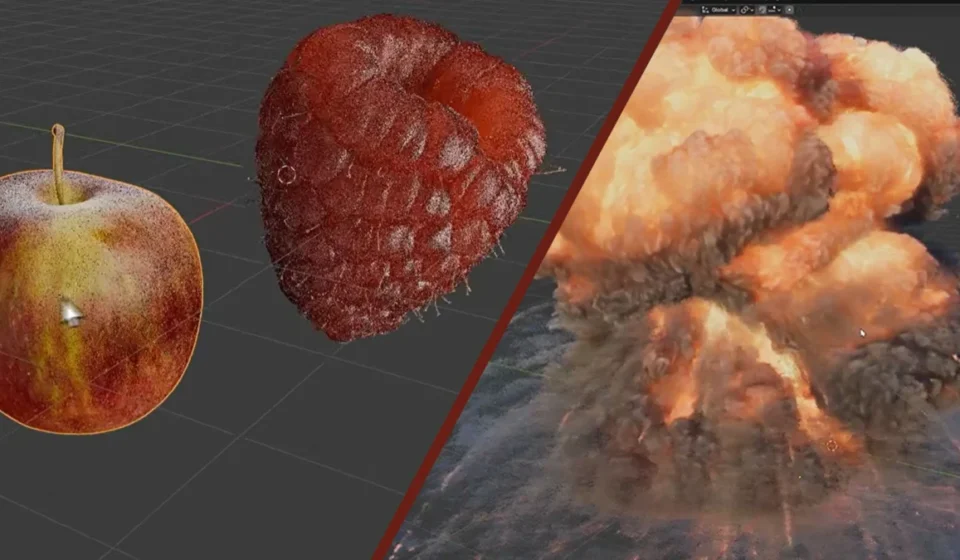
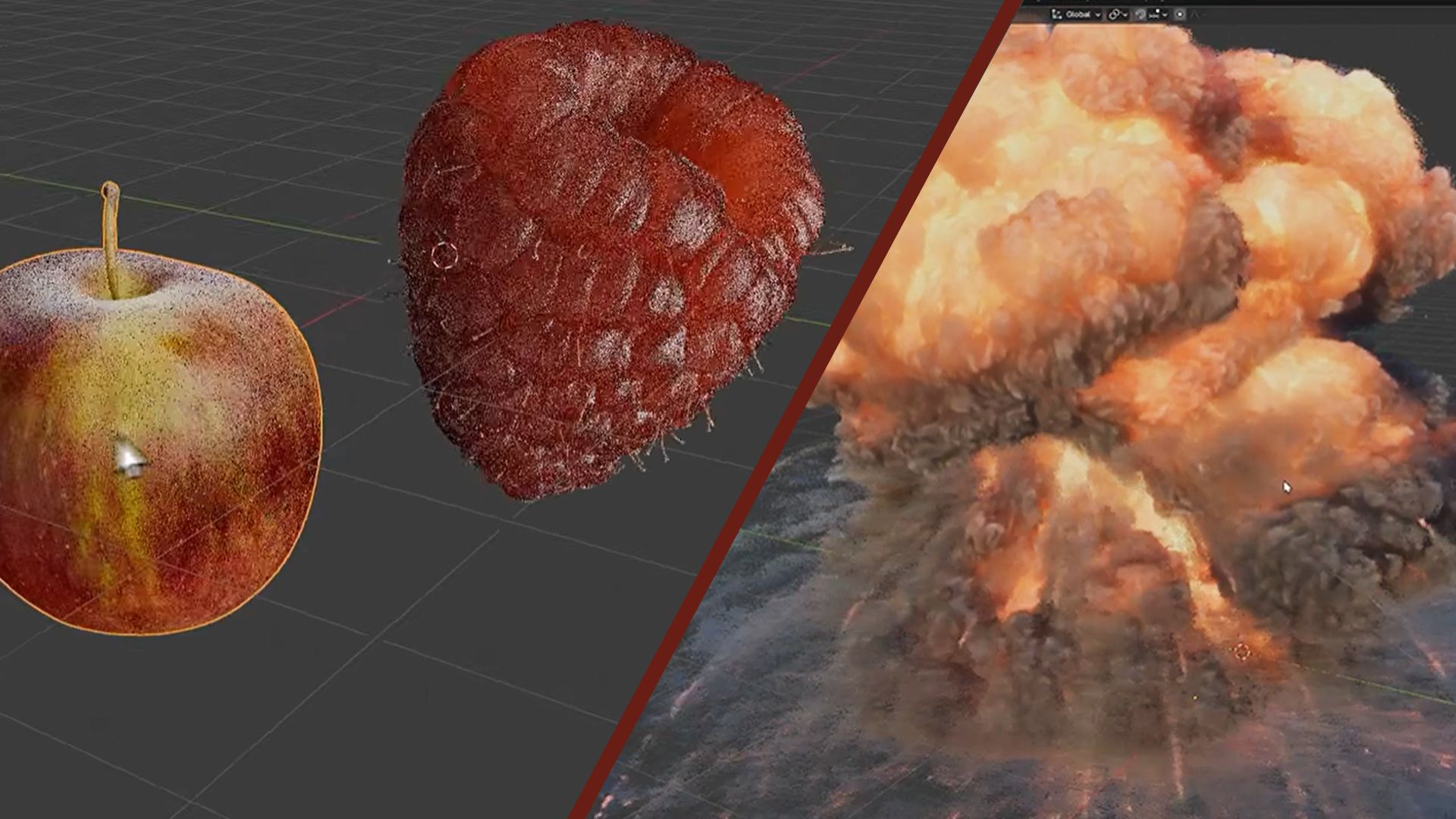
Gaussian splatting changes the game by using a technique known as "radiance field reconstruction." Instead of rigid surfaces, a splat is composed of millions of tiny, translucent, ellipsoidal "blobs." Each blob carries precise data regarding its 3D position, opacity, color, and orientation. When rendered together, these millions of particles recreate a scene with near-photorealistic fidelity from as few as a dozen or even hundreds of ordinary 2D photographs or video frames.
The result is a high-fidelity 3D environment that retains the lighting and texture information of the original source, offering a level of realism that traditional polygonal modeling often struggles to achieve without immense computational overhead.
Chronology: The Journey to Native Integration
The rapid ascent of Gaussian splatting from an academic research paper to a production-ready feature in a major software suite has been lightning-fast.
- Early 2023: The original Gaussian Splatting research paper is published, catching the attention of the computer graphics community for its ability to produce real-time, high-quality novel view synthesis.
- Late 2023: Early pioneers in the open-source community begin creating experimental Python-based tools and specialized Blender add-ons. These early implementations were often cumbersome, requiring users to export files from tools like COLMAP or Brush and navigate complex Python environments just to visualize the data.
- Early 2024: As adoption grows, the demand for a "native" experience becomes clear. Professional studios begin experimenting with splats for background environments, leading to a surge in feature requests on the Blender developer portal.
- Mid-2024: The Blender Foundation officially begins working on the integration, focusing on file format support and rendering compatibility.
- Current Phase (Alpha): With the release of the Blender 5.3 alpha, users can now import .PLY and .SPZ files directly into the workspace, rendering them through the internal engines.
Technical Implications: Importing and Rendering
The update allows for the direct import of 3D Gaussian Splats, streamlining the workflow significantly. Previously, artists had to jump through multiple software hoops to get their data into the viewport. Now, the process is as simple as importing a standard asset.
Rendering Compatibility
One of the most significant aspects of this update is the broad rendering support. Users are not restricted to a single view; the splats can be rendered across all of Blender’s primary engines:
- Workbench: Ideal for real-time interaction and viewport navigation.
- EEVEE: Allows for fast, high-quality previews of the splat within the scene.
- Cycles: Enables high-end, path-traced integration where the splat can interact with other 3D objects in the scene.
This multi-engine support is critical for professionals. It means that an artist can use a photorealistic splat as a background plate, place physical 3D objects in front of it, and use Cycles to calculate light bounces, shadows, and reflections between the "real" geometry and the "splat" geometry.
Current Limitations and the Path Ahead
Despite the excitement, the Blender Foundation is being transparent about the current limitations of the alpha release. As of now, four primary hurdles exist:
- Performance Constraints: The current implementation is not yet optimized for massive datasets. Users working with high-density splats may experience viewport lag.
- Color Space Discrepancies: The pipeline assumes an sRGB color space. Because Cycles and EEVEE operate in a linear space, there are instances where low-opacity or high-radiance areas may render with artifacts or unexpected color shifts.
- Transform Limitations: The "Apply Transform" function does not currently account for the specific attributes of splats—namely scale, rotation, and spherical harmonics—leading to issues if a user tries to manipulate the object’s origin or orientation in the scene.
- No Export Functionality: Currently, the update is a one-way street. Users can bring splats into Blender to render them, but they cannot yet export them back out as splat files from within the software.
The community, however, is optimistic. These are considered "Day One" limitations that the active development team and the open-source community are already working to address.
Implications for the Industry
The integration of Gaussian splats into Blender has profound implications for several creative sectors:
VFX and Virtual Production
For visual effects artists, the ability to rapidly scan a location and import it as a high-fidelity, light-sensitive background is a game changer. It drastically reduces the "time to scene" for set extensions. Instead of building a complex proxy model of a building, an artist can scan the location and drop the result into a Blender scene in minutes.
Architecture and Heritage Conservation
Architects and historians can now utilize "digital twins" with unprecedented ease. A site can be documented with a simple smartphone, and the resulting splat can be used for spatial analysis, historical documentation, or client presentations without the need for a laser-scanning rig.
Gaming and Interactive Media
While game engines like Unreal Engine and Unity have been experimenting with splats, Blender’s inclusion of this feature allows game developers to prototype environments with incredible speed. It allows for a hybrid workflow where the "hero" assets are hand-modeled, but the sprawling, complex background environments are created through splatting.
Official Stance and Community Reception
The Blender Foundation has maintained its commitment to "innovation through collaboration." The official developer notes emphasize that this feature is a direct response to the "democratization of 3D scanning."
VFX artist Jason Key and technical content creators like CGMatter have been instrumental in highlighting both the potential and the growing pains of this feature on platforms like X and YouTube. Their showcases have provided the foundation for the current wave of community feedback, which is being funneled directly into the development roadmap for the November launch.
Furthermore, industry solutions like those from Chaos are already working on solving the "relighting" problem—the difficulty of changing the time of day or light source in a captured splat. With Blender 5.3 now acting as the hub, the ecosystem of tools surrounding Gaussian splatting is maturing at an exponential rate.
Conclusion: A New Era of Hybrid 3D
Blender 5.3 is more than just a software update; it is an acknowledgement that the boundary between photography and 3D modeling is dissolving. By embracing Gaussian splatting, Blender is ensuring that it remains the primary tool for the next generation of digital artists.
While the technology is still in its infancy, the capability to natively import, manipulate, and render these photorealistic data sets within an industry-standard pipeline represents a massive leap forward. As the November release approaches, the focus will shift from "can we do this?" to "what can we create with this?"
For those looking to stay ahead, the current alpha release offers a window into a future where the physical world and the digital canvas are seamlessly, and almost instantaneously, integrated. Whether you are a seasoned VFX veteran or a hobbyist animator, the arrival of Gaussian splatting in Blender 5.3 is an invitation to experiment with a medium that is fundamentally redefining the limits of visual storytelling.