Bringing Sunshine Indoors: How DFW Confetti Bounce Redefined Spring and Summer Celebrations with the Ultimate "Here Comes the Sun" Event

FORT WORTH, Texas — In the ever-evolving world of high-end event planning, themes come and go, but few capture a sense of universal joy quite like a bright, weather-inspired aesthetic. As families and event coordinators look ahead to the peak spring and summer celebration seasons, a new benchmark for children’s parties has emerged from the heart of Texas.
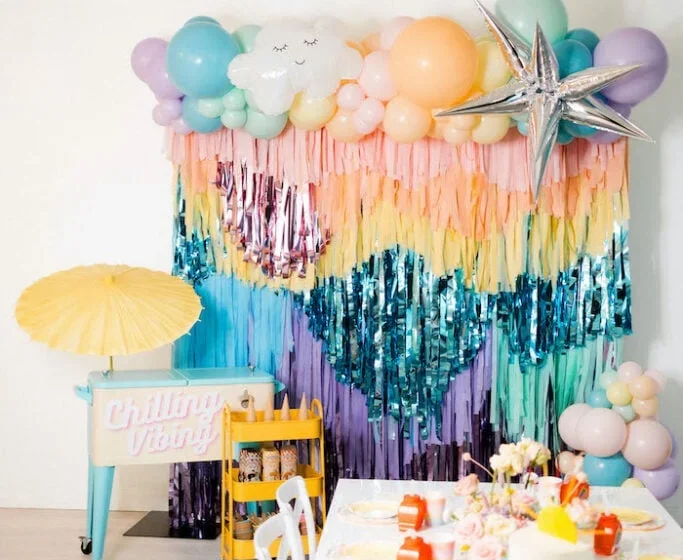
Masterminded by event stylist Sandy Puga of DFW Confetti Bounce, a recent "Here Comes the Sun"-themed celebration has taken the event planning community by storm. Featuring an innovative blend of pastel rainbows, cloud balloon installations, a striking blue bounce house, and meticulously curated table settings, the event offers a masterclass in modern, whimsical party design.
Industry experts note that this particular celebration marks a shift away from hyper-commercialized character themes toward more organic, design-forward concepts that appeal equally to toddlers and design-conscious parents.
Main Facts: Anatomy of a Sunshine Celebration
The showcase event, hosted in Fort Worth, Texas, was designed to provide scalable inspiration for birthdays, baby showers, and seasonal gatherings. At its core, the celebration relies on a carefully balanced palette: soft yellows, baby blues, peachy pinks, and muted lavenders.
Key structural and decorative elements of the event include:

- The Anchor Attraction: A custom blue bounce house flanked by organic balloon garlands mimicking pastel rainbows and fluffy white cloud accents.
- The Focal Point Dessert Table: Anchored by a sunshine-topped cake featuring white icing drips, complemented by color-coordinated treats grouped strategically by height and shade.
- The Immersive Kids’ Table: A low-profile long dining setup featuring sun-shaped plates, rainbow cups, fresh spring florals, and bespoke favor boxes.
- Texture and Depth: Utilization of a vibrant fringe wall to create a dynamic backdrop for both photography and play.
The design philosophy behind the event prioritizes visual impact without sacrificing structural simplicity, allowing DIY planners and professional stylists alike to adapt the core concepts to various budgets and venue sizes.
Chronology: From Concept to Execution
The conceptualization and realization of the Fort Worth event followed a structured timeline designed to maximize visual cohesion and guest engagement.
Phase 1: Conceptualization and Palette Selection (Months Prior)
The planning process began with the selection of the "Here Comes the Sun" motif. Unlike traditional primary-color sunshine themes, Puga opted for a sophisticated pastel gradient. This foundational choice dictated every subsequent decision, from the choice of the blue bounce house to the selection of matte-finish balloons.
Phase 2: Structural Installation (Morning of the Event)
Installation day focused heavily on structural architecture. Riggers and decorators first established the large-scale installations—specifically the balloon arches and the blue bounce house—to set the spatial boundaries of the party. The backdrop—a high-impact fringe wall—was erected next to serve as the visual anchor for the primary photography zone.
Phase 3: Table Styling and Detail Work (Pre-Event Hours)
With the major installations secure, the focus shifted to the micro-details. The low-profile children’s table was meticulously arranged. Place settings were laid out with precision, ensuring that the sun plates and rainbow cups alternated harmoniously with fresh floral arrangements. Concurrently, the dessert station was organized, with the sun-topped cake positioned centrally to command immediate attention upon entry.

Phase 4: Guest Experience and Activation (Event Time)
The final phase centered on guest interaction. Children were immediately drawn to the active-play zones—highlighted by the bounce house—while parents gravitated toward the photogenic dessert and dining areas. The flow of the event was carefully managed to transition guests smoothly from high-energy play to structured dining and dessert consumption.
Supporting Data: Sourcing the Look
For event planners and parents looking to replicate the Fort Worth showcase, industry data highlights a significant surge in consumer demand for modular party supplies that mimic custom-designed aesthetics. Market trends indicate that consumers increasingly favor cohesive "all-in-one" styling kits over piecemeal purchases.
To achieve a professional-grade look similar to the DFW Confetti Bounce showcase, event designers recommend the following resource categories:
- Backdrop Foundations: Utilizing pre-packaged rainbow balloon garland kits paired with neutral or pastel backdrop frames to create immediate architectural height.
- Tableware Integration: Sourcing pastel party tableware sets that incorporate themed motifs—such as sun plates or cloud cups—to reduce the need for excessive standalone centerpieces.
- Textural Elements: Incorporating rainbow tassel garlands and fringe wall panels to add movement and tactile depth to flat walls.
- Dessert Enhancements: Elevating standard baked goods through specialized cake and cupcake toppers that instantly tie generic sweets into the overarching theme.
Official Responses and Industry Commentary
The reception within the event planning community has been overwhelmingly positive, with many pointing to the event as a timely response to shifting consumer desires.
"Parents today are looking for environments that feel magical to children yet aesthetically pleasing to adults," notes an independent event coordinator familiar with regional Texas party trends. "Sandy Puga and the team at DFW Confetti Bounce managed to strike that exact balance. It’s playful, it’s bright, but it has an undeniable editorial quality to it."

In statements regarding the conceptual framework of the party, organizers emphasized the psychological impact of color and light in event design. "When you step into a space dominated by soft yellows, baby blues, and warm lighting, it immediately alters your mood," design analysts suggest. "Themes centered around light, sun, and nature naturally evoke optimism, making them perennial favorites for milestone celebrations."
Furthermore, parents who attended the showcase praised the functionality of the layout. By separating high-energy elements (like the bounce house) from structured seating (the kids’ table and dessert station), the event maintained a calm, organized flow despite a high volume of active children.
Implications for the Future of Children’s Event Design
The success of the "Here Comes the Sun" showcase carries several broader implications for the party planning and event design industries as they navigate the upcoming seasons.
1. The Rise of "Experiential" Children’s Parties
Gone are the days of simple cake-and-punch gatherings in a living room. The modern children’s party is increasingly expected to feature "experiential" zones—dedicated spaces for physical activity (bounce houses), creative photography (fringe walls and balloon installations), and immersive dining. This trend places a higher premium on rental companies and multi-talented event stylists who can provide turnkey solutions.
2. Sustainability and Reusability in Decor
While large-scale balloon installations remain popular, industry leaders are noting a parallel demand for sustainable, reusable decor elements. Fringe walls, fabric tassel garlands, and durable plastic or bamboo tableware sets are replacing single-use plastics, driven by consumer desire to reduce waste without compromising on aesthetic vibrancy.

3. The Democratization of Professional Design
Through the widespread availability of specialized party supplies—such as curated sunshine birthday decoration sets and standardized balloon kits—DIY planners are increasingly able to achieve professional-level results at home. This has forced commercial event designers to continually elevate their offerings, focusing on custom structural elements, unique color gradients, and seamless spatial layouts to set their work apart.
As spring and summer celebrations approach, the blueprint established in Fort Worth serves as a timely reminder that great event design is not necessarily about complexity, but about intentionality, color harmony, and creating spaces where joy can naturally unfold.
Related posts: