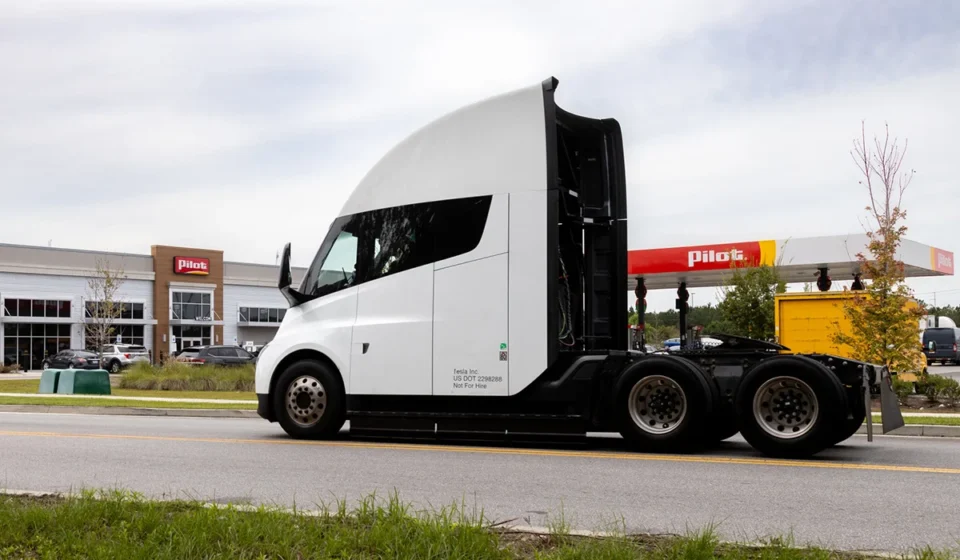
Electrifying the American Highway: Pilot and Tesla Launch High-Power Megacharger Network for Heavy-Duty Freight

The landscape of American long-haul trucking is undergoing a seismic shift. In a landmark development for the logistics and transportation sector, Pilot and Tesla have officially inaugurated their first collaborative Tesla Megacharger site in Ellabell, Georgia. This facility, situated at Pilot Travel Center No. 1390, represents more than just a new piece of infrastructure; it is the cornerstone of a nationwide initiative to facilitate the electrification of the heavy-duty freight industry. By integrating Tesla’s cutting-edge Megacharger technology into Pilot’s expansive network of travel centers, the companies are aiming to bridge the gap between electric vehicle (EV) feasibility and the demanding requirements of commercial trucking.
Main Facts: The Ellabell Milestone
The Ellabell, Georgia site serves as the pilot project for a broader, high-stakes infrastructure rollout. Equipped with six heavy-duty charging stalls, the site utilizes Tesla’s sophisticated V4 cabinet technology. This hardware is engineered specifically to meet the unique power demands of Class 8 electric trucks, such as the Tesla Semi.
The technical specifications of these chargers are industry-leading. Each stall is capable of delivering up to 1.2 megawatts of power—a level of energy transfer that was once thought to be logistically impossible in a roadside setting. This immense power delivery allows a Tesla Semi to recover approximately 60% of its battery capacity in just 30 minutes, effectively mimicking the duration of a standard driver rest break. This "plug-and-play" capability is essential for ensuring that fleet operators do not experience prohibitive downtime, a primary hurdle in the adoption of electric heavy-duty transport.
The Ellabell location, situated at 130 Interstate Exchange Way, is the first of many. Currently, twelve additional locations are in various stages of construction, with sites in Tulare, California; Fort Stockton, Texas; and Las Vegas, Nevada, nearing completion.
A Chronology of Collaboration
The journey toward this launch began in earnest in early 2023, when Pilot and Tesla first announced their intention to join forces. While the initial announcement set the vision, the past year has been defined by intense engineering, site selection, and regulatory coordination.
- January 2023: Pilot and Tesla announce a strategic collaboration to develop a high-speed charging network specifically for heavy-duty electric trucks, focusing on major U.S. freight corridors.
- Late 2023 – 2024: The companies focus on site selection, prioritizing high-traffic freight routes including the I-5, I-10, and other critical arteries across California, Georgia, Indiana, Nevada, and Texas.
- Mid-2024: Construction begins on the initial cohort of sites. Engineering teams work to integrate Tesla’s V4 technology into the existing electrical grids of Pilot travel centers.
- Late 2024: The Ellabell, Georgia site completes its commissioning process, passing rigorous safety and performance benchmarks.
- Current Status: The network is officially operational, with a rapid expansion phase underway to bring three major additional hubs online in early 2025.
Supporting Data: The Infrastructure Gap and the Megacharger Solution
The push for electrification in the trucking sector is driven by both environmental mandates and the economic desire for lower operational costs. However, the "chicken and egg" problem—where carriers are hesitant to buy electric trucks without charging infrastructure, and developers are hesitant to build chargers without trucks on the road—has stalled progress for years.
The Pilot-Tesla partnership addresses this by leveraging Pilot’s existing footprint. Pilot operates over 900 locations across 43 U.S. states and five Canadian provinces, serving roughly 1.2 million guests daily. By retrofitting these sites, the partnership provides an immediate, reliable network that existing truck stops cannot currently offer.
Key Technical Advantages:
- High-Voltage Architecture: The V4 cabinets are designed to handle the high thermal loads associated with megawatt-level charging, a significant step up from the Level 3 chargers used for passenger EVs.
- Throughput Efficiency: With 1.2 MW of power, the Megacharger effectively removes the "charging bottleneck." For a fleet manager, this means a truck can complete a cross-country route with only minimal, strategically timed stops that align with federal Hours of Service (HOS) regulations.
- Scalability: Each future site is designed to house between four and eight high-power stalls, ensuring that as fleet sizes grow, the infrastructure can scale accordingly without requiring a complete overhaul of the site.
Official Responses and Strategic Vision
The collaboration is viewed by both parties as a fundamental pillar of their long-term growth strategies. For Pilot, the move is an evolution of its identity from a traditional diesel supplier to a comprehensive energy provider for the modern era.
"Pilot is proud to bring heavy-duty charging directly to key trucking routes and pair it with the services and amenities drivers rely on," said Shannon Sturgil, senior vice president of alternative fuels at Pilot. Sturgil emphasized that the initiative is about more than just electricity; it is about accessibility. "With these initial locations, we’re making fleet electrification a more accessible option for long-haul transportation, and we are excited to continue working with Tesla to move at the pace and preference of our customers."
From Tesla’s perspective, the partnership validates the viability of the Semi in the real-world trucking market. By placing chargers at Pilot locations, Tesla ensures its customers have access to the amenities that are standard in the trucking industry—showers, dining, lounges, and secure parking—which are often lacking at dedicated EV charging hubs.
The Broader Implications for the Logistics Industry
The rollout of the Megacharger network has profound implications for the future of the American supply chain.
1. The Decarbonization of Freight
Transportation remains one of the largest contributors to carbon emissions in the United States. While passenger vehicle electrification has garnered the most media attention, the heavy-duty sector is the "final frontier." By providing the infrastructure for heavy-duty electric trucks, Pilot and Tesla are creating a realistic pathway for fleets to transition away from traditional internal combustion engines, directly reducing the carbon footprint of the nation’s goods movement.
2. Operational Economics for Fleets
For trucking fleets, the shift to electric is a financial calculation. While the upfront cost of an electric semi-truck is higher than a diesel equivalent, the lower cost of electricity compared to diesel, combined with reduced maintenance requirements, creates a compelling total cost of ownership (TCO) argument. The existence of a reliable, high-speed charging network is the final piece of the puzzle that allows fleet managers to commit to these capital expenditures with confidence.
3. Pilot’s Energy Transition
Pilot is effectively future-proofing its business model. Beyond the Megacharger network, the company is investing heavily in a coast-to-coast passenger EV charging network and alternative fuel sources such as renewable diesel and biodiesel. As a company that supplies approximately 12 billion gallons of fuel annually, Pilot is positioning itself to be the primary energy supplier for the trucking industry, regardless of whether that energy is delivered in a liquid or electrical format.
4. Grid and Utility Challenges
The rapid scaling of this network will inevitably test the local utility infrastructure at each Pilot site. Delivering megawatt-level power requires significant upgrades to local substations and distribution lines. The successful launch in Ellabell serves as a case study for future site development, providing a blueprint for how private industry and public utilities can collaborate to handle the massive energy loads required for electric freight.
Conclusion: A New Era on the Interstate
The opening of the Ellabell, Georgia Megacharger site is a pivotal moment in the history of the U.S. interstate system. It signals that the era of electric long-haul trucking has moved from the conceptual stage to the operational stage.
As the construction continues in California, Texas, and Nevada, the network will begin to form a contiguous chain that allows fleets to traverse key freight corridors with the same reliability as they do today with diesel. For the drivers, the logistics managers, and the trucking industry at large, the Pilot-Tesla partnership provides a clear vision of the road ahead: one that is faster, cleaner, and inextricably linked to the rapid advancement of power electronics and energy storage. As this infrastructure takes root, it will undoubtedly serve as the backbone for the next generation of logistics, ensuring that the supply chains of the future are as efficient as they are sustainable.