ExtraMile Partners with Vroom Delivery to Revolutionize Convenience Retail Logistics

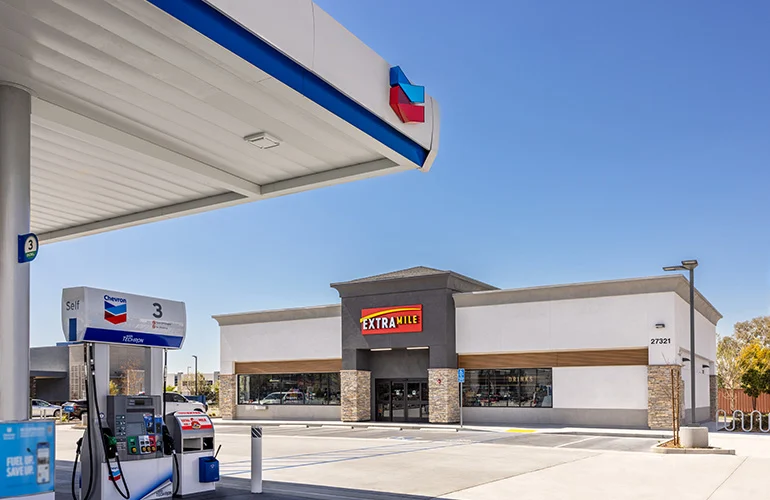
In a strategic move designed to redefine the digital footprint of the convenience store industry, ExtraMile—the expansive joint venture between Chevron U.S.A. Inc. and Jacksons Food Stores—has announced a comprehensive partnership with Vroom Delivery. This collaboration will extend cutting-edge e-commerce and delivery infrastructure to more than 1,200 franchised locations across 18 states, marking a significant shift in how these high-traffic retail hubs engage with the modern, mobile-first consumer.
Main Facts: The Digital Transformation of ExtraMile
The core of this partnership lies in the integration of Vroom Delivery’s specialized e-commerce platform into the existing ExtraMile operational ecosystem. Vroom, a technology firm that has carved a niche specifically within the convenience retail sector, offers a suite of tools that bridge the gap between physical inventory and digital demand.
For ExtraMile franchisees, this integration is not merely an additional sales channel; it is a holistic upgrade to their back-end management systems. By leveraging Vroom’s technology, franchisees can now seamlessly sync their in-store product catalogs with third-party delivery powerhouses, including DoorDash, Uber Eats, and Grubhub. This creates a unified digital storefront that mirrors the physical availability of goods in real-time.
The partnership addresses one of the most persistent hurdles in convenience retail: the labor-intensive nature of manual inventory updates. Previously, many retailers struggled to maintain accurate online menus, leading to order cancellations and customer frustration. With the Vroom integration, inventory management is largely automated, allowing store staff to focus on in-person service while the system handles the complexities of digital fulfillment.
Chronology: The Evolution of Convenience
To understand the weight of this announcement, one must look at the progression of ExtraMile’s strategic growth.
- Foundation: ExtraMile, established as a joint venture between Chevron and Jacksons Food Stores, spent years building a robust physical network. With over 1,200 locations, the brand became a fixture in the American West and Southeast.
- The Digital Pivot: Recognizing the shift in consumer behavior during the early 2020s, the brand began evaluating how to translate its high-speed, high-convenience model into the digital delivery space.
- Pilot Testing: Before the national rollout, ExtraMile tested various technological frameworks to ensure that the user experience remained consistent with the brand’s reputation for speed and reliability.
- The Vroom Selection: After thorough vetting, Vroom Delivery was selected due to its specific focus on the unique supply chain demands of convenience stores—namely, high-frequency, low-margin, and highly perishable inventory management.
- The Announcement: The official partnership was unveiled this month, setting the stage for a nationwide integration scheduled to take place throughout the remainder of the fiscal year.
Supporting Data: The Convenience Landscape
The retail landscape is currently undergoing a "convenience revolution." According to recent industry data, the demand for instant delivery services has moved beyond restaurant meals and into the realm of everyday household goods.
Retailers who have adopted robust e-commerce platforms see a distinct uptick in "incremental business"—sales that would not have occurred through traditional foot traffic. The data suggests that convenience stores that utilize integrated delivery platforms see a significant increase in Average Order Value (AOV). This is attributed to the fact that customers, when shopping online, are less prone to the "checkout line impulse" and more prone to "basket building," adding multiple items to their cart to meet delivery thresholds.
Furthermore, the "dynamic assortment" capability introduced by this partnership is a game-changer. By replacing static, one-size-fits-all menus with live inventory data, franchisees can offer customers what is truly on the shelves. For a convenience store, which may carry upwards of 3,000 SKUs, this level of precision prevents the "out-of-stock" disappointment that drives customers to competitors.
Official Responses and Strategic Vision
Rob Falciani, the head of marketing at ExtraMile, has been the primary voice regarding this initiative. In his official statement, Falciani emphasized that the move is fundamentally about future-proofing the brand.
"At ExtraMile, we’re always looking for ways to give our franchisees access to the tools that can help them grow their businesses," Falciani stated. "Teaming up with Vroom Delivery takes our online ordering and delivery capabilities to the next level, making it easier to capture incremental business while automating much of the work behind the scenes so store teams can stay focused on serving their customers."
Falciani’s rhetoric underscores a vital point in modern retail: efficiency is the new currency. By offloading the burden of digital order management from the store team, the franchise ensures that the "in-store" experience—the bread and butter of the Chevron-Jacksons model—does not suffer.
Furthermore, Falciani addressed the long-term outlook: "Being convenient in 2026 means meeting customers on their terms, including those moments when they don’t plan to visit a store. We’ve already seen this technology help retailers sell significantly more products, and we’re excited to make it available across the ExtraMile network."
Implications for the Future of Convenience Retail
The implications of this partnership extend far beyond the 1,200 ExtraMile locations. It signals a shift in the power dynamics of the convenience store market.
1. The Death of the "Static Menu"
For decades, convenience stores were defined by their physical footprint. If you weren’t on the corner, you weren’t in the game. With the integration of Vroom’s dynamic cataloging, the "digital footprint" is now as important as the physical one. This allows smaller, franchised locations to compete with massive retail chains that have had the capital to build proprietary apps from the ground up.
2. Labor Optimization
One of the most critical challenges in the current retail climate is the labor shortage. By automating the digital workflow, ExtraMile is essentially giving its franchisees an "extra employee" who never sleeps. This digital efficiency allows store owners to retain talent by focusing their time on higher-value customer service tasks rather than administrative menu management.
3. Hyper-Local Competition
The use of third-party marketplaces like DoorDash and Uber Eats puts ExtraMile products directly in front of millions of local consumers. This effectively turns every ExtraMile store into a localized warehouse. Because convenience stores typically have shorter travel distances to the average consumer than large-format supermarkets, the delivery times—and thus the customer satisfaction—are likely to be superior.
4. A Template for Franchises
ExtraMile’s structure as a joint venture makes this move particularly interesting. By standardizing the technology across a massive network of franchisees, they are creating a template for how large, decentralized retail networks can modernize. Other fuel-and-convenience brands will likely watch the performance metrics of this partnership closely to determine if a similar path is viable for their own networks.
Conclusion: Setting the Pace
As we look toward 2026 and beyond, the definition of "convenience" will continue to be rewritten by those who can successfully integrate the digital and physical worlds. The partnership between ExtraMile and Vroom Delivery is a bold, calculated bet that the future of retail lies in the seamless intersection of convenience, technology, and local availability.
For the franchisee in rural Idaho or the busy urban corridor of a California city, this platform represents more than just a software update—it is a lifeline to a new generation of consumers who prioritize speed, accuracy, and digital access above all else. By automating the backend and expanding the digital reach, ExtraMile is not just participating in the evolution of the industry; they are actively driving it.
The success of this rollout will serve as a bellwether for the rest of the industry. If, as Falciani suggests, the technology leads to a significant surge in product sales and operational efficiency, we can expect to see a rapid acceleration of digital integration across the entire American convenience retail sector. For now, ExtraMile is firmly in the driver’s seat, steering its 1,200 locations toward a digital-first future.