From Deep Space Mysteries to Lost Worlds: A Comprehensive Look at This Week’s Scientific Breakthroughs

This week has proven to be a whirlwind of discovery and challenge within the scientific community. From the cold, pressurized depths of our own early solar system to the gravitational titans lurking 10 billion light-years away, researchers are recalibrating our understanding of cosmic history. Simultaneously, the realities of space exploration have hit home as the International Space Station (ISS) grapples with infrastructure maintenance, and breakthroughs in artificial intelligence suggest a new era for global health.
Main Facts: A Convergence of Cosmic and Terrestrial Science
The week’s headlines are defined by four distinct, yet equally significant, events:
- The Dormant Black Hole Weigh-in: Using the unprecedented clarity of the James Webb Space Telescope (JWST), astronomers have successfully measured the mass of a "dormant" black hole located 10 billion light-years away. This is a monumental achievement, as dormant black holes—those not actively consuming surrounding gas—are notoriously difficult to detect.
- The Ghost of a Protoplanet: Analysis of a rare angrite meteorite (NWA 12774) discovered in the Sahara Desert has provided evidence of a "lost" protoplanet that existed roughly 4.5 billion years ago. This discovery challenges existing models of planetary formation in our early solar system.
- Infrastructure Strains in Orbit: The ISS experienced a temporary security alert after an air leak was detected in the transfer tunnel, forcing astronauts to shelter in place while ground control assessed the integrity of the station.
- AI-Driven Immunological Progress: In the realm of medicine, researchers have unveiled a "universal vaccine" design synthesized by artificial intelligence, marking a potential shift in how we approach the rapid development of immunization against evolving viral threats.
Chronology of Discovery and Events
The week began with the high-tension scenario aboard the ISS, reminding the public that life in microgravity remains a fragile endeavor. As NASA engineers worked to isolate the leak, the focus shifted to the cutting-edge of astrophysics.
Mid-week, the publication of two major studies redirected the scientific discourse toward the early history of the universe and our own solar system. First, the report on the distant black hole in the galaxy MRG-M0138 appeared in the journal Science. Shortly thereafter, the investigation into the NWA 12774 meteorite was published in Earth and Planetary Science Letters, providing a physical link to a planetary body that has long since vanished.
Finally, as the week drew to a close, NASA made the difficult decision to officially declare the MAVEN (Mars Atmosphere and Volatile EvolutioN) mission concluded, marking the end of a long and fruitful chapter in Martian exploration.
Supporting Data: Peering into the Void and the Past
The Mechanics of Weighing a Dormant Giant
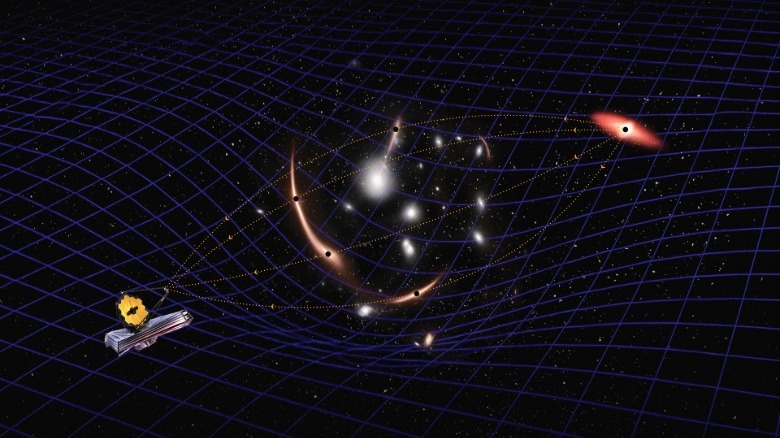
The measurement of the black hole in MRG-M0138 was made possible by a technique that bridges the gap between massive-scale gravity and microscopic-scale precision. Because the black hole is dormant, it lacks the brilliant "accretion disk" of light that usually betrays a black hole’s location.
To overcome this, researchers utilized gravitational lensing. By observing the galaxy through the gravitational distortion caused by massive foreground objects, the JWST acted as a cosmic magnifying glass. Lead author Andrew Newman of Carnegie Science noted that the team focused on the "sphere of influence"—the region where the black hole’s gravity is so intense it dictates the orbital velocity of surrounding stars. By measuring these accelerated stellar movements, the team could calculate the mass of the central object with a level of accuracy previously thought impossible at such extreme distances.
The Mineralogical Evidence of a Lost World
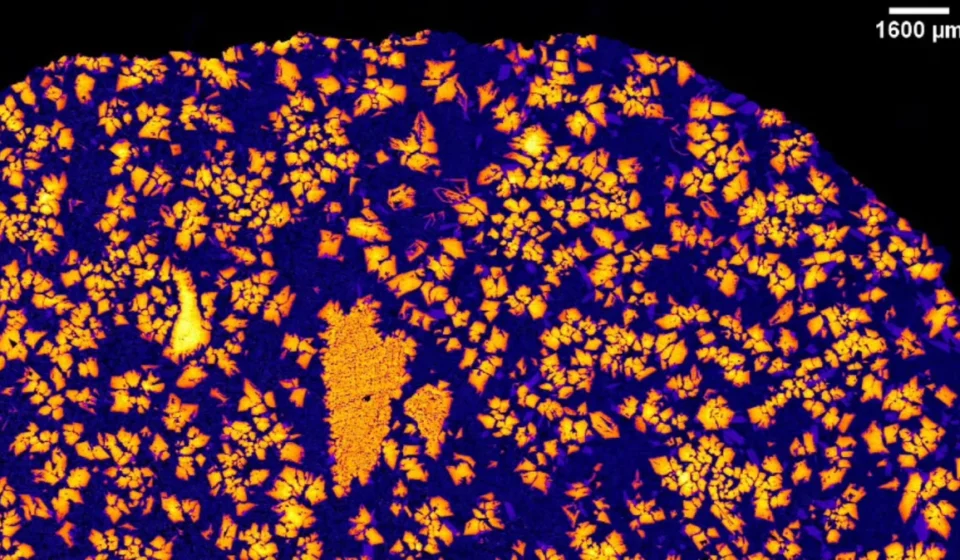
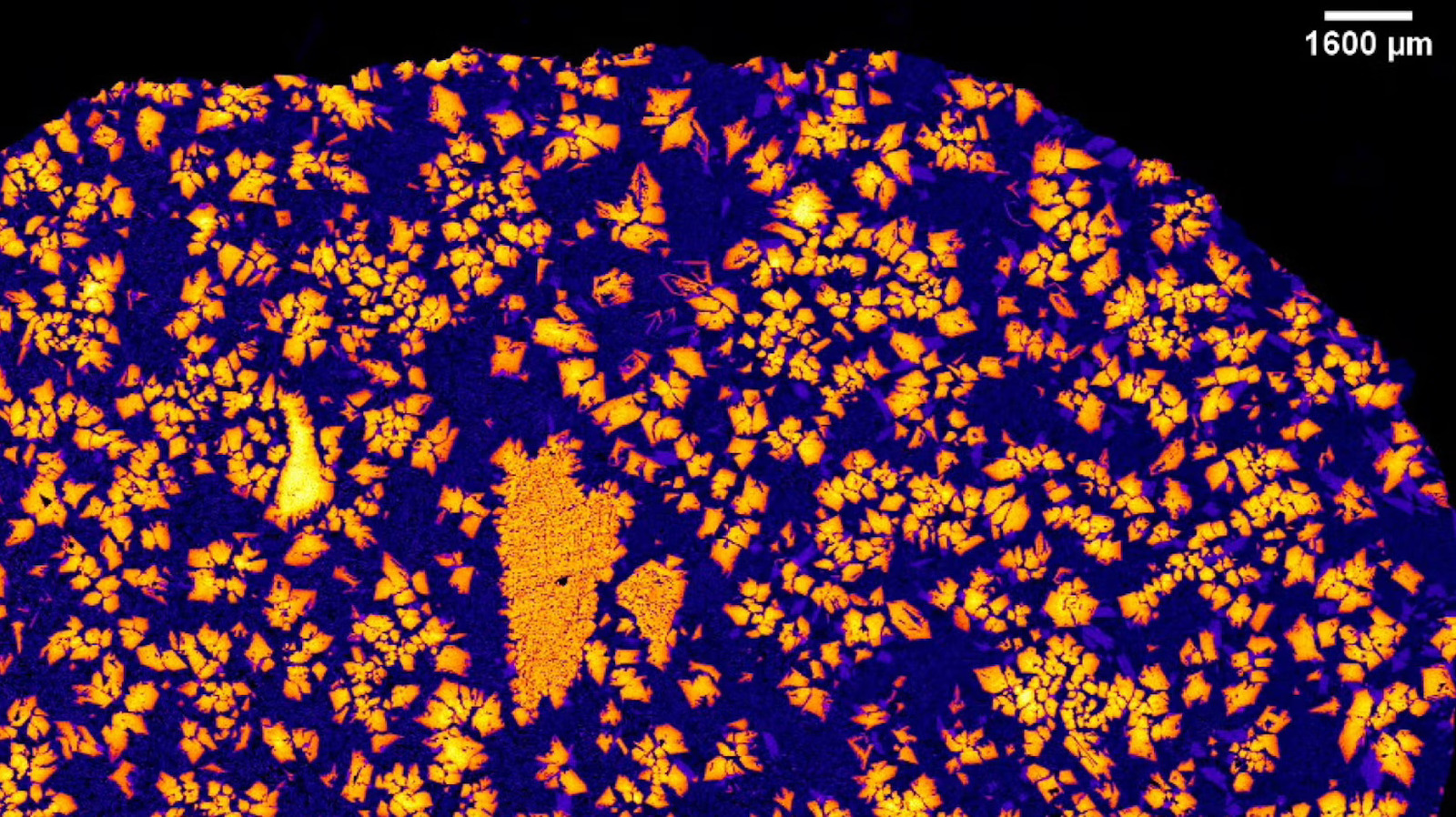
The NWA 12774 meteorite, a rare type of volcanic rock known as an "angrite," contains chemical signatures that contradict a standard asteroid origin. Assistant Research Professor Aaron Bell of the University of Colorado Boulder highlighted the presence of a specific aluminum-rich crystal: clinopyroxene.
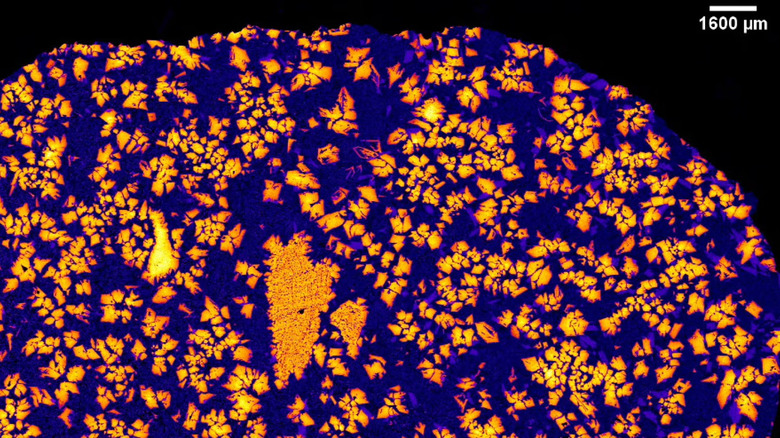
For this mineral to form, the meteorite would have required a pressure environment of at least 17.5 kilobars. In the context of the early solar system, such pressure can only be generated within the mantle of a massive, geologically active body. Based on the crystalline structure, researchers estimate the parent planet had a radius of at least 1,118 miles—roughly the size of our Moon or potentially as large as Mars. This suggests that the early solar system was a far more crowded and dynamic environment than previously modeled, filled with planetary bodies that were ultimately destroyed or assimilated during the chaotic formation period.
Official Responses and Expert Insights
NASA and the broader academic community have been quick to frame these findings as pivotal for future research. Regarding the ISS incident, NASA mission control emphasized that the crew remained in no immediate danger, citing the robust redundant safety protocols that allowed for the temporary isolation of the affected module. The agency continues to monitor the station’s structural health, which remains a primary concern as the ISS approaches its intended decommissioning date.
On the academic front, the sentiment regarding the JWST findings is one of profound optimism. "This is one of the best techniques we have to weigh a black hole," said Newman. "We were excited to extend it to a much earlier period in cosmic history." This success paves the way for further surveys of the early universe, allowing scientists to understand how supermassive black holes formed so quickly after the Big Bang—a question that remains one of the greatest riddles in modern cosmology.
Similarly, the findings concerning the lost protoplanet have prompted a re-evaluation of meteorite classification. Experts suggest that we must look beyond silica content as the primary indicator of planetary origin, as the pressure signatures found in NWA 12774 demonstrate that "asteroid-like" meteorites can actually be the shrapnel of much larger, more complex worlds.
Implications for Future Scientific Endeavors
The ripple effects of this week’s news are significant:
- Astrophysics: The ability to weigh dormant black holes provides a new metric to compare the growth of black holes with the growth of their host galaxies. This data will be essential for testing models of galactic evolution.
- Planetary Science: The confirmation of a "lost world" proves that our current solar system is merely the survivor of a much larger, more violent history. This encourages further search for "ghost" chemical signatures in other meteorites, potentially mapping the population of the early solar system.
- Public Health: The introduction of AI-designed vaccines represents a shift toward proactive, rather than reactive, medicine. By simulating viral protein structures, AI can predict mutations before they occur, potentially mitigating future pandemics before they gain a foothold.
- Space Exploration: The end of the MAVEN mission and the air leak issues on the ISS serve as a sobering reminder of the physical limits of space hardware. As we set our sights on the Moon and Mars, the lessons learned from these events—both the technical failures and the groundbreaking successes—are the literal building blocks of our future in the stars.
In summary, this week serves as a testament to the resilience of both human ingenuity and the instruments we create to understand our place in the universe. Whether by peering into the deep, dark gravity wells of the early cosmos or analyzing the silent, ancient stones of the Sahara, humanity continues to piece together the narrative of existence, one discovery at a time.
Related posts: