From Humble Roots to Retail Innovation: The Strategic Evolution of U.S. Market

The landscape of American convenience retail is undergoing a seismic shift, and at the forefront of this transformation is Oregon-based U.S. Market. What began as a modest entrepreneurial endeavor—funded by a mere $200 investment—has blossomed into a regional powerhouse. Under the leadership of founders Lal and Don Sidhu, the chain is currently executing an ambitious multi-year strategy designed to redefine the convenience store experience. By blending high-end store aesthetics, a sophisticated culinary roadmap, and a robust digital rewards ecosystem, U.S. Market is positioning itself not merely as a place to fuel up, but as a lifestyle destination.
A Legacy of Growth: The Chronology of U.S. Market
The story of U.S. Market is a quintessential American success story. Founded in Silverton, Oregon, the brand was built on the fundamental pillars of accessibility and community service.
- The Inception: With an initial investment of $200, the founders established a single location, prioritizing operational efficiency and customer intimacy. This "bootstrap" mentality allowed the brand to weather the early volatility of the retail market.
- The Scaling Phase: Throughout the early 2000s and 2010s, the company focused on geographic expansion within Oregon, strategically selecting sites that allowed for high-volume traffic while maintaining the personalized service that defined their early success.
- The Modern Pivot: As consumer expectations evolved, so did the leadership team. With Amar Sidhu stepping in as the director of business development, the company shifted its focus from basic convenience to experiential retail. This era marked the transition toward the proprietary "Q2" store prototype, signaling a departure from traditional "c-store" aesthetics toward a more modern, premium retail environment.
- The Path to 2027: Currently, the company is in the midst of an aggressive growth phase, with new sites under construction and a comprehensive rollout of private-label goods and proprietary food programs aimed at cementing their market dominance by 2027.
The Q2 Prototype: Redefining the Convenience Aesthetic
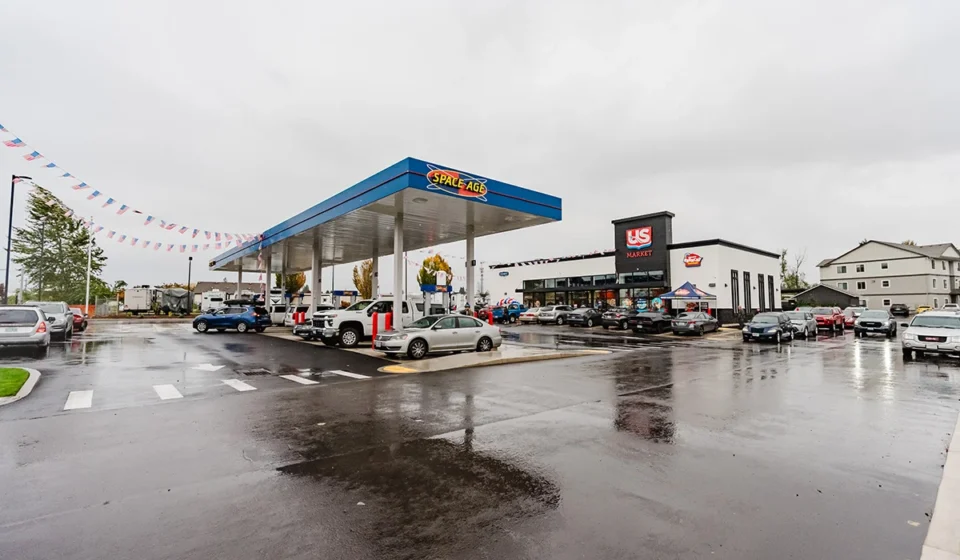
At the heart of the company’s current expansion is the "Q2" store prototype. This design language is more than just a fresh coat of paint; it is an intentional architectural shift.
"Our brand has evolved tremendously over the past several years, and this year we’re excited to introduce the next evolution of our store design with our new Q2 prototype," says Amar Sidhu. "It’s a modern direction that reflects who we are today, while setting the standard for where we’re going tomorrow."
The Q2 prototype emphasizes open sightlines, sustainable lighting, and a layout that naturally guides the customer toward high-margin foodservice areas. By moving away from the cluttered aisles of the past, U.S. Market is creating a premium environment that invites longer dwell times—a key metric for retailers looking to boost in-store spending.
Culinary Innovation: The Rise of "U.S. Kitchen"
Perhaps the most significant pillar of the company’s evolution is its aggressive move into foodservice. Recognizing that the modern consumer views the convenience store as a viable lunch or dinner option, U.S. Market is moving beyond pre-packaged snacks.
Balancing Partnership and Proprietary Growth
While the company maintains a strong, successful partnership with the established powerhouse Krispy Krunchy Chicken, it is simultaneously launching its own proprietary foodservice brand: U.S. Kitchen. This dual-track strategy allows the company to capitalize on the brand recognition of a national partner while building long-term equity in its own culinary identity.
The "U.S. Market" Private Label Philosophy
"At U.S. Market, we’ve always believed that our customers should never have to choose between affordability and quality," Sidhu explains. The private label strategy began with a flagship product—U.S. Market Water—and has since expanded into a sophisticated catalog of goods.
The vision for the future is distinctly chef-driven. The menu is slated to include:
- The "Big 10" Smash Burger: A high-quality, made-to-order signature item.
- Handcrafted Quesadillas: Focused on fresh, authentic ingredients.
- Seasonal Bowls: Designed to cater to health-conscious commuters and local workers.
By controlling the supply chain and branding for these items, U.S. Market is effectively increasing its profit margins while ensuring that the "U.S. Market" brand becomes synonymous with quality.
The "Dirty Soda" Phenomenon: Capturing the Experience Economy
One of the most innovative aspects of the U.S. Market strategy is the adoption of the "Dirty Soda" trend. Originating from independent specialty shops, this concept involves mixing sodas with flavored syrups, creams, and purees to create customized, non-alcoholic mocktails.
By bringing this to the convenience store level, U.S. Market is tapping into the "experience economy." A customer coming in for an "Old Fashioned" mocktail—made with Coca-Cola, vanilla, and other flavor enhancers—is not just buying a drink; they are engaging in a bespoke retail moment. This destination-style atmosphere is a crucial component of the company’s goal to transition from a "stop" to a "destination."
Digital Transformation: The My U.S. Market Loyalty Program
As the retail industry moves toward a data-driven model, U.S. Market is preparing to launch the "My U.S. Market" rewards program. This platform represents a significant technological investment, aimed at bridging the gap between physical retail and digital engagement.
The program promises to offer:
- Personalized Offers: Utilizing purchase history to provide targeted discounts, increasing the likelihood of return visits.
- Fuel Savings: Leveraging the company’s core business to drive loyalty.
- Connected Shopping: A seamless experience that rewards the customer across both the retail store and the foodservice counter.
"We’ll be launching the My U.S. Market rewards program, allowing customers to earn exclusive rewards, receive personalized offers, save on fuel, and enjoy a more connected shopping experience every time they visit one of our locations," Sidhu notes.
Strategic Implications: What This Means for the Industry
The trajectory of U.S. Market serves as a case study for the broader convenience store industry. The shift toward higher-quality private labels, proprietary fresh food, and digital loyalty programs is no longer optional—it is a requirement for survival in a market increasingly dominated by big-box retailers and fast-casual dining.
The Impact on Local Competition
By elevating the design and culinary offerings, U.S. Market is effectively raising the barrier to entry for local competitors. Independent stores that fail to innovate in terms of foodservice or digital engagement will find it difficult to compete with the "destination" status that U.S. Market is cultivating.
Operational Challenges and Opportunities
Expanding from a single location to a modern chain with sophisticated proprietary food programs presents significant logistical hurdles. Maintaining consistency in food quality across multiple locations, managing a private label supply chain, and rolling out a complex digital loyalty program requires a robust corporate infrastructure. However, if U.S. Market can successfully navigate these challenges, the payoff in customer loyalty and brand equity will be substantial.
Looking Toward 2027 and Beyond
As U.S. Market heads into 2027, the focus is clearly on sustainability and scalability. The company’s ability to weave together its legacy roots with a high-tech, chef-inspired future will likely determine its long-term success. If the Q2 prototype and the My U.S. Market loyalty program perform as expected, the brand is well-positioned to become a dominant player in the Pacific Northwest and beyond.
In conclusion, U.S. Market is a brand in motion. By leveraging its founders’ initial vision for accessibility and pairing it with a bold, forward-thinking strategy, the retailer is successfully transitioning from a local staple to a modern retail powerhouse. For customers, this means higher-quality food, more personalized service, and a better overall experience; for the industry, it is a reminder that even the most established business models can—and must—evolve to remain relevant.