Inside the Watch Roll: How Two-Time ‘Top Chef’ Winner Buddha Lo Found His Horological Voice Through Family, Flavor, and Fine Dining

Main Facts: A Culinary Master’s Hidden Passion for Horology
For Buddha Lo, the world-renowned executive chef of New York City’s Michelin-starred Huso and a back-to-back champion of Bravo’s grueling culinary battleground Top Chef, precision is a daily religion. Whether he is micro-tweezering delicate, jewel-toned elements onto a plate of oscietra caviar or orchestrating a meticulously timed multi-course tasting menu, every fraction of a millimeter and every second counts in Lo’s professional universe.
It should come as little surprise, then, that this obsession with micro-engineering, design, and execution has spilled over into another world defined by gears, dials, and heritage: haute horology.
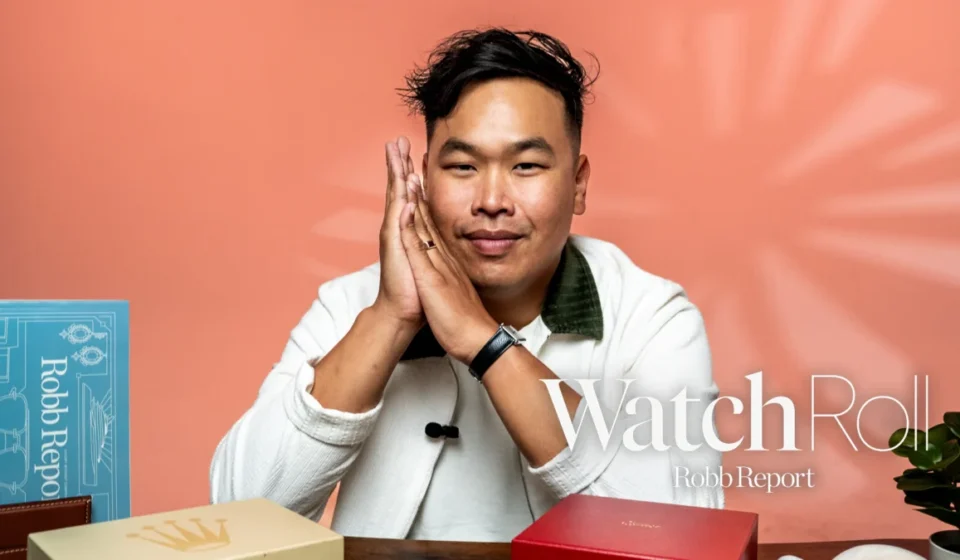
In the latest installment of Robb Report’s exclusive Watch Roll video series, Chef Buddha Lo opened up his personal watch case to showcase a curated collection that bridges emotional inheritance with modern style. Far from being a casual collector chasing the latest hype pieces on secondary markets, Lo’s horological journey is deeply personal. It is anchored by the legacy of his late father—a master craftsman in his own right—and punctuated by pieces that reflect the bold, artistic flair that has made Lo one of the most recognizable and celebrated chefs of his generation.
The crown jewel of Lo’s collection is a striking, diamond-accented Rolex Datejust Ref. 116243, inherited from his father. Featuring a 36mm two-tone case powered by the reliable Caliber 3135 movement, and framed by a captivating blue dial sparkling with diamonds—including distinctive markers at the 6 and 9 o’clock positions—the watch is much more than a status symbol. To Lo, it is a wearable family heirloom that he has proudly worn on national television, including Top Chef and America’s Culinary Cup.
Beyond the Rolex, Lo’s collection highlights a refined taste for understated elegance and unexpected geometry, featuring a timeless Cartier Tank Must De Cartier (Ref. WSTA0136) for everyday service at Huso, and a vintage-leaning Cartier Santos Ronde Octagon that offers a subtle nod to the integrated-bracelet aesthetic popularized by luxury powerhouses like Audemars Piguet.
Chronology: From Inheritance to Iron Chef—The Timeline of a Watch Collector
While Buddha Lo’s culinary career has been a rapid, high-altitude ascent through the ranks of global gastronomy, his entry into the watch collecting community is a relatively recent chapter, born out of bittersweet circumstances.
Phase One: The Catalyst (The Passing of a Father)
Several years ago, Buddha Lo’s father passed away, leaving behind a treasured collection of timepieces. For Lo and his brother, inheriting these watches served as both a poignant grieving process and an unexpected awakening. Growing up, Lo had always admired his father’s eye for quality and detail, but handling the physical objects that once adorned his wrists sparked an immediate, visceral fascination with horology. What began as an emotional attachment to his father’s personal belongings quickly evolved into a dedicated passion for understanding movements, complications, history, and design.
Phase Two: Discovering Personal Style (The Cartier Era)
As Lo stepped into the spotlight—conquering Top Chef and establishing himself at the helm of Huso—he began curating pieces that reflected his own evolving identity. Roughly three years ago, while browsing online, Lo stumbled upon a Cartier Santos Ronde Octagon. Captivated by its unique geometric bezel, integrated bracelet, and vintage charm, he made it his own. Around the same time, he added the Cartier Tank Must De Cartier (Ref. WSTA0136) to his rotation, realizing that the clean lines and historic pedigree of the French maison made for the ultimate, reliable daily companion in a high-heat, high-stress restaurant kitchen.
Phase Three: Primetime Television and Immortality
With his collection established, Lo made a conscious decision to integrate his father’s watches into his public persona. Rather than keeping fragile heirlooms locked away in a safe, Lo wore his father’s diamond-set Rolex Datejust Ref. 116243 directly onto the sets of Top Chef and America’s Culinary Cup. By doing so, he ensured that his father’s presence would be permanently immortalized in high-definition broadcast history—a tangible piece of family lore for future generations to witness.
Supporting Data: Inside Buddha Lo’s Watch Roll
To understand a collector’s mindset, one must examine the specific pieces they choose to wear. Lo’s rotation offers a fascinating glimpse into a chef’s psyche: a balance of high-impact showmanship, understated daily utility, and structural appreciation.
| Brand & Model | Reference Number | Key Specifications | Significance to Buddha Lo |
|---|---|---|---|
| Rolex Datejust | Ref. 116243 | 36mm two-tone case, Caliber 3135 automatic movement, blue dial with diamond hour markers (including 6 and 9 o’clock). | Inherited from his late father; described as having "the most flavor in his collection." Worn on Top Chef to ensure his children and grandchildren can see him wearing their grandfather’s watch. |
| Cartier Tank Must De Cartier | Ref. WSTA0136 | Quartz or mechanical movement, classic rectangular case, Roman numeral dial, leather strap. | Chosen as a "nice, everyday wear" piece that effortlessly transitions into the refined, elegant dining room environment at Huso. |
| Cartier Santos Ronde Octagon | Vintage / Secondary Market | Unique octagonal bezel, integrated metal bracelet, classic round case silhouette. | Discovered online; purchased out of pure attraction to its rare aesthetic. Lo notes it has a "sort of AP [Audemars Piguet] feel" due to its integrated bracelet design. |
Official Perspectives: The Philosophy of Craftsmanship
When discussing his dual passions, Buddha Lo draws a direct parallel between the meticulous labor required to build a fine Swiss timepiece and the ephemeral art of high-end gastronomy.

In his interview with Robb Report, Lo reflected on the shared DNA of chefs and watchmakers:
"I see a lot of similarities between watchmaking and cooking. Tweezering a lot of mini elements onto plates just for the overall effect and beauty of it. I mean, it will probably be the same as any watchmaking shop around the world, a lot of moving parts. But for our part, people appreciate it for only a couple seconds, and then they devour it."
This quote captures the poignant paradox of Lo’s profession. A master watchmaker spends months hand-beveling bridges, polishing screws, and regulating hairsprings to create an object designed to last for centuries, passed down through generations like the Rolex Datejust Lo received from his father. Conversely, a Michelin-starred chef spends hours butchering, fermenting, reducing, and plating a dish designed to be consumed in a matter of moments.
Yet, for Lo, the watches serve as a permanent anchor in a transient career. While a masterpiece of modern cuisine vanishes the moment the guest puts down their fork, the watch on his wrist ticks forward, recording the hours spent in the kitchen, the pressure of competition, and the enduring memory of his father.
Implications: The Intersection of Haute Horology and Haute Cuisine
Buddha Lo’s emergence as a notable watch collector highlights a broader cultural trend: the deep intersection between contemporary gastronomy and luxury lifestyle markers like independent watchmaking, vintage timepieces, and high-end fashion.
In recent years, top-tier chefs have transitioned from anonymous back-of-house laborers to global cultural icons. With this elevation in status comes an appreciation for the finer things outside the culinary sphere. Just as athletes and musicians have long used watches as a canvas for personal expression, elite chefs are increasingly embracing horology as a reflection of their dedication to craft, detail, and heritage.
1. The Death of the "Beater" Kitchen Watch
Traditionally, working chefs wore disposable digital watches or rugged, inexpensive quartz timepieces to withstand the heat, water, and bumps of a commercial kitchen. Lo turns this convention on its head. By wearing a Cartier Tank or a vintage Santos during service at Huso, he demonstrates that fine timepieces are meant to be worn, lived in, and integrated into the rhythm of daily life rather than preserved as museum pieces.
2. The Emotional Economy of Heirlooms
In an era dominated by hyper-consumerism and the pursuit of waitlist-heavy stainless-steel sports watches, Lo’s collection reminds the collecting community of the emotional core of horology. His Rolex Datejust is valuable not because of its secondary market premium or diamond-set bezel, but because it belonged to his father. As Lo eloquently notes, the true value of the watch lies in its ability to transcend time, allowing future generations to look back at television archives and see their grandfather’s legacy actively participating in their father’s greatest career triumphs.
3. The Future of Chef-Collector Collaborations
As culinary stars continue to partner with luxury brands—ranging from knife makers and wine estates to luxury automotive and watch manufacturers—figures like Buddha Lo serve as natural ambassadors for the watch industry. Their innate understanding of tolerances, balance, and aesthetic harmony makes them natural horophiles.
Whether he is plating caviar at Huso or consulting on his next culinary venture, Buddha Lo proves that whether you are working with microscopic gears or micro-herbs, true mastery is defined by an uncompromising attention to detail—and the stories you choose to wear on your wrist while you do it.