
Taming the Tumbleweeds: Why the Furminator Has Become an Essential Tool for Peak Shedding Season

As the seasons shift, pet owners across the country are facing a familiar and frustrating phenomenon: the sudden, aggressive onset of "peak shedding season." For those sharing their homes with double-coated breeds—such as German Shepherds, Huskies, or Golden Retrievers—the arrival of spring and autumn often translates into a living room carpet transformed into a landscape of fur "tumbleweeds." While vacuuming remains a necessary chore, the root cause of the mess lies in the undercoat. Enter the Furminator Deshedding Tool, a device that has recently surged in popularity among pet care professionals and home-owners alike as the gold standard for managing canine hair fallout.
Main Facts: The Science Behind the Shedding
Shedding is a natural physiological process for dogs, serving as a way to regulate body temperature and remove damaged or dead hair. However, for domestic breeds, this process often results in excessive dander and fur accumulation. The Furminator distinguishes itself from standard slicker brushes or grooming combs by its specific engineering.
Unlike a brush meant for detangling the topcoat, the Furminator is a deshedding tool. It features a stainless steel edge designed to reach through the topcoat safely to remove the loose, dead undercoat. By effectively "harvesting" this fur before it naturally detaches and floats onto furniture, rugs, and clothing, owners can reduce shedding by up to 90%. Priced starting at $31.87, the tool is available in various sizes to accommodate different breeds, ensuring that the teeth spacing and blade length are appropriate for the specific hair density of the animal.
A Chronology of Grooming: From Seasonal Problem to Proactive Solution
The evolution of home grooming has seen a significant shift over the last decade. Historically, pet owners relied on standard bristle brushes that primarily smoothed the topcoat, often failing to address the dense, insulating undercoat where the bulk of shedding originates.
- Pre-2010s: Grooming was largely viewed as a surface-level aesthetic activity. Professional grooming visits were the primary method for dealing with heavy shedding, often expensive and time-consuming.
- The Mid-2010s: The introduction of specialized deshedding tools changed the landscape. Owners began to realize that consistent home maintenance could significantly extend the time between professional grooming appointments.
- 2020-2024: With the increase in pet adoption rates and the rise of social media-driven pet care education, tools like the Furminator became viral sensations. The focus shifted from reactive cleaning (vacuuming) to proactive maintenance (grooming).
- 2025 (Present Day): We are currently in the midst of a peak shedding cycle. Data from major pet retailers, including Chewy, indicates a sharp increase in searches and sales for specialized deshedding equipment, suggesting that pet owners are becoming more sophisticated in their approach to home hygiene.
Supporting Data: Why Owners are Making the Switch
The efficacy of the Furminator is supported by a growing body of anecdotal evidence and consumer satisfaction metrics. In a recent review analysis, users highlighted three primary benefits: the reduction of household allergens, the ease of use, and the positive physical response from the pets.
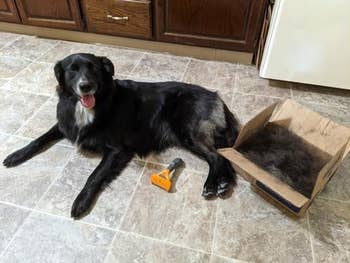
One particularly telling review from a user named Lauren, who owns a multi-breed mix of German Shepherd, Australian Shepherd, and Husky, captures the sentiment of many. Her dog, a "heavy shedder" by genetic design, experienced significant relief after using the tool. She noted that while she was initially skeptical of the price tag, the results—a soft, shiny coat and a drastic reduction in loose fur—confirmed the tool’s value.

The data suggests that the "investment vs. reward" ratio is high. By spending roughly $30-$40 once, owners avoid the recurring costs of professional de-shedding treatments, which can cost anywhere from $50 to $150 per visit depending on the dog’s size. Furthermore, the tool’s ability to prevent matting in the undercoat serves as a long-term health benefit, preventing the skin irritation that often accompanies heavy, trapped fur.
Official Responses and Expert Perspectives
Professional groomers generally advocate for the use of the Furminator, though they emphasize the importance of technique. According to industry experts, the most common mistake made by home users is applying too much pressure.
"The tool is designed to glide, not to scrape," says one industry consultant. "The goal is to remove the loose undercoat that has already detached from the follicle. If you press too hard, you risk irritating the skin or damaging the live coat."
Official product guidelines from the manufacturer emphasize that the tool should be used on a clean, dry coat. They recommend starting at the neck and working toward the tail, using long, gentle strokes. By following this method, owners can mirror the professional techniques used in salons. Manufacturers also note that the tool is not intended for all coat types; it is specifically optimized for breeds with dense undercoats and is generally not recommended for non-shedding breeds (such as Poodles or Bichon Frises) whose coats require different maintenance.
Implications for the Modern Pet Household
The shift toward using high-quality deshedding tools has profound implications for the relationship between pets and their owners.
1. Improved Indoor Air Quality
Loose fur is a primary vehicle for dust, dander, and pollen. By removing these particles at the source—the pet’s coat—before they become airborne, households can significantly improve their indoor air quality. This is particularly vital for families with mild pet allergies.
2. Enhanced Bonding
Grooming is not merely a hygienic necessity; it is a social bonding experience. When a tool like the Furminator is used correctly, the sensation is often perceived as a massage by the dog. This daily or weekly ritual helps to reinforce the bond between the human and the animal, creating a sense of calm and routine that benefits the dog’s mental well-being.
3. Economic Efficiency
As noted by satisfied consumers, the economic impact is clear. While a vacuum cleaner is an essential household item, its lifespan is often shortened by the grit and hair of heavy-shedding pets. By capturing the fur before it hits the floor, the Furminator essentially acts as a protective accessory for your home appliances, extending the life of your vacuums and air purifiers.
4. Dermatological Health
Trapped undercoat is a breeding ground for bacteria and can lead to "hot spots"—painful, inflamed areas of skin that are common in thick-coated breeds during the transition between seasons. Consistent use of a deshedding tool ensures that air can circulate properly against the dog’s skin, preventing moisture buildup and reducing the likelihood of dermatological issues.
Conclusion: A Seasonal Necessity
As we navigate the current peak shedding season, the evidence is clear: the Furminator has moved beyond a simple gadget to become a staple of responsible pet ownership. It offers a solution to a problem that has plagued dog owners for generations.
While the price point may seem elevated compared to generic store-brand brushes, the combination of professional-grade design, long-term durability, and the significant reduction in household maintenance makes it a sound investment. As Lauren and countless other users have discovered, the true value of the tool is found in the peace of mind that comes with a cleaner home and a healthier, happier pet.
For those currently battling the "tumbleweeds" of fur in their hallways and living rooms, the message from the current market is simple: address the source, invest in the right equipment, and reclaim your home from the seasonal shed. With the right technique and the proper tool, peak shedding season doesn’t have to be a season of stress.
Related posts: