The Architecture of Action: How "Proactive Laziness" and Environmental Design Can Rewire Your Daily Life

By Global Lifestyle & Behavior Trends Desk
Published: October 24, 2023
Main Facts
In the modern pursuit of self-improvement, millions of people look toward motivation, willpower, and aggressive goal-setting as the primary engines of personal transformation. However, a growing body of behavioral science—popularized by researchers and bestselling authors alike—suggests that human beings are fundamentally creatures of least resistance.
At the center of this realization is a deceptively simple framework known as "resetting the room," a behavioral strategy pioneered by IT professional Oswald Nuckols of Natchez, Mississippi. Rather than viewing tidiness as a moral virtue or a reactive chore, Nuckols and behavioral experts frame environmental resetting as a proactive design strategy. The core thesis is straightforward: by arranging your physical surroundings immediately after completing a task to make the next action as frictionless as possible, you eliminate the psychological barriers that stall productivity and breed bad habits.
This concept extends far beyond basic household cleaning. When applied systematically, environmental design allows individuals to manipulate "friction"—the amount of effort required to execute a behavior. By lowering the friction for positive habits (such as laying out workout clothes or pre-sorting greeting cards) and raising the friction for detrimental ones (such as unplugging the television or storing smartphones in separate rooms), individuals can fundamentally alter their daily routines without relying on finite reserves of willpower.
Chronology
The modern understanding of environmental design and friction management has evolved over decades through the intersection of psychology, behavioral economics, and practical self-optimization:
- Mid-20th Century: Early behavioral psychologists, notably B.F. Skinner and later pioneers in cognitive behavioral therapy, begin documenting how external stimuli dictate human response, establishing the baseline theory that environment supersedes raw willpower in shaping behavior.
- Early 2010s: As the digital age accelerates, concerns over distraction, attention fragmentation, and digital addiction peak. Productivity researchers begin looking closely at "choice architecture"—a term coined by Richard Thaler and Cass Sunstein—to explain how the physical arrangement of choices alters human decision-making.
- Mid-2010s: Oswald Nuckols, an IT developer working in Mississippi, formulates his personal philosophy of "resetting the room," integrating small micro-habits into his daily routine that prioritize future convenience over immediate relaxation.
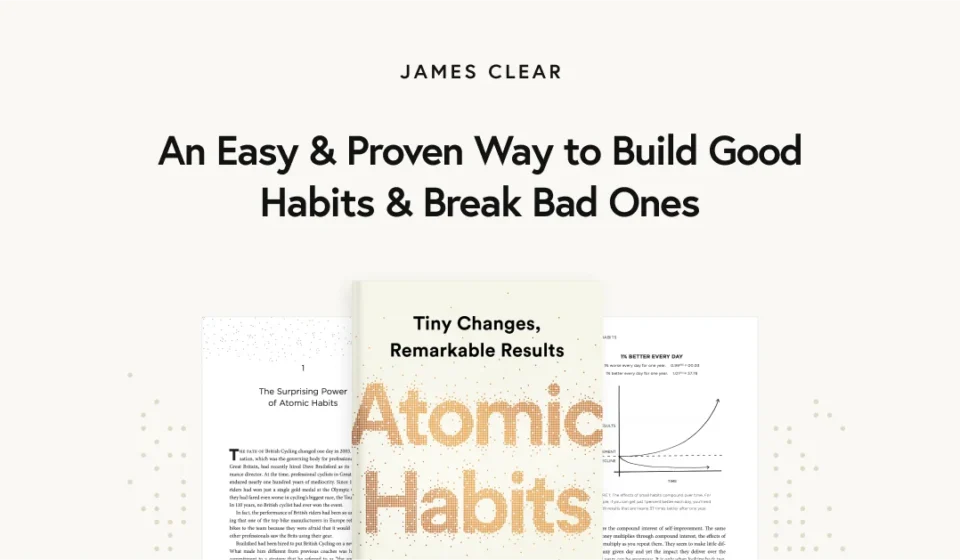
- 2018: Habit expert James Clear publishes Atomic Habits, featuring Nuckols’ strategy and dedicating entire frameworks to "priming the environment." The book spends hundreds of weeks on the New York Times bestseller list, bringing environmental friction management into the global mainstream.
- Present Day: Behavioral health specialists, corporate wellness programs, and educational institutions increasingly adopt environment-first paradigms, moving away from exhortations of "mental toughness" toward structural redesigns of homes, offices, and digital ecosystems.
Supporting Data & Behavioral Insights
While self-help advice often centers on intangible qualities like motivation, empirical data regarding human behavior consistently points to spatial and contextual cues as the ultimate drivers of habit formation.
- The Proximity Effect: Studies in behavioral psychology repeatedly demonstrate that visual and physical proximity dramatically increases consumption and engagement. For instance, when food is placed directly on a desk versus six feet away, consumption rates drop significantly. Similarly, individuals who keep their smartphones within arm’s reach check them up to double the frequency of those who store them out of sight.
- The Cost of Context Switching: Research from neurological and workplace productivity studies indicates that recovering from a single distraction—such as a glance at an unprompted text message—can take an average of over 20 minutes to refocus entirely on the original task. Eliminating early-morning phone accessibility, therefore, yields multi-hour blocks of uninterrupted cognitive capacity.
- Friction Thresholds: In behavioral economics, the "Law of Least Effort" states that when deciding between multiple courses of action, humans will naturally gravitate toward the option that requires the least expenditure of energy. Environmental priming leverages this law by making the desired habit the literal path of least resistance.
To illustrate how these data points translate into daily life, consider the following comparative framework of environmental manipulation:
| Behavioral Goal | High-Friction Setup (Traditional Approach) | Low-Friction Setup (Environmental Design) |
|---|---|---|
| Cooking a Healthy Breakfast | Waking up to a dark, cluttered kitchen; deciding what to make; searching for pans and utensils. | Skillet on the stove, cooking spray on the counter, and plates laid out the night before. |
| Sending Greeting Cards | Remembering someone had a life event, driving to a store, browsing cards, buying stamps. | Keeping a pre-sorted box of occasion-specific cards on hand for instant dispatch. |
| Reducing Screen Time | Relying on willpower to ignore a phone buzz sitting right next to you on the desk. | Leaving the phone in another room until midday, rendering mindless checking physically inconvenient. |
| Curbing Television Bingeing | Telling oneself "I’ll only watch one show," then scrolling endlessly through streaming menus. | Unplugging the TV after every use, removing remote batteries, or storing the device out of sight. |
Official Responses & Expert Perspectives
Behavioral scientists, organizational psychologists, and productivity experts have increasingly rallied around the concept of environmental design, viewing it as a vital antidote to modern burnout and decision fatigue.
Dr. Wendy Wood, Provost Professor of Psychology and Business at the University of Southern California and author of Good Habits, Bad Habits, has long argued that people who appear to have extraordinary self-control are actually just adept at structuring their lives to avoid temptation.
"We tend to praise people with good self-control for their mental fortitude," Wood notes in her research. "However, our findings show that individuals with strong habits are not necessarily exercising more willpower. Rather, they have optimized their environments so that they rarely find themselves in a war of attrition with their own impulses."
From a corporate leadership perspective, human resource executives are beginning to implement environmental modifications within office structures. By redesigning hybrid workspaces—such as creating designated "focus pods" free of visual clutter and removing constant digital pings—companies report measurable increases in employee output and a reduction in reported stress levels.
Furthermore, educational consultants are advising parents and teachers to apply these principles to children’s learning environments. By organizing study stations with books and materials laid out ahead of time, children experience significantly lower rates of procrastination and transition friction when starting homework.
Implications
The implications of adopting a philosophy of proactive environmental design extend far beyond personal productivity; they touch upon mental health, societal trends, and the future of work and lifestyle design.
1. The Death of the "Willpower Myth"
For generations, cultural narratives have suggested that personal failure—whether in fitness, finance, or career advancement—is a direct result of moral weakness or a lack of discipline. The normalization of environmental priming dismantles this punitive myth. By recognizing that human behavior is largely a product of context, individuals can stop blaming themselves for failing to maintain difficult habits in chaotic environments. Instead, they can shift their focus toward becoming architects of their surroundings.
2. Cumulative Efficiency and "Proactive Laziness"
As Oswald Nuckols observed, the ultimate irony of environmental preparation is that it masquerades as hard work while actually being an act of profound laziness. Cleaning the toilet while the shower water warms up, putting the TV remote back in its designated slot, or packing gym bags before going to bed requires only seconds of effort. Yet, the cumulative return on investment is massive. Over weeks, months, and years, living in an optimized ecosystem saves hundreds of hours of frustration, hesitation, and decision fatigue.
3. Redesigning the Digital Frontier
As the boundary between physical and digital spaces blurs, the principles of friction management are proving vital for digital wellness. Tech-literate consumers are applying "digital environmental design" by turning off all non-human notifications, utilizing grayscale phone displays to reduce visual stimulation, and locking productivity-sapping applications behind password walls. The future of digital well-being will likely rely less on self-imposed screen-time limits and more on structural blockades that make mindless consumption functionally cumbersome.
Conclusion: Designing a World to Do Right
Ultimately, whether approached from the perspective of an individual managing daily chores, a parent organizing a household, or a leader shaping an organization’s culture, the central question remains the same: How can we design a world where it is easy to do what is right?
By shifting our focus from execution to preparation—from fighting our impulses to redesigning our rooms—we unlock a sustainable pathway to long-term behavioral change. When you master the habits of preparation, the habits of execution cease to be a daily struggle and become the natural, effortless flow of everyday life.