
The Architecture of Action: How "Proactively Lazy" Environment Design is Revolutionizing Personal Productivity

NEW YORK — In an era dominated by relentless digital distractions, complex time-management applications, and towering self-help libraries, behavioural scientists and productivity experts are arriving at a surprisingly minimalist conclusion: the secret to building lasting habits has very little to do with willpower, and almost everything to do with architecture.
According to insights popularized in James Clear’s bestselling framework Atomic Habits, the most successful individuals do not rely on monumental bursts of motivation to achieve their goals. Instead, they act as subtle interior designers of their daily lives. By systematically manipulating their immediate surroundings, they construct a world where doing the right thing becomes the path of least resistance, while destructive behaviors are effectively fenced off by friction.
Main Facts: The Power of Environment Priming
At the core of environmental design is a simple premise: human beings are profoundly lazy, and our brains are biologically wired to conserve energy. Rather than fighting this evolutionary trait, productivity strategists suggest leveraging it through a concept known as "priming."
When an individual organizes a physical or digital space for its intended future purpose, they reduce the cognitive and physical friction required to execute that action. Conversely, introducing small obstacles—or friction—into the path of a bad habit can extinguish it before it begins.
This philosophy challenges the traditional cultural narrative surrounding productivity, which often equates success with grueling discipline. Instead, it posits that true efficiency is "proactively lazy." By investing a few seconds upfront to prepare a space, individuals can reclaim hours of focused time, eliminate decision fatigue, and automate their success.
Chronology: The Evolution of "Resetting the Room"
The modern understanding of environmental priming has evolved from anecdotal productivity hacks into a codified behavioral science backed by cognitive research.
- Pre-2018 (The Discovery Phase): While researching human behavior for his upcoming book, author James Clear encountered the methodologies of Oswald Nuckols, an IT developer from Natchez, Mississippi. Nuckols practiced a routine he called "resetting the room"—a systematic approach where every space is tidied not just to clean up past actions, but to prepare for future ones.
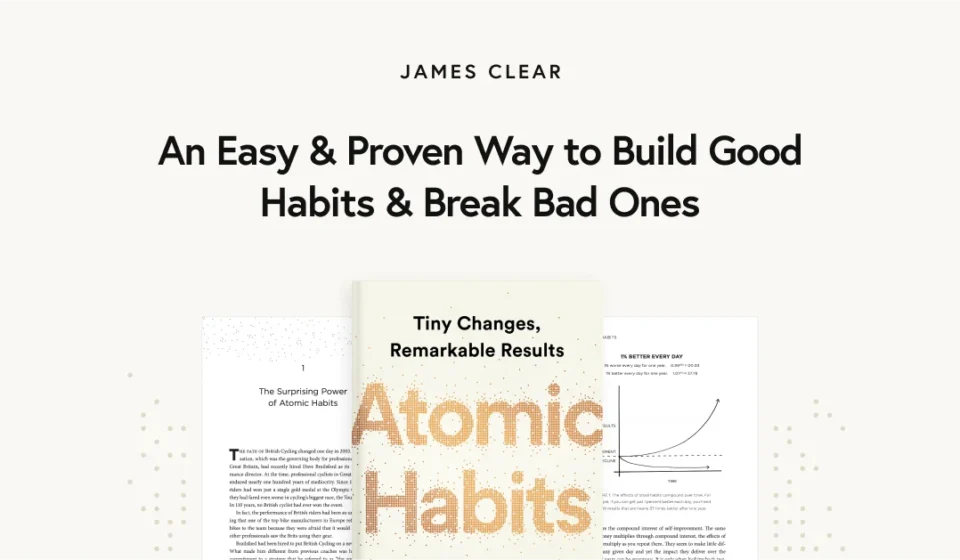
- October 2018 (Mainstream Publication): The concepts of environmental design and habit friction were formalized with the release of Atomic Habits. Chapter 12 of the book popularised the twin concepts of making good habits obvious and attractive, and bad habits invisible and difficult.
- 2019–Present (The Digital and Physical Integration Era): As remote work expanded globally in the wake of the pandemic, the lines between living and working spaces blurred. Behavioral psychologists began heavily emphasizing environmental cues—such as removing smartphones from bedrooms, creating dedicated work zones, and presorting digital tools—as essential strategies for maintaining mental health and productivity in distracted environments.
Supporting Data and Real-World Applications
To understand how environmental design operates in practice, one must examine the micro-habits that govern daily life. Behavioral analysts point to several distinct categories of environment manipulation, divided into two primary strategies: lowering the path of least resistance and raising the path of most resistance.
1. Priming for Success (Lowering Friction)
When a space is arranged to facilitate a positive behavior, execution rates skyrocket.
- The Kitchen Blueprint: Individuals wishing to eat a healthy breakfast often fail because the barrier to entry—pulling out pans, gathering utensils, and finding ingredients—occurs when willpower is lowest in the morning. By placing the skillet on the stove, setting out cooking spray, and arranging utensils the night before, the morning cooking process becomes frictionless.
- The Prepared Communicator: Simple administrative tasks, such as sending greeting cards, often lapse due to logistical hurdles. Research shows that individuals who keep pre-sorted boxes of cards categorized by occasion (birthdays, weddings, condolences) maintain significantly higher rates of thoughtful outreach than those who must make a dedicated trip to the store for each event.
- The IT Developer’s Standard: Oswald Nuckols’ routine offers a masterclass in cumulative preparation. By wiping down the toilet while the shower water warms up—capitalizing on dead time—and folding couch blankets immediately after watching television, Nuckols ensures his home remains perpetually organized. "People think I work hard, but I’m actually really lazy," Nuckols notes. "I’m just proactively lazy. It gives you so much time back."
2. Engineering Friction (Raising the Path of Most Resistance)
Conversely, when a habit is detrimental, the most effective intervention is not self-reproach, but the deliberate addition of inconvenience.
- Digital Boundaries: The average smartphone user checks their device dozens of times a day out of pure muscle memory. Clinical observations demonstrate that placing a smartphone in a separate room during deep-work blocks dramatically reduces the frequency of mindless checking. The physical distance introduces just enough friction to prompt conscious deliberation over whether the phone is genuinely needed.
- The Television Barrier: For compulsive television viewers, behaviorists suggest unplugging the television after each use, removing the batteries from the remote, or, in extreme cases, relocating the device to a closet. Requiring an extra ten to sixty seconds of physical labor to access entertainment significantly suppresses impulsive binge-watching.
- Culinary and Social Moderation: Minor adjustments—such as hiding alcoholic beverages at the very back of the refrigerator or temporarily deleting social media applications from a phone—leverage the brain’s reluctance to exert effort. Without a true addiction in play, these micro-obstacles are frequently enough to break the cycle of automatic consumption.
Official Responses and Expert Perspectives
Behavioral scientists, psychologists, and organizational leaders have increasingly endorsed environment-first design as a cornerstone of modern performance management.
Dr. Wendy Wood, Provost Professor of Psychology and Business at the University of Southern California and author of Good Habits, Bad Habits, has long emphasized that relying on sheer willpower is a losing battle.
"People who seem to have incredible self-control are often just better at structuring their lives to avoid temptation," Wood notes in her research. "They set up environments where they don’t have to exercise self-control in the first place."
Corporate wellness consultants and executive coaches are adopting similar frameworks. Rather than training employees to "focus harder," forward-thinking organizations are redesigning digital workspaces—disabling non-essential notification badges, establishing asynchronous communication norms, and encouraging physical separation from personal devices during collaborative sessions.
"When we look at leadership development," says corporate culture strategist Elena Vance, "the question shouldn’t just be, ‘How do we motivate our teams?’ It must be, ‘How do we design a corporate ecosystem where doing the high-value work is the easiest, most frictionless choice available?’"
Implications for Individuals and Society
The widespread adoption of environmental priming carries profound implications across multiple domains, from personal mental health to public policy and education.
The Cumulative Effect of Micro-Changes
The human brain evaluates tasks based on perceived effort. If the effort required to initiate a good habit is high, procrastination sets in. By breaking environments down into meticulously primed zones, individuals can accumulate dozens of subtle advantages throughout the day.
An individual who wakes up to a prepared kitchen, sits at a desk free of digital distractions, and returns home to an orderly living room experiences significantly lower baseline cortisol levels. The reduction in decision fatigue preserves cognitive bandwidth for complex problem-solving, creative endeavors, and interpersonal relationships.
Societal and Architectural Shifts
On a broader scale, the philosophy of environment design challenges the hyper-individualistic view of human failure. When students struggle to study or citizens struggle to maintain healthy lifestyles, society frequently resorts to moralizing—blaming a lack of discipline or character.
However, embracing an environmental perspective shifts the diagnostic lens toward structural solutions. Urban planners, educators, and architects are increasingly asking how public spaces, classrooms, and workplaces can be engineered to encourage positive communal behaviors naturally. From bike lanes that make cycling safer and more appealing than driving, to classroom layouts that naturally foster collaboration, designing the environment is the ultimate lever for large-scale behavioral change.
Conclusion: Mastering the Art of Preparation
Ultimately, the journey toward lasting self-improvement begins with a shift in perspective. As articulated in the foundational tenets of modern behavioral design, mastery does not belong to those who suffer through the greatest friction, but to those who eliminate it entirely.
Whether applied by an individual writer trying to protect their morning focus, a parent organizing a household, or a leader reshaping an organizational culture, the guiding principle remains unchanged. By asking the fundamental question—"How can we design a world where it’s easy to do what’s right?"—we can stop fighting our biology and start building systems that work for us.
When you master the habits of preparation, the habits of execution will follow naturally.