The Evolution of Accessibility: Analyzing the Anycubic 11th Anniversary Sale and the State of Modern 3D Printing

As the additive manufacturing sector matures, the barrier to entry for both hobbyists and professional designers continues to lower. A pivotal moment in this trend is currently unfolding with the Anycubic 11th anniversary sale. Featuring discounts of up to $500 on select bundles, the event serves as more than just a promotional window; it acts as a barometer for how consumer-grade 3D printing technology is scaling, shifting from niche tinkering to a mainstream creative utility.
Main Facts: What the Anniversary Sale Means for Creators
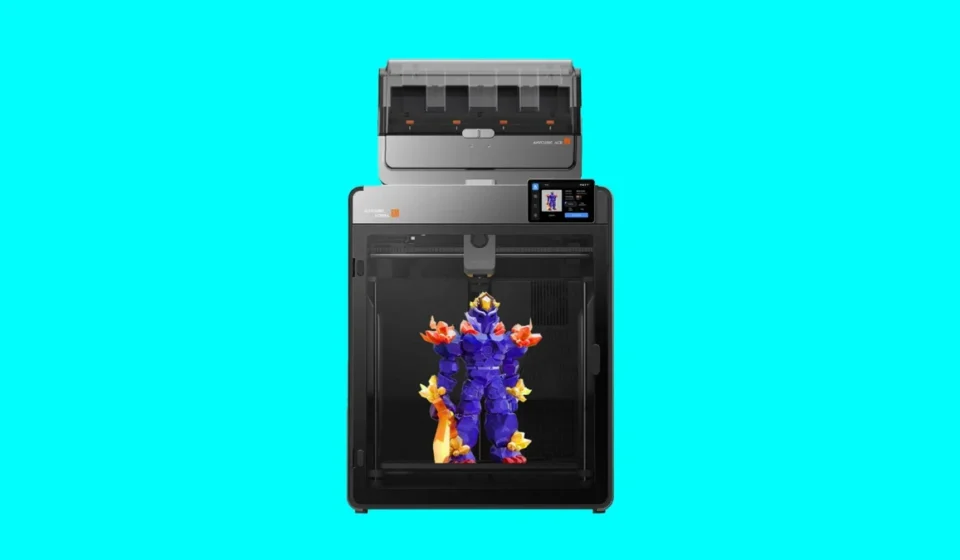
The Anycubic 11th anniversary event is currently live, offering significant price reductions across the company’s FDM (Fused Deposition Modeling) and resin-based product lines. The headline offer, a $170 discount on the Kobra S1 ACE 2 Pro Combo, highlights a broader industry shift toward multi-material and multi-color capability.
This specific unit allows for 16-color FDM printing, a feature that was largely relegated to high-end industrial machines only a few years ago. By bringing this level of complexity to a price point accessible to independent designers, Anycubic is signaling a move toward "democratized complexity." Beyond the headline deal, the sale encompasses:
- Tiered Bundle Savings: Discounts ranging from entry-level starter kits to professional-grade production arrays.
- Resin Technology: Significant price drops on machines utilizing LCD and DLP resin technology, catering to creators who prioritize high-detail, smooth-surface finishes.
- Consumable Discounts: Reduced pricing on essential materials—filament and resin—which are the primary recurring costs for any 3D printing workflow.
- Newsletter Incentives: A secondary layer of savings is available via voucher packs for those who subscribe to the brand’s mailing list, a strategy designed to foster long-term customer engagement.
The Chronology of Anycubic’s Growth
To understand the weight of this 11th-anniversary milestone, one must examine the trajectory of the company within the broader context of the 3D printing industry.
2013–2016: The Foundation
Founded in 2013, Anycubic entered the market when 3D printing was largely synonymous with "reprap" DIY kits—machines that required significant technical knowledge and manual calibration to function. During these early years, the brand focused on establishing a footprint in the hobbyist community, learning the pain points of the average user: bed leveling, nozzle clogging, and inconsistent extrusion.
2017–2020: The Resin Revolution
The pivotal shift occurred when Anycubic pioneered affordable desktop resin printing (SLA/LCD). By making the Photon series widely available, they moved the industry forward. Suddenly, intricate jewelry casting and high-resolution tabletop miniatures were within reach for the average consumer, not just those with industrial budgets.
2021–2024: The Era of "Plug and Print"
The current era is defined by automation. The Kobra series and the introduction of the ACE (Anycubic Color Engine) represent the current pinnacle of this evolution. By prioritizing speed, auto-leveling, and multi-color integration, the company has transitioned from selling "tools for builders" to "appliances for creators." The 11th-anniversary sale marks the culmination of this transition, where the hardware is now sophisticated enough to support creative output rather than constant machine maintenance.
Supporting Data: Why Hardware Accessibility Matters
The rise of 3D printing is backed by compelling market data. According to industry reports, the consumer 3D printing market is expected to maintain a compound annual growth rate (CAGR) of over 20% through 2030. This growth is driven by three primary factors:
- Software Integration: The evolution of slicer software has made the transition from 3D model to physical object nearly seamless.
- Material Science: The development of more durable and environmentally friendly PLA and resin variants has expanded the use cases for home-printed parts from decorative figurines to functional household tools.
- Cost-to-Utility Ratio: The current Anycubic sale illustrates a critical point: the cost of a 16-color capable printer is now less than the cost of a high-end smartphone. For independent designers and small businesses, the return on investment (ROI) for such a machine can be realized within months through the production of prototypes or small-batch custom goods.
When comparing the Kobra S1 ACE 2 Pro against market predecessors, the efficiency gains are staggering. Print speeds have increased by nearly 300% since 2018, and the failure rates—once a major hurdle for newcomers—have dropped significantly due to integrated sensor arrays and improved software-hardware handshake protocols.
Official Perspectives and Industry Implications
While manufacturers like Anycubic drive the hardware, the implications of these sales ripple through the creative community. We reached out to design professionals to gauge the impact of these hardware cycles.
"The availability of multi-color and multi-material printing at this price point changes the design process entirely," says a lead industrial designer in the additive manufacturing space. "When you remove the need for post-processing—such as painting or manual assembly of different colored parts—you drastically reduce the time-to-market for a prototype. For an independent designer, that’s not just a discount; it’s a competitive advantage."
The company itself frames these sales as a commitment to the "Maker Movement." By incentivizing the purchase of complete bundles—which include the printer, the material management system, and the necessary safety equipment—they are effectively encouraging a holistic approach to the hobby. They are no longer just selling a machine; they are selling an ecosystem.
Implications: The Future of the Creative Workflow
What does this mean for the future of the artist, the designer, and the hobbyist?
For the Hobbyist
The "11th Anniversary" marks a threshold where the hobbyist is no longer forced to be a mechanic. The modern 3D printer is becoming a household appliance. The integration of color-changing engines means that the focus shifts from "how to print" to "what to design." This democratization is likely to result in a surge of user-generated content on platforms like Printables and Thingiverse.
For the Professional Creator
For those working in design, architecture, or hospitality, these sales are an opportunity to scale. Small design agencies, like the one described by our contributor Joe, often require rapid prototyping capabilities. The ability to iterate on a design, print a multi-color model to show a client, and revise it in the same day—all at a price point that doesn’t require a capital expenditure budget—is fundamentally changing how visual content is produced.
Economic and Environmental Considerations
It is worth noting that while these deals are enticing, consumers should factor in the hidden costs of the hobby. As noted in the original release, prices exclude local taxes, which can fluctuate based on the buyer’s region. Furthermore, the commitment to 3D printing involves a recurring investment in filament, resin, and maintenance parts. However, as the ecosystem grows, the market for third-party, cost-effective, and high-quality materials is expanding, further lowering the barrier to entry.
Conclusion: A Window of Opportunity
The Anycubic 11th anniversary sale is a microcosm of a much larger industrial shift. As the technology becomes more robust, faster, and more colorful, the role of the creator is shifting. The machine is finally receding into the background, allowing the design itself to take center stage.
Whether you are a seasoned professional looking to add to your render-farm-turned-print-farm, or a complete novice curious about the possibilities of additive manufacturing, the current climate is one of the most favorable in the history of the industry. The combination of hardware maturity, lower price points, and a growing community of support means that there has never been a better time to invest in the machinery of the future.
As the sale progresses, the real value will not be measured in the dollars saved, but in the potential created—in the prototypes realized, the art produced, and the ideas brought from a digital file into the physical world. For those looking to bridge the gap between imagination and reality, the path forward is becoming increasingly clear, and increasingly accessible.