
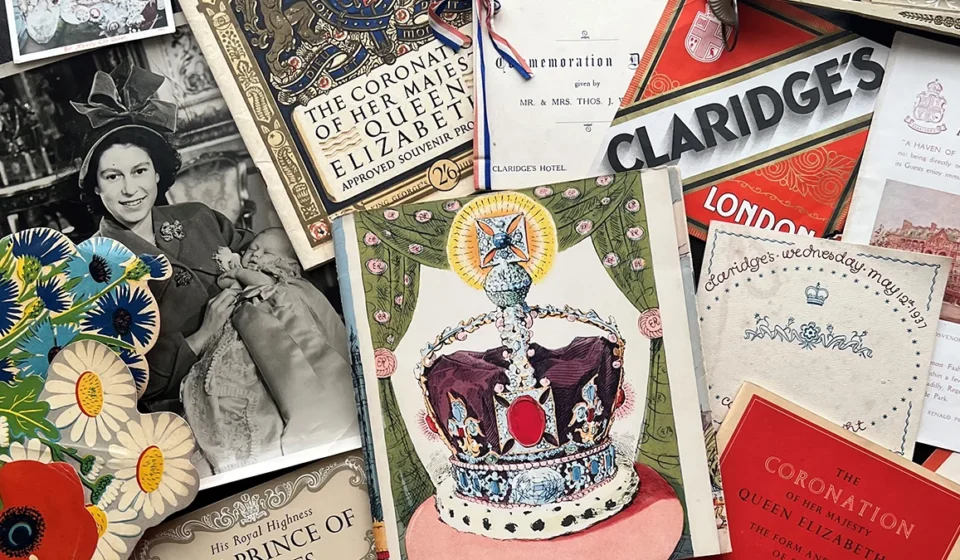
The Grand Dame Revealed: An In-Depth Look at the First Authorized Biography of Claridge’s

For over two centuries, the revolving doors of Claridge’s in London’s Mayfair have served as a portal to a world of unparalleled opulence, discreet diplomacy, and high-society intrigue. Often cited as one of the greatest hotels on Earth, the property has long been shrouded in the mystique of the guests who grace its suites. Now, for the first time in its storied history, the “Queen of Hotels” is opening its private archives to the public.
This autumn, publishing house Hodder & Stoughton will release Claridge’s: Queen of Hotels, Hotel of Kings, the first-ever authorized biography of the iconic institution. The tome promises to peel back the layers of history, detailing how a modest 19th-century lodging house evolved into the global gold standard for luxury hospitality.
Main Facts: The Definitive History of an Icon
The upcoming publication is not merely a coffee-table book; it is a comprehensive historical narrative that traces the trajectory of the hotel from its inception in 1812 to its current status as a modern-day titan of industry. The book aims to answer a fundamental question: How does a hotel maintain its relevance, glamour, and influence for over 200 years?
The answer, as the book suggests, lies in the intersection of architectural evolution, shifting social mores, and an unwavering commitment to service. From the Regency era to the digital age, Claridge’s has acted as a silent witness to history. The biography explores the hotel’s expansion, its iconic art deco redesigns, and its ability to adapt to modern culinary demands, such as the recent, highly acclaimed integration of Dante Mayfair.
The book will be available in hardback, audiobook, and ebook formats on October 8. It is currently available for pre-order through the official Claridge’s shop for approximately $47, offering enthusiasts and historians alike a chance to own a piece of the hotel’s legacy.
A Chronology of Elegance: From 1812 to the Present
To understand the weight of this new biography, one must appreciate the timeline that Martin Williams, the book’s author, has sought to capture.

The Foundation (1812–1900)
Founded by William and Marianne Claridge, the hotel originally began as Mivart’s Hotel before adopting the name of its founders. It quickly became the preferred destination for the European aristocracy who required a London residence that matched the standards of their own country estates. By the late 19th century, it had established a reputation for housing royalty and diplomats, solidifying its status as the most prestigious address in Mayfair.
The Golden Age of Art Deco (1920–1950)
The interwar period saw the hotel undergo a radical transformation. The 1920s and 30s brought the bold lines of Art Deco to the lobby and the ballroom. This was the era of the “Bright Young Things,” where the hotel became a sanctuary for the elite, including legendary figures like Audrey Hepburn and Winston Churchill. During the Second World War, the hotel famously became a home-away-from-home for exiled heads of state, further cementing its reputation as an extension of the royal household.
The Modern Era (1950–Present)
In the latter half of the 20th century and into the 21st, Claridge’s balanced its heritage with contemporary innovation. The addition of world-class dining, the recent unveiling of its first-ever spa, and the modernization of its guest experiences have ensured that it remains as relevant to a 21st-century tech mogul as it was to a 19th-century Duke.
The Archivist’s Access: Martin Williams and the Untold Story
The credibility of Claridge’s: Queen of Hotels, Hotel of Kings rests squarely on the shoulders of its author, Martin Williams. A respected historian and former consultant for Christie’s and Sotheby’s, Williams brings a rigorous, academic, yet engaging approach to the subject.
His previous work, The King Is Dead, Long Live the King! (2023), demonstrated his ability to synthesize complex social and cultural shifts into compelling narratives. However, the Claridge’s project offered a unique challenge: the sheer volume of undocumented history.
“When you have a property that has been the center of high society for two centuries, you are dealing with a vast amount of legend, much of it unverified,” says an industry insider familiar with the project. “Williams was given keys to archives that have literally never been opened. He wasn’t just writing a book; he was acting as a curator for the hotel’s collective memory.”

The author himself has expressed the gravity of the task. “From architecture, interior design, and haute cuisine to royalty, politics, and high society, so many fascinating elements and personalities have combined to imbue Claridge’s with its unrivaled heritage,” Williams stated in a recent press release.
Supporting Data: The Who’s Who of Claridge’s
The hotel’s guest registry is essentially a blueprint of 20th-century history. The biography highlights the diverse array of personalities who have walked its halls:
- Royalty: From the late Queen Elizabeth II to various European monarchs, the hotel has long served as an annex to Buckingham Palace for visiting dignitaries.
- Political Icons: Winston Churchill is perhaps the most famous long-term resident, famously having a suite named in his honor.
- Cultural Trailblazers: Icons of film and music, including Audrey Hepburn and Mick Jagger, have consistently chosen the hotel for its blend of extreme privacy and visible glamour.
- Culinary Pioneers: Modern chefs like Gordon Ramsay have played a pivotal role in maintaining the hotel’s culinary reputation, merging the classic with the cutting edge.
The book promises to reveal never-before-seen anecdotes about these figures, humanizing them through the lens of their interactions with the hotel’s staff and infrastructure.
Official Responses and Strategic Implications
For the Maybourne Hotel Group, which owns the property, this book serves a dual purpose. It is a celebratory piece of literature, but it is also a strategic move in brand positioning.
By formalizing its history through an authorized biography, Claridge’s is effectively staking its claim as the definitive luxury institution in London. In an era where new, ultra-luxury hotels are springing up across the globe with high-tech amenities, Claridge’s is leaning into its greatest asset: its heritage.
“In the world of luxury, history is a currency,” says luxury branding consultant Elena Rossi. “By commissioning this book, Claridge’s isn’t just telling a story; they are reinforcing the idea that you cannot replicate 200 years of pedigree. They are separating themselves from the ‘new money’ competitors by anchoring their brand in the bedrock of history.”

Furthermore, the integration of digital elements—such as the audiobook version and the ease of online pre-ordering—shows that the hotel is adept at bridging the gap between its traditional image and the needs of a younger, digital-native generation of travelers.
The Legacy of a Landmark
As the publication date approaches, the excitement surrounding Claridge’s: Queen of Hotels, Hotel of Kings continues to build. It serves as a reminder that hotels are more than just places to sleep; they are the stages upon which the theater of life is performed.
Whether one is a history buff, an architecture enthusiast, or simply someone who appreciates the fine art of hospitality, the book offers a window into a world that is rarely seen. It is a story of survival, of changing tastes, and of an unwavering commitment to excellence.
When asked why now is the right time for this biography, a spokesperson for the hotel noted, “We have reached a point where the legend of Claridge’s has grown so large that it deserves to be documented properly. We aren’t just preserving our past; we are sharing it with the world to inspire the future of luxury.”
As autumn arrives and the pages of this monumental work are finally turned, one thing is certain: the legend of the "Queen of Hotels" is only beginning to be understood. For those who walk through its doors, the experience will never be the same again—the walls, the hallways, and the grand staircase will now be understood for what they truly are: silent, elegant witnesses to the history of the modern world.