The Grandparent of the Sub-100 Club: An In-Depth Exploration of Ilford Pan F+

In the vast and enduring ecosystem of analog photography, certain emulsions exist in a realm apart from the high-speed workhorses favored by journalists and street shooters. While ultra-fast films like Ilford Delta 3200 and Kodak T-Max P3200 routinely hold court at the opposite end of the spectrum—capturing fleeting moments in near-darkness with their characteristic gritty textures—a quieter, more deliberate clique operates in the shadows of the ISO scale.
Welcome to the "Sub-100 Club," an exclusive fraternity of ultra-low ISO photographic films that reward patience, deliberate pacing, and bright ambient light. While recent reviews have explored contemporary favorites like CineStill 50D, this week turns the spotlight toward the true grandparent of the group: Ilford Pan F+.
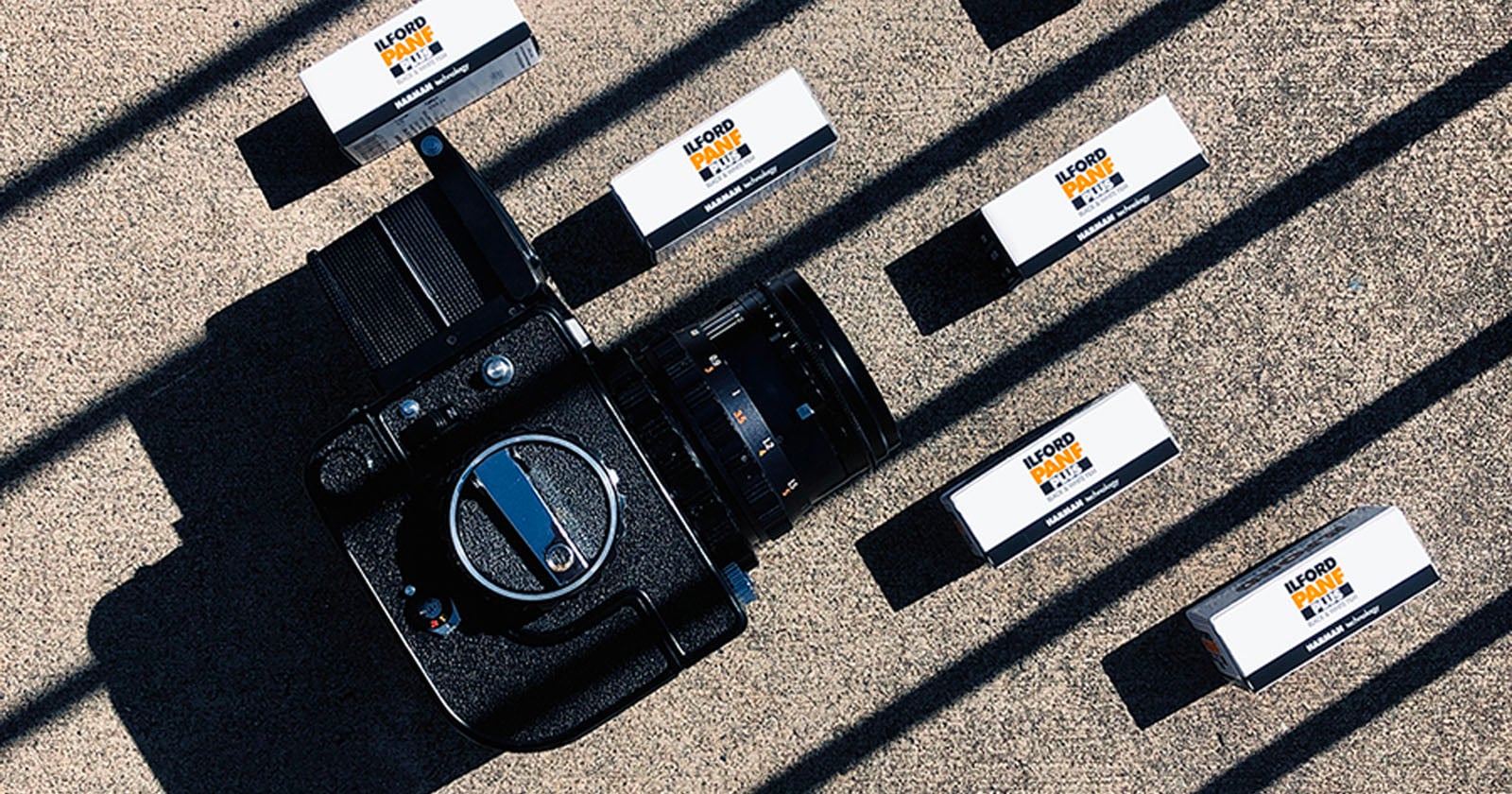
Boasting microscopic grain, exceptional acutance, and a moody, high-contrast aesthetic reminiscent of classic film noir, Pan F+ remains a polarizing yet deeply beloved choice for analog purists. Furthermore, recent developments have expanded its availability, introducing long-awaited large-format sheet options that open up new horizons for landscape and architectural practitioners.
Main Facts: The Anatomy of an Ultra-Slow Legend
Ilford Pan F+ is a panchromatic black-and-white photographic film characterized by its ultra-low speed rating. To understand Pan F+ is to understand the core trade-offs of traditional film engineering: what an emulsion sacrifices in raw light sensitivity, it typically returns exponentially in resolution, tonal richness, and structural integrity.
- ISO Rating: Ultra-low speed (traditionally rated around ISO 50).
- Key Characteristics: Exceptionally fine grain, high acutance (edge sharpness), deep inky blacks, bright crisp whites, and a brooding, atmospheric character.
- Formats Available: Historically offered in 35mm and 120 medium format, the lineup has expanded significantly to include large format 4×5 and 8×10 sheets.
- Primary Ideal Uses: Architectural photography, landscape studies, bright-day street photography, studio portraiture emphasizing dramatic contrast, and mural-sized enlargements.
- Handling Quirks: Strict requirements regarding latent image retention (must be developed promptly after exposure) and moderate reciprocity failure characteristics during long exposures.
Chronology: A History Spanning Nearly Eight Decades
The lineage of Ilford Pan F is remarkably storied, tracing its roots back to an era when post-war industrial design and chemical engineering were rapidly modernizing photographic arts.
- 1948: Ilford introduces the original Pan F panchromatic black-and-white emulsion to the global market. Positioned as a specialized tool for technical and fine-art applications requiring maximum resolution, it quickly builds a dedicated following among studio and landscape photographers.
- 1992: Marking a significant milestone in its evolution, the film receives a major emulsion overhaul and is officially bestowed with the “+” suffix, becoming Pan F+. This update modernizes its spectral sensitivity and improves overall sharpness.
- 2000s: Ilford continues to refine the emulsion quietly through the turn of the millennium, tweaking chemical formulas to enhance consistency and manageability in diverse processing environments.
- 2026: In a move heavily requested by large-format practitioners for decades, Ilford formally introduces Pan F+ in 4×5 and 8×10 sheet film formats, bridging the gap between medium-format perfection and ultra-large-format fidelity.
Supporting Data: Performance Metrics and Technical Evaluation
Evaluating Pan F+ requires examining how its physical properties translate into tangible aesthetic results on the negative and the darkroom easel.

1. Grain Structure and Resolution
As expected from a film operating comfortably below ISO 100, Pan F+ exhibits some of the finest grain structures available on the commercial market. For photographers shooting 35mm formats who desire the pristine, clean aesthetic typically associated with medium format, Pan F+ serves as a direct bridge. When projected or scanned for mural-sized enlargements, the film holds up remarkably well, preserving intricate micro-details without the distraction of heavy silver clumping.
2. Acutance and Edge Contrast
Sharpness in black-and-white film is governed not just by resolving power, but by acutance—the subjective visual sharpness defined by local contrast boundaries between adjacent light and dark areas. Pan F+ is engineered to exhibit high natural acutance. While high acutance is often artificially induced in the darkroom using specialized high-acutance developers like Rodinal or FX-2, Pan F+ achieves this characteristic inherently within its emulsion layer.

This makes it a favorite for architectural photography, where brickwork, mortar lines, and metallic trusses must render with razor-like precision. Conversely, portrait photographers often debate its utility; while some praise its ability to carve out dramatic facial topography, others note that it unsparingly accentuates every line, wrinkle, and skin blemish.
3. Tonal Range and Contrast
Pan F+ is fundamentally a dramatic film. Its characteristic curve leans heavily into deep, saturated blacks and brilliant, clean highlights. Midtones often carry a darker, more brooding weight. While the film retains a rich and nuanced tonal scale—avoiding the muddy flatness of poorly exposed stock—its baseline contrast naturally evokes a classic cinematic film-noir atmosphere.

Official Responses and Practical Handling Considerations
Because Pan F+ diverges significantly from forgiving, high-speed modern emulsions like Ilford Delta or Kodak T-Max, working with it demands adherence to specific technical parameters. Field reports and manufacturer data sheets highlight two primary operational challenges: reciprocity failure and latent image stability.
Navigating Reciprocity Failure
Due to its slow speed, photographers frequently push Pan F+ into long-exposure territory—whether intentionally to smooth out water bodies and cloudscapes or out of necessity in subdued lighting.

- 1 to 10-second exposures: Require an additional $frac12$ to 1 stop of exposure compensation (e.g., a metered 10-second exposure should be extended to roughly 20 seconds).
- Extended exposures (up to 60 seconds): Reciprocity characteristics taper off more progressively, requiring a full +2 stops of overexposure at the 60-second mark, translating to an actual shutter time of approximately 240 seconds.
Notably, historical data from the early 2000s indicates that earlier iterations of Pan F+ required aggressive compensation much earlier in the exposure timeline (hitting the +2 stop threshold as early as 30 seconds). Ilford’s ongoing chemical refinements over the decades have resulted in an emulsion that handles low-light reciprocity significantly better than its predecessors, though strict compensation remains mandatory for precise archival work.
Latent Image Stability
One of Pan F+’s most well-documented quirks is its poor latent image retention. While many black-and-white films can sit inside a camera or a storage box for months—or even years—after exposure without noticeable degradation, Pan F+ demands prompt processing.

Exposing a roll of Pan F+ and letting it sit unspooled or undeveloped for several months frequently leads to thin, anemic negatives that mimic extreme underexposure. Ilford’s official technical documentation explicitly advises that exposed Pan F+ should be developed within three months of exposure, with shorter turnaround times yielding the most robust density and contrast.
Implications for the Analog Community
The enduring presence and recent expansion of Ilford Pan F+ carry profound implications for the contemporary film photography renaissance.

First, the commercial survival and adaptation of specialized, low-volume emulsions prove that consumer demand for distinct, non-digital textures remains robust. In an era where digital sensors offer infinite ISO flexibility and clinical sharpness through computational processing, photographers increasingly turn to ultra-slow analog films for deliberate friction. Pan F+ cannot be rushed; it forces the practitioner to slow down, mount a tripod, calculate reciprocity tables, and carefully meter every scene.
Second, the long-awaited introduction of 4×5 and 8×10 sheet formats in 2026 marks a monumental victory for large-format landscape and studio practitioners. By scaling up the microscopic grain and high acutance of Pan F+ to large sheet sizes, photographers gain access to an unprecedented level of resolving power combined with the inimitable moody drama that only this historic emulsion can provide.

Conclusion: Embracing the Dark Flair
Ilford Pan F+ is not a beginner’s film. It can be demanding, unforgiving of poor exposure habits, and rigid regarding development timelines. Yet, for those willing to master its intricacies, the rewards are extraordinary. Whether deployed on the streets of Portland under harsh midday sun, mounted on a wooden field camera capturing misty coastal long exposures, or loaded into a studio medium-format body for stark character studies, Pan F+ delivers a visual signature that is entirely its own.
As film stocks continue to evolve and adapt in the modern marketplace, the grandparent of the Sub-100 Club stands as a testament to the timeless appeal of sharpness, depth, and unapologetic analog character.
Related posts: