
The Retail Vanguard: Derek Gaskins Returns to C-Store Leadership to Spearhead OXXO’s U.S. Expansion

The landscape of American convenience retail is undergoing a seismic shift, and one of its most seasoned architects has returned to the fold to steer a major international player into the U.S. market. Derek Gaskins, a veteran executive whose career includes leadership tenures at industry titans like GetGo, Rutter’s, Yesway, and bp, has been appointed as the Vice President of Marketing and Category Management at OXXO USA.
Gaskins’ appointment marks a significant turning point for OXXO, the retail giant owned by Mexico’s FEMSA, as it seeks to translate its immense Latin American success into a robust, long-term footprint in the United States. His return to the sector comes only months after he briefly departed for the luxury confectionery world, signaling that the allure of the fast-paced, high-stakes convenience industry remains a powerful gravitational force for top-tier retail talent.
The Strategic Arc: A Chronology of Growth
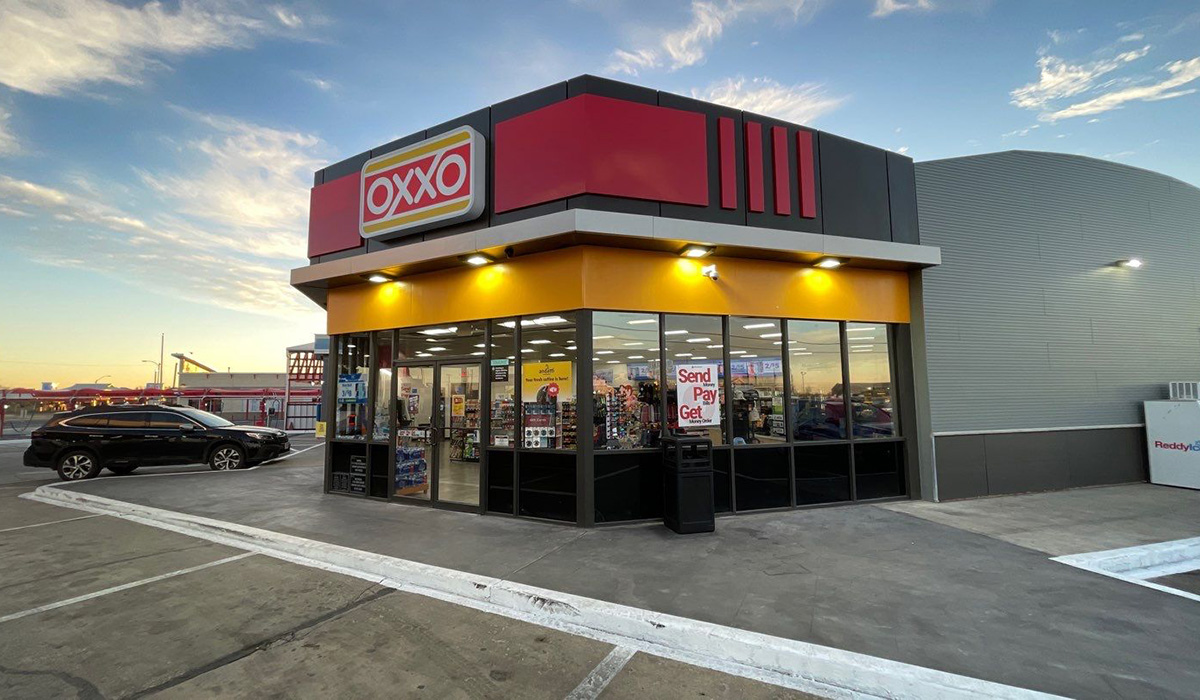
To understand the significance of Gaskins’ arrival, one must examine the rapid evolution of OXXO’s presence in the U.S. The narrative began in earnest in August 2024, when FEMSA executed a strategic $385 million acquisition of Delek US’s retail assets. This move instantly injected 249 convenience store locations—primarily situated across the competitive Southwest corridor—into the OXXO portfolio.
The Timeline of Transition
- August 2024: FEMSA completes the $385 million acquisition of Delek US’s retail operations, marking the official entry of the OXXO brand into the United States.
- August 2025: Industry veteran Derek Gaskins departs the c-store channel to take the helm as head of retail for Mars-owned Hotel Chocolat.
- Late 2025/Early 2026: Recognizing the untapped potential of the U.S. expansion, OXXO recruits Gaskins to lead its marketing and category management divisions.
- Current Phase: The brand is deep in the "integration and evolution" phase, shifting from the legacy Delek branding to the OXXO identity while refining the product assortment for American consumers.
The Gaskins Philosophy: Why Return?
For Gaskins, the decision to return to convenience retail was rooted in a combination of professional unfinished business and the sheer scale of the OXXO opportunity.
"Convenience retail is where I’ve done the most meaningful work of my career," Gaskins shared in an exclusive interview. "Honestly, it never felt like I fully left. The pull to come back was always there, and OXXO is what made the timing right."
Gaskins views OXXO not merely as a foreign retailer entering a new market, but as a brand with "deep global roots" and a "proven track record of building genuine consumer love." In the hyper-competitive U.S. market—where legacy players like 7-Eleven, Wawa, and Sheetz dominate—the arrival of a brand that has mastered the art of neighborhood-centric retail in Mexico represents a disruptive threat to the status quo.
Operational Priorities: The "Student First" Approach
Despite his extensive resume, Gaskins is entering this role with a measured, disciplined strategy. He emphasizes that while his expertise is vast, the nuances of the OXXO brand require a period of observation.
"My first priority is to listen and learn," Gaskins noted. "I’m new to OXXO, new to the team, and new to what’s already been built here—and I want to honor that before I start making noise. The best leaders I’ve known have always been students first."
Key Areas of Immediate Focus:
- Consumer Sentiment Analysis: Deep-diving into the habits of the former Delek customer base to understand their expectations of the new OXXO identity.
- Supplier Synergy: Leveraging OXXO’s international buying power while strengthening local vendor partnerships to ensure a supply chain that meets the specific demands of the Southwest.
- Momentum Mapping: Identifying low-hanging fruit where the brand can make operational improvements that yield immediate, tangible results for the customer experience.
Differentiation: The OXXO Value Proposition
One of the most persistent challenges for international brands entering the U.S. is the "homogenization" of the customer experience. OXXO, however, aims to break this mold through authenticity.
"OXXO has built real consumer loyalty across Latin America by genuinely understanding the neighborhoods it serves," Gaskins explained. "That’s a rare capability, and it’s something American convenience consumers are hungry for."
The Role of Food and Beverage
The U.S. convenience market has become increasingly reliant on foodservice as a primary differentiator. As consumers pivot away from traditional gas-station snacks toward fresh, prepared meals and premium coffee, OXXO is positioned to leverage its global food and beverage playbook.
Gaskins views the food program as the "heart" of the brand. "When a brand can make a customer’s day better through a great cup of coffee or a fresh meal, that’s not just a transaction—it’s a relationship," he said. By importing the "OXXO experience"—which often feels more like a neighborhood hub than a sterile fuel stop—the company hopes to foster long-term loyalty that survives beyond the initial price-driven visit.
Strategic Implications for the U.S. Market
The appointment of a veteran like Gaskins signals that FEMSA is committed to a sophisticated, long-term strategy. The implications for the broader industry are threefold:
1. Increased Competitive Pressure
OXXO is not a startup; it is a global powerhouse with the capital and the operational rigor to execute on a massive scale. By hiring leaders with deep experience in the domestic U.S. market, they are effectively "localizing" their global strategy, which significantly lowers the risk of operational failure.
2. A Shift Toward "Neighborhood" Retail
The industry has seen a push toward "destination" retail, but OXXO’s model focuses on hyper-local community integration. If successful, this could force other regional chains to re-evaluate their marketing and store-level engagement strategies, moving away from generic loyalty programs toward more localized, community-based value propositions.
3. The Human Capital War
Gaskins’ return highlights the importance of top-tier talent in the convenience sector. As the industry faces labor challenges and shifting consumer expectations, the ability to attract and retain leaders who understand both the "science" of category management and the "art" of retail culture will become the primary differentiator between winners and losers.
Looking Ahead: The One-Year Benchmark
When asked about his vision for the end of his first year, Gaskins avoids the typical corporate jargon of "percentage growth" or "market share targets." Instead, he focuses on culture as the leading indicator of success.
"I’d want to have built a high-performing commercial team that’s proud of the work they’re doing and clear on where they’re headed," Gaskins said. "Everything else—the sales results, the customer growth, the supplier partnerships—flows from getting the people and culture right."
His ultimate ambition for OXXO is simple but profound: "I’d love for OXXO to be the brand the industry is talking about. Not because we made a lot of noise, but because we did the work and earned it."
As the retail industry watches, the "OXXO-fication" of the former Delek network will serve as a critical case study in brand transformation. With Gaskins at the helm of the marketing and category strategy, the company is signaling that it is prepared to move past the initial acquisition phase and into a period of aggressive, purposeful growth. The goal is no longer just to exist in the U.S. market—it is to define the next generation of what the American convenience experience can be.