The Unseen Hand of AI: Accelerating the Internet’s Slide into Aesthetic Sameness

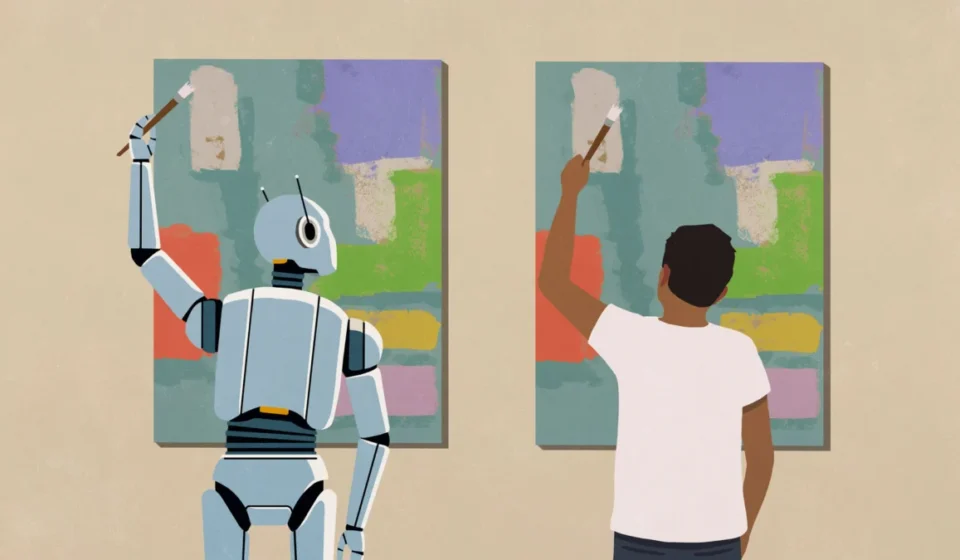
The digital landscape, once a vibrant tapestry of diverse visual identities, is increasingly converging on a singular aesthetic. This trend, already evident before the widespread adoption of artificial intelligence, has been dramatically accelerated by AI, which functions as a high-speed photocopier of prevailing design norms. The result is a growing sea of sameness, where brands struggle to differentiate themselves, and the very essence of creativity risks being diluted into a statistically probable average.
The Era of Digital Uniformity
A casual survey of twenty cybersecurity company websites immediately reveals this pervasive uniformity. Dark navy backgrounds, electric blue accents, logos featuring a shield or padlock, and abstract network diagrams suggesting both complexity and control are ubiquitous. While the underlying products may differ, their visual language is almost indistinguishable. This phenomenon extends far beyond cybersecurity, impacting a multitude of sectors where brand identities have become increasingly interchangeable. AI company logos themselves, ironically, offer perhaps the most pointed illustration: a proliferation of orbital shapes rendered in a shared corporate blue, supposedly representing innovation but ultimately embodying derivative visual identities.
This homogenization poses a significant challenge. In an oversaturated digital world, distinctiveness is paramount for capturing attention and building brand loyalty. When everything looks alike, the consumer’s ability to discern unique offerings diminishes, potentially leading to a market driven solely by familiarity or price, rather than genuine brand value.
Tracing the Path to Sameness
The current state of aesthetic convergence is not solely an AI-driven phenomenon. Its roots lie in earlier developments within digital design and branding.
The Pre-AI Landscape: "The Blanding"
Before the advent of generative AI, the visual landscape was already undergoing a process of narrowing. Major tech companies like Google, Apple, and Microsoft introduced comprehensive design systems designed to bring order, consistency, and accessibility to digital interfaces. While these systems successfully improved user experience by establishing shared standards—such as bottom navigation bars, universally recognized magnifying glass search icons, and standardized spacing grids—they inadvertently fostered a culture of "safe defaults." Adhering to these guidelines guaranteed an "acceptable" design, minimizing risk for designers and companies alike, but often at the cost of genuine innovation and distinctiveness. In a world where "nobody gets fired" for following the rules, original thought can easily be stifled, leading to a comfortable but uninspired conformity.
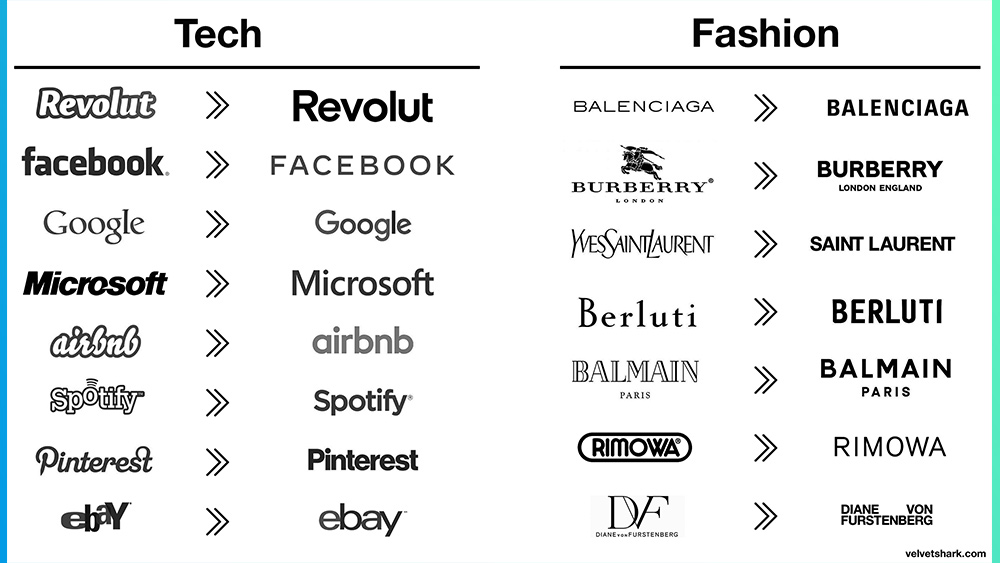
Concurrently, the luxury fashion industry experienced its own version of this trend in the late 2010s. Iconic brands like Burberry, Balenciaga, Celine, Calvin Klein, and Saint Laurent shed their elaborate, distinctive logotypes in favor of identical all-caps, sans-serif wordmarks. This phenomenon was aptly dubbed "the blanding." While a trained eye might discern subtle typographic differences, the general public perceived a monotonous repetition, with brands seemingly adopting the same minimalist aesthetic in different colors. This shift, often driven by a desire for digital adaptability and a perceived modern simplicity, stripped away decades of carefully cultivated visual heritage, leaving many brand identities feeling generic and interchangeable.
This was the aesthetic climate into which AI arrived—a landscape already predisposed to visual homogeneity.
The Mechanics of Mimicry: How AI Reinforces the Mean
Generative AI, far from being an independent inventor, operates fundamentally as an averaging engine. Its core function is to identify the most statistically probable output based on the vast datasets it has ingested.
AI as an Averaging Engine
What AI "sees" is the internet—a colossal repository of human-generated content that, as previously discussed, was already narrowed by cautious brands, trending toward similar palettes, typefaces, and layout conventions. When tasked with generating a design, an image, or a piece of text, AI doesn’t conjure originality from nothingness. Instead, it synthesizes patterns, styles, and tropes that are most frequently represented in its training data. If the dominant visual language for a particular sector is dark blue, orbital shapes, and sans-serif fonts, AI will naturally gravitate towards these elements, perceiving them as the "correct" or "most successful" stylistic choices. This inherent mechanism makes AI a powerful tool for replication and iteration, but a less potent one for true, disruptive innovation in aesthetics.
The Perilous Feedback Loop
The real problem, and the accelerating factor in this aesthetic convergence, is the feedback loop. As AI-generated content—be it website layouts, logos, or marketing imagery—is deployed and subsequently indexed by search engines and incorporated into new datasets, it inevitably returns to the web. The next generation of AI models then trains on this increasingly homogenized pool of data. This creates a self-reinforcing cycle where the range of what counts as "good design" or "acceptable aesthetics" narrows further with each iteration.
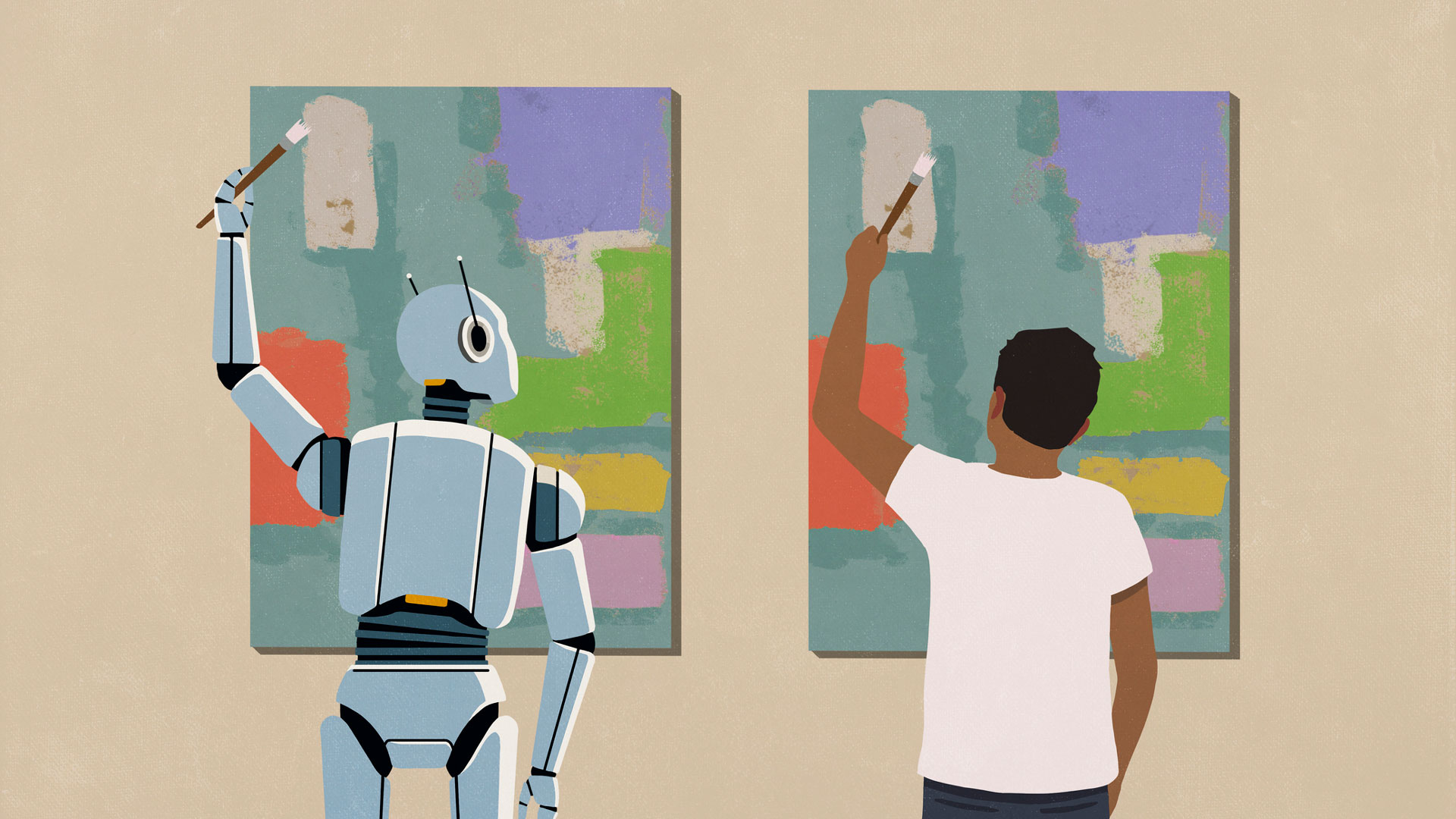
This process is akin to repeatedly photocopying a document. With each successive copy, fine details are lost, nuances fade, and what remains is a high-contrast, simplified, and increasingly generic version of the original. The distinctive characteristics that once gave a brand or design its unique flair are gradually smoothed out, leaving behind a bland, statistically safe imitation. The irony is stark: the technology hailed for reshaping creativity is, by its very nature, producing some of the most derivative visual identities in recent memory.
Reinforcing the Mean: Research Findings
The academic community has begun to quantify this phenomenon. Research published in 2026 (as referenced in the original article) confirmed that AI tools used to build websites, generate marketing materials, or design visual assets consistently reproduce dominant style conventions from their training data. This accelerates convergence toward a visual mean, effectively reducing the overall diversity of the digital aesthetic. Studies likely employed metrics such as color palette similarity, typeface analysis, layout grid adherence, and even semantic analysis of visual themes to demonstrate this homogenization. The findings suggest that without deliberate intervention, the natural trajectory of AI-assisted design is towards greater uniformity, posing significant questions for brand strategists and creative professionals.
The Diminished Value of Distinction
The consequences of this aesthetic convergence extend far beyond mere visual boredom. The loss of distinctiveness carries tangible economic and emotional costs, eroding the very foundations of brand value.
Beyond Aesthetic Fatigue: The Erosion of Brand Equity
Consider the widely discussed Coca-Cola AI Christmas advertisement. When Coca-Cola attempted to recreate its iconic 1995 "Holidays Are Coming" ad using generative AI in 2024, the results were jarring. Trucks moved with wheels that didn’t rotate quite right, and lighting that defied the laws of physics. While a technically improved version was produced in 2025, critics noted a profound lack of emotional resonance. It felt like an imitation of nostalgia, rather than the genuine article. Coca-Cola’s commercial value rests on decades of meticulously cultivated emotional warmth and association with cherished memories—elements entirely absent from generic training data.
This incident highlights a crucial point: brand equity is not merely a collection of visual assets. It is the accumulated weight of distinctive decisions, shared experiences, and emotional connections built over time. These intangible qualities, which are deeply human and often defy explicit categorization, are precisely what AI struggles to replicate. When AI produces designs that are technically proficient but emotionally hollow, it risks stripping brands of their soul, leaving them as mere shells of their former selves.
The Economic Cost of Homogeneity
When everything in a given category looks identical, the economic implications are severe. Buyers, confronted with a sea of indistinguishable options, often default to familiarity (existing market leaders) or, more detrimentally, to price. This transforms what should be a rich competitive landscape into a commodity market, where differentiation becomes impossible through design alone. For new entrants, the challenge is amplified: how does one stand out and build a unique identity when the tools available—especially AI-powered ones—tend to push towards the established average? Brand equity, once a powerful differentiator and a significant asset, becomes worthless in a homogenized market. The investment in unique visual identity, careful storytelling, and distinctive messaging is undermined when AI can instantly generate a "good enough" facsimile.
The "Soulless Work" Conundrum
As one design strategist succinctly put it at last year’s Upscale conference, "We were making soulless work long before AI came along. The difference now is that AI can make that soulless work in seconds." This statement encapsulates the critical challenge. AI isn’t creating the problem of soullessness; it’s merely making it more efficient and pervasive. The human tendency towards caution, risk aversion, and adherence to perceived best practices already paved the way for generic design. AI simply automates and amplifies this tendency, democratizing the production of the mediocre. The danger is not just a lack of originality, but a potential stagnation of creative evolution itself, as the "average" becomes the default, and the truly unique becomes increasingly rare.
Industry Voices on the Horizon of Uniformity
The growing homogenization fueled by AI has not gone unnoticed by industry leaders and experts, sparking a debate about the future of creativity and branding.

"The greatest challenge with AI in design isn’t its capability, but its lack of discernment for genuine human emotion," states Dr. Evelyn Reed, a renowned brand strategist. "AI is excellent at pattern recognition and synthesis, but it fundamentally doesn’t understand the cultural nuances, the historical context, or the subtle emotional triggers that give a brand its unique resonance. Relying solely on AI for design is like asking a perfect mimic to write an original symphony—it can reproduce the notes, but not the soul." Dr. Reed advocates for a shift towards human-centric prompting and critical evaluation, where designers use AI as a tool for execution, not ideation.
Conversely, some AI developers acknowledge the current limitations but highlight the potential for more sophisticated models. "Current generative AI models are trained on what’s available, and yes, that often leans towards the common denominator," explains Hiroshi Tanaka, Lead AI Architect at a prominent generative design firm. "However, the next generation of AI will allow for more curated training datasets and fine-tuning, enabling brands to inject their proprietary aesthetics and values more effectively. The key will be in developing bespoke AI models that learn from a brand’s unique history, not just the general internet." Tanaka envisions a future where AI becomes a hyper-personalized design assistant, rather than a generic template generator.
However, design ethicists like Professor Anya Sharma raise concerns about the broader societal implications. "This aesthetic convergence isn’t just about corporate logos; it’s about the visual fabric of our daily lives," Professor Sharma warns. "When our digital environments become indistinguishable, we risk losing cultural markers, visual diversity, and even the ability to appreciate genuine artistic expression. It’s a subtle form of cultural flattening, where the unique visual dialects of different communities and creative movements are gradually eroded in favor of a globalized, bland commonality." She emphasizes the importance of preserving visual heritage and actively seeking out diverse design influences to counter this trend.
These varied perspectives underscore the complexity of the issue. While AI offers unparalleled efficiency, its deployment in creative fields demands a nuanced understanding of its inherent biases and a conscious effort to steer it towards outcomes that celebrate, rather than suppress, originality.
Charting a Course for Originality
The answer to this aesthetic challenge is not to abandon AI tools altogether. Instead, it lies in a conscious and strategic approach that understands AI’s inherent tendencies and deliberately interrupts its default pathways.
Beyond Defaults: Strategic AI Integration
Designers and brands must move beyond simply accepting AI’s statistically probable outputs. This means actively challenging the generated results, experimenting with unconventional prompts, and providing highly specific, brand-aligned creative briefs. AI should be treated as a sophisticated assistant capable of rapid iteration and execution, but one that requires precise direction and human oversight. Instead of asking "design a logo for a tech company," prompts should delve into brand values, emotional impact, target audience psychographics, and specific historical or cultural influences that defy generic representation.
Cultivating Human Creativity
The unique role of human designers becomes even more critical in an AI-saturated world. Human creativity offers intuition, cultural understanding, emotional intelligence, and the capacity for truly novel thought—qualities that remain beyond AI’s grasp. Designers must leverage their distinctively human abilities to provide the conceptual breakthroughs, the disruptive ideas, and the profound narratives that AI can then help to manifest. This requires investing in human talent, fostering environments that encourage risk-taking and experimentation, and celebrating the "imperfections" and idiosyncrasies that AI tends to smooth out.
The Imperative of Distinctive Data
For brands seeking true differentiation, simply training AI on the vast, generic internet will continue to yield generic results. The future of distinctive AI-assisted design lies in curated, proprietary, and diverse datasets. Companies should explore training AI models on their unique brand archives, historical design assets, specific artistic movements, or culturally rich visual libraries. By feeding AI a diet of unique and highly specific data, brands can guide the algorithms towards outputs that reflect their individual identity, rather than the collective average.
Embracing Imperfection and Narrative
Finally, brands must embrace the idea that perfection, as defined by AI’s statistical models, is often sterile. Authentic brand experiences often incorporate elements of imperfection, rawness, and genuine narrative. These are the qualities that connect with human audiences on a deeper, more emotional level. By actively seeking out and integrating these less "perfect" but more characterful elements—whether through hand-drawn textures, unexpected color combinations, or storytelling that evokes complex emotions—designers can create work that AI, left to its own devices, would never produce.
The internet’s slide into aesthetic sameness is a pressing challenge, but it is not an insurmountable one. By understanding the mechanisms of AI, strategically guiding its capabilities, and re-centering the irreplaceable value of human creativity, we can chart a course toward a future where digital design is not merely efficient, but truly distinctive, meaningful, and creatively rich. The choice is ours: to passively accept the "copy of a copy" or to actively shape an aesthetic future that celebrates the unique.