The Death of the Link-Farm: Why Marketing Leaders are Demanding a New Era of Curation

In an era defined by information saturation, the primary challenge for marketing leaders is no longer finding information—it is filtering it. Every day, the average executive’s digital ecosystem is bombarded by a relentless deluge of industry reports, AI-generated think pieces, algorithmic social media trends, and a revolving door of “must-listen” podcasts.
The paradox is stark: despite having access to more data than at any point in human history, many marketing leaders report feeling less informed and more overwhelmed. This friction has paved the way for a fundamental shift in B2B communication. The era of the "link-farm" newsletter—a chaotic aggregation of headlines designed solely to drive traffic to a website—is officially drawing to a close. In its place, a new, value-dense format is emerging, one that prioritizes synthesis, strategic foresight, and the reader’s time.
The Data Behind the Shift: Why Newsletters Still Rule
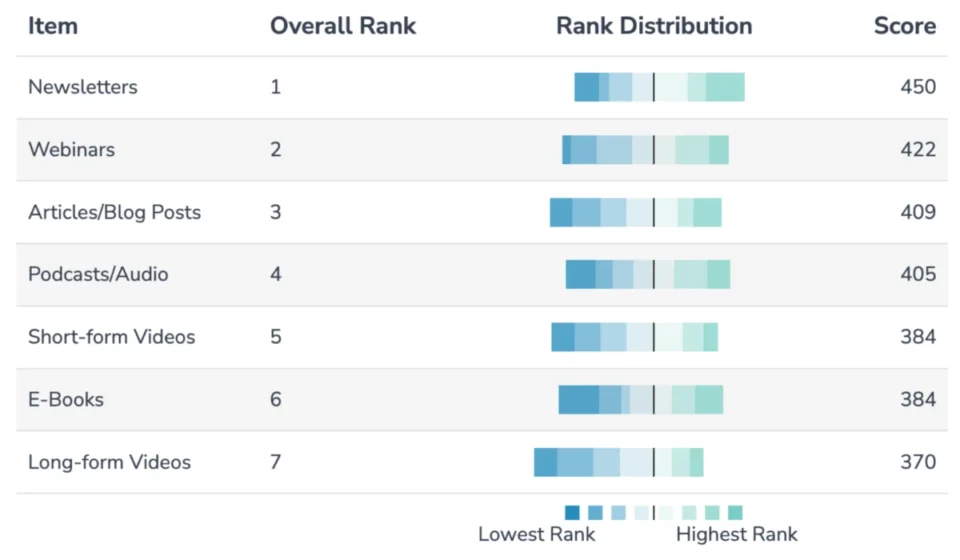
At the center of this transition is Convince & Convert (C&C), which recently conducted a comprehensive annual audit of its audience to understand how marketing leaders prefer to consume professional insights. The results were definitive: when asked to rank their preferred methods for staying informed, newsletters consistently topped the list, outperforming short-form video, webinars, blogs, and podcasts.
The data suggests that for high-level decision-makers, the newsletter is not merely a content distribution channel; it is a vital utility. Unlike social media feeds, which are subject to the whims of shifting algorithms, or long-form blogs that require a significant time investment to parse, the right newsletter acts as a trusted filter. It doesn’t just report on what happened; it explains what it means and, more importantly, why it matters.
This preference for curated, "do-the-thinking-for-you" content has led Convince & Convert to undergo a major strategic overhaul, retiring their legacy newsletter, ON, in favor of a redesigned, high-utility product titled The Trendline.
A Chronology of the Rebrand: From "ON" to "The Trendline"
The decision to rebrand was not a reactive choice based on design trends, but a calculated response to evolving audience behavior. The evolution followed a clear trajectory:

- Phase 1: Auditing the Noise. C&C leadership recognized that their previous newsletter format, ON, relied heavily on a "link-first" model. While this served the purpose of driving traffic to the company’s blog and podcast, the team realized it was creating a "tax" on the reader’s attention. The reader had to click, load, and parse information elsewhere to derive value.
- Phase 2: Audience Sentiment Analysis. Through annual surveys, the team confirmed a growing frustration among their readership: they didn’t want more content; they wanted more clarity. The data showed that the audience valued synthesis over volume.
- Phase 3: The Strategic Pivot. The team identified that to remain authoritative, they needed to deliver value within the inbox. This meant a shift from a newsletter that functioned as a table of contents to one that functioned as a strategic briefing.
- Phase 4: Launching The Trendline. The new format was engineered to prioritize brevity, expert commentary, and actionable takeaways, moving away from a medium-based organization (blog, podcast, video) to a topic-based organization (what is happening and why).
The Anatomy of the New Newsletter Strategy
The philosophy driving The Trendline is rooted in the idea that in a world of infinite content, the most valuable commodity is the reader’s time. To respect that, C&C implemented several structural shifts that offer a blueprint for modern email marketing.
1. The Debrief Model
Rather than a laundry list of news items, The Trendline acts as a "debrief." Each story is presented through a proprietary strategic lens. The editorial team asks: What questions should a CMO be asking about this trend? How does this impact the bottom line? This shift turns the newsletter from a passive feed into an active advisory tool.
2. Eliminating the "Click-Through Tax"
The most significant change is the decision to provide core insights upfront. Readers no longer need to click multiple links to understand the premise of an article. The essential information is provided in the body of the email. If the reader wants to dive deeper, the option is there, but the "value" is delivered without requiring a friction-filled departure from the inbox.
3. Hierarchical Curation
The old format was organized by medium, which was logical for the publisher but not for the reader. The new format is organized by strategic importance. Each section has clear, predefined guidelines, ensuring that even complex topics remain compact, scannable, and digestible.
4. Interactive Engagement Metrics
The inclusion of "Sound Off"—a poll featured at the end of each edition—serves a dual purpose. It creates a recurring, low-friction touchpoint for readers to engage with the brand, and it provides C&C with high-quality, zero-party data. Unlike open and click-through rates, which can be influenced by bot traffic and privacy settings, poll participation provides a clear indicator of reader interest and topical relevance.
Implications for Marketing Leaders
The transition to The Trendline highlights a broader truth for the industry: the bar for owned media has been raised. A decade ago, simply having a presence was enough. Today, audience trust is earned through rigor.

For marketing departments currently managing their own email strategies, the implications are clear:
- Audit for Value: If your newsletter is merely a list of links to your latest blog posts, you are likely losing audience attention. Ask yourself: Is this newsletter useful even if the reader never clicks a single link?
- The Power of the "Filter": Your audience is overwhelmed. They don’t need you to give them more content; they need you to be the expert filter that highlights the 1% of information that actually impacts their strategy.
- Design for the Mobile Executive: Senior leaders consume information in "pockets" of time—while waiting for a meeting, commuting, or between calls. If your content requires a 10-minute deep dive to understand, it will be skipped.
- Listen to the "Why": The success of The Trendline came from understanding that their audience’s pain point wasn’t a lack of information, but a lack of time. When you solve a pain point rather than just pushing a product, you build long-term authority.
The Future of Owned Media
The move from ON to The Trendline is not merely a branding exercise; it is an admission that the relationship between a brand and its audience has changed. In an age of AI-generated fluff and content saturation, the only way to remain relevant is to provide something that machines cannot easily replicate: human-led, context-driven, and highly curated strategic perspective.
By shifting to a model that emphasizes quality over quantity and insight over aggregation, Convince & Convert is positioning its newsletter as a "must-read" resource. As the digital landscape continues to fragment, brands that adopt this "debrief" mindset—offering utility upfront and respecting the reader’s time—will be the ones that capture the most valuable asset in modern marketing: sustained, trust-based attention.
For those looking to refine their own strategies, the takeaway is straightforward: stop competing for clicks and start competing for the reader’s trust. In the long run, the latter is the only sustainable path to growth.