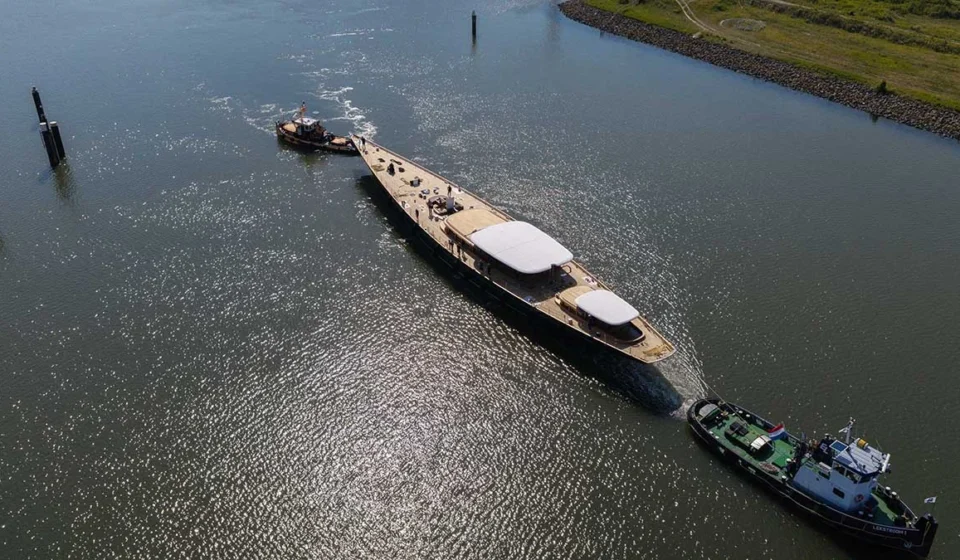

After seven years of rigorous engineering, clandestine design sessions, and the pursuit of a seemingly impossible maritime standard, the 230-foot sailing yacht Zero has finally kissed the open water. Launched in the Netherlands this past July, Zero is not merely another high-end vessel for the elite; it is a profound, tangible manifesto for the future of sustainable ocean exploration. Winner of Robb Report’s prestigious 2025 “Best of the Best” award, the vessel represents a watershed moment where luxury, naval architecture, and radical environmental responsibility converge.
The Genesis of a Maritime Icon
The journey of Zero began in 2019 as a conceptual challenge—a "what if" scenario that asked whether a superyacht of significant size could operate with a truly zero-emission footprint. Spearheaded by the visionary Dutch design studio Vripack, the project quickly evolved from a theoretical exercise into an industrial marvel.
The development phase alone spanned over 60,000 hours of research and development, involving a consortium of the industry’s brightest minds. While Vripack held the reins for the exterior and interior aesthetics, the technical heavy lifting was managed by Dykstra Naval Architects, who perfected the complex hull form, sailplan, and thruster configuration. The physical construction, which commenced in 2023 at the esteemed Vitters Shipyard, transformed the blueprints into a 230-foot reality. When the yacht emerged from the construction shed on July 6, it signaled the end of the planning phase and the beginning of a new chapter in the history of naval engineering.
A Technical Anatomy of Sustainability
At the heart of Zero lies an intricate, multifaceted power management system that allows the yacht to operate with unprecedented energy independence. Unlike traditional yachts that rely on heavy diesel generators, Zero has been engineered to harvest energy from its environment.

Energy Harvesting Systems
- Hydrogeneration: The primary engine of the vessel’s autonomy is its 250 kW hydrogeneration system. By capturing the kinetic energy of the water flowing past the hull while the yacht is under sail, the vessel generates the vast majority of its required power, effectively turning movement into electricity.
- Solar Integration: The yacht features roughly 1,000 square feet of high-efficiency solar panels, seamlessly integrated into the deck and superstructure design. These panels provide a continuous, silent trickle-charge to the onboard battery banks, even when the vessel is at anchor.
- Wind Harvesting: Beyond the physical propulsion provided by the sails, Zero utilizes the wind as a direct power source, capable of drawing approximately 200 kW of electrical power through sophisticated turbine-like integration.
Storage and Management
All harvested energy is fed into a massive, high-density onboard battery bank. The true "brain" of the vessel is its proprietary energy management software, which constantly monitors consumption and supply. This high-tech nervous system ensures that every watt is allocated with clinical precision. According to Vripack’s technical documentation, this setup offers up to two weeks of complete energy autonomy, allowing the vessel a virtually unlimited range so long as the wind blows and the sun shines.
Chronology of the Zero Project
The timeline of Zero is a testament to the patience required for genuine innovation:
- 2019: Zero is first introduced as a design concept, challenging existing norms regarding yacht efficiency.
- 2019–2022: A multi-year period of intense research, simulation, and engineering hypotheses. Thousands of computer models are tested to ensure the viability of the renewable power systems.
- 2023: Official start of construction at Vitters Shipyard. The assembly of the hull and the integration of the complex electrical backbone take center stage.
- July 2026: The vessel is floated for the first time. The yacht is moved to Harlingen for the final technical launch and the delicate process of stepping the masts.
- Late 2026: The vessel enters a comprehensive period of sea trials, where performance data will be collected and analyzed to validate the initial design theories.
Design Philosophy: Where Elegance Meets Efficiency
While Zero is a masterpiece of engineering, she is equally a triumph of aesthetic design. The exterior silhouette pays homage to the “Golden Age of Sail,” featuring a sleek, elongated Palma Blue hull that cuts through the water with minimal drag. The superstructure is a masterclass in material selection, utilizing FSC-certified Brazilian teak to provide a warm, organic contrast to the high-tech, metallic finishes of the deck hardware.
The interior is designed to be a sanctuary, with a theme heavily inspired by the natural world. Designers opted for sustainable, earthy materials, including smoked European oak and “leathered” stone, which offer a tactile, grounding experience for guests. The accommodation layout is designed for comfort and intimacy, featuring four distinct guest cabins, each uniquely styled to reflect the owner’s favorite global destinations. With a capacity for 12 guests and nine crew, the vessel manages to balance the spaciousness required for luxury living with the lean, efficient footprint of a performance sailer.

Official Perspectives: A Shared Vision
The team behind Zero views the project not merely as a product, but as an open-source gift to the maritime industry.
“Zero has been our perfect storm,” says Marnix Hoekstra, co-creative director at Vripack. “It challenged us in all the ways we like to be tested, and we will forever be proud to have been part of this very special team. It wasn’t just about building a boat; it was about proving that the maritime industry can—and must—evolve.”
Mark Leslie-Miller, partner at Dykstra Naval Architects, echoes this sentiment: “For years, Zero has existed as a vision, a series of calculations, design studies, and engineering hypotheses. Seeing her afloat transforms all of that into a living experiment. It is the bridge between what we think is possible and what we can prove is sustainable.”
Vitters CEO Louis Hamming notes the broader purpose of the project: “We look forward to seeing Zero in her natural habitat, and showing the world what can be achieved when creative minds embark together on a voyage to create a yacht that proves what can be done to make the world and the seas a little better.”

Implications for the Future of Yachting
Perhaps the most revolutionary aspect of Zero is its commitment to transparency. Rather than keeping their proprietary technology behind closed doors, the developers have structured the project as a 100-percent open-source science project. Through the non-profit Foundation Zero, the team will publicly share data, design information, and performance results.
This decision is intended to act as a catalyst for the entire superyacht industry, which has historically been slow to adopt radical green technologies. By providing a blueprint for energy-autonomous sailing, Zero lowers the barrier to entry for other builders and designers to integrate similar systems into their own projects.
The vessel will be used for a mix of private travel, exclusive charters, and—crucially—continued scientific research. As the industry faces increasing pressure to reduce its carbon footprint, Zero provides a roadmap. It proves that the "luxury" of a superyacht does not have to be synonymous with environmental degradation. Instead, it can be a vessel for research, a platform for innovation, and a symbol of how humanity can harmonize its desire for exploration with the urgent need to protect the oceans we sail upon.
As Zero prepares for its delivery later this year, the maritime world watches with bated breath. It is more than just a boat; it is the silent, efficient, and beautiful harbinger of a cleaner, more thoughtful era of yachting.