The Architecture of Change: How Real-World Practitioners Are Mastering Atomic Habits

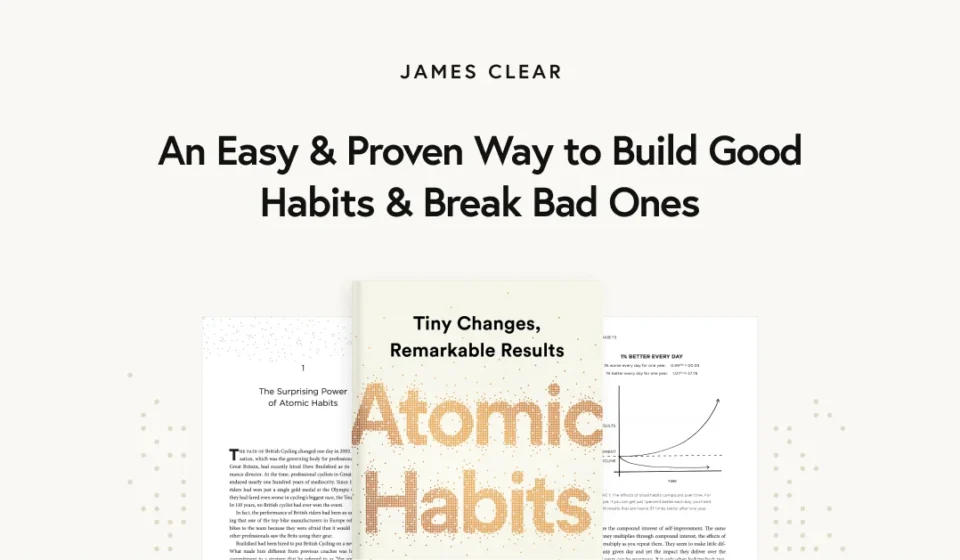
In the modern era of self-improvement, the distance between reading a philosophy and embodying it is often where most transformation stalls. While James Clear’s seminal work, Atomic Habits, has provided a theoretical blueprint for behavioral change, the true value of his research lies in its application. Recently, a collection of anecdotal evidence from readers has surfaced, illustrating how the principles of "tiny changes" are being weaponized against stagnation. These stories—ranging from overcoming deep-seated addictions to mastering new languages—offer a practical roadmap for anyone looking to bridge the gap between intent and action.
Main Facts: The Science of Small Adjustments
At the heart of the Atomic Habits methodology is the rejection of goal-oriented obsession in favor of systems-based growth. The central thesis posits that lasting change is not a result of a massive, singular epiphany, but rather the cumulative effect of small, incremental adjustments. By focusing on "identity-based habits"—the shift from what you want to achieve to who you want to become—practitioners are finding that the psychological friction typically associated with habit formation begins to dissipate.
The reported successes of these readers are not rooted in sheer willpower, which is a finite resource, but in the strategic manipulation of one’s environment and psychological cues. Whether it is "habit stacking" (linking a new behavior to an existing one) or "environment design" (altering physical surroundings to reduce the friction of good habits and increase the friction of bad ones), the data suggests that structural change almost always outperforms conscious effort alone.
Chronology of Habit Transformation
The journey of habit formation, as evidenced by these reader submissions, generally follows a specific trajectory:
- The Identity Pivot: Individuals begin by redefining their self-concept. Rather than viewing themselves as "people trying to quit," they adopt the persona of "people who live healthy lives."
- The Cue Calibration: Practitioners identify the triggers that lead to automatic behaviors. By removing these triggers or introducing positive ones (e.g., placing a water bottle on a nightstand), they disrupt the existing neural pathway.
- The Structural Reinforcement: Through habit stacking, the new behavior is anchored to a "keystone" activity, such as brushing teeth or putting children to bed.
- The Friction Management: The environment is physically altered—such as locking away unhealthy snacks or removing apps—to create a "barrier to entry" for unwanted behaviors.
- The Maintenance Phase: Habit tracking is introduced to provide visual feedback, creating a "chain" that the individual is psychologically motivated to keep unbroken.
Supporting Data: From Theory to Reality
The efficacy of these methods is best observed in the diverse, real-world examples provided by those who have successfully navigated the transition.
Identity-Based Habits
Roland, a reader who struggled with dietary choices, noted that he only found success once he stopped focusing on the negative ("I want to stop eating junk") and focused on the affirmative ("I am someone who eats healthy"). Robert, who quit smoking, echoed this sentiment: "The difference between I don’t smoke and I can’t smoke is a powerful trainer of my brain." This linguistic shift transformed the act of quitting from a sacrifice into an investment in his future wellbeing.
Environmental Design and Friction
The concept of "choice architecture" is perhaps the most quantifiable aspect of these stories. Consider Cyd, who managed to curtail a snacking habit by keeping her trigger foods in a cold, locked car. By increasing the friction—making the snack difficult to access—she removed the "impulse" element of the habit. Conversely, Natalie eliminated floor clutter by simply placing a basket near the door, reducing the physical steps required to perform the desired action.
The Role of Habit Stacking
David, another practitioner, linked meditation to the existing keystone habit of brushing his teeth. This "anchoring" technique allowed him to bypass the "I don’t have time" excuse, as the new habit was effectively piggybacked onto a routine that was already non-negotiable.
Official Perspectives: The Philosophy of Small Wins
James Clear’s approach has been widely praised by psychologists and behavioral economists for its accessibility. The philosophy suggests that we should never focus on the "big win" at the start. Instead, we should focus on the "two-minute rule."
In the provided testimonies, this is evident in the story of Gunter, who maintained a consistent workout routine by shrinking his sessions during busy days. By refusing to skip the habit entirely—even if the workout was abbreviated—he maintained the rhythm of the habit. This is a critical distinction: the goal is not the intensity of the workout, but the preservation of the identity of a person who works out every day.
Implications: The Long-Term Impact on Personal Growth
The cumulative implications of these stories are profound. They suggest that the human brain is highly adaptable if the conditions are right.
The Danger of "All-or-Nothing"
One of the most dangerous myths in self-improvement is the idea that one must be perfect to be successful. Several readers, including Caelan and Ken, utilized "mental tricks" to navigate this. By scheduling "cheat days" or setting incremental, progressive deadlines (e.g., "I will go one week without fast food," followed by two, then four), they prevented the burnout that usually accompanies rigid, all-or-nothing goals.
Substitution as a Strategy
The "habit substitution" method, employed by readers like Shawn (who used candy as a temporary bridge to stop smoking) and Suraj (who replaced substance abuse with powerlifting), underscores the idea that nature abhors a vacuum. When you remove a habit, you must fill the space with a new one. Replacing a destructive obsession with a constructive one, such as physical fitness, is a hallmark of the most successful transformations.
The Power of Visual Feedback
The use of habit tracking, as described by Cindy, demonstrates the power of visual confirmation. By marking red "X’s" on a calendar, she created a visual manifestation of her progress. This is not just a reminder; it is a psychological reward system. The "chain" becomes a representation of her new identity, and breaking that chain becomes a violation of the person she has worked hard to become.
Conclusion: A Call to Action
The evidence presented here suggests that the "Atomic Habits" framework is not merely a collection of self-help tropes, but a sophisticated system of behavioral engineering. By manipulating the environment, leveraging existing routines through stacking, and recalibrating the internal identity, individuals can systematically rewire their brains for success.
The takeaway for the reader is clear: the scale of your ambition should not be matched by the scale of your starting effort. Whether it is removing an app from your phone, placing your running shoes by the door, or simply committing to one page of reading a day, the most sustainable changes are the ones that feel almost too small to matter. As these stories demonstrate, it is exactly these small, consistent actions that, over time, construct the architecture of a new life.
If you are currently struggling to break a cycle or start a new chapter, do not look for the "big leap." Instead, look for the smallest possible action you can take today to align your environment and your identity with the person you intend to become. The results, as thousands of others have found, will follow.