
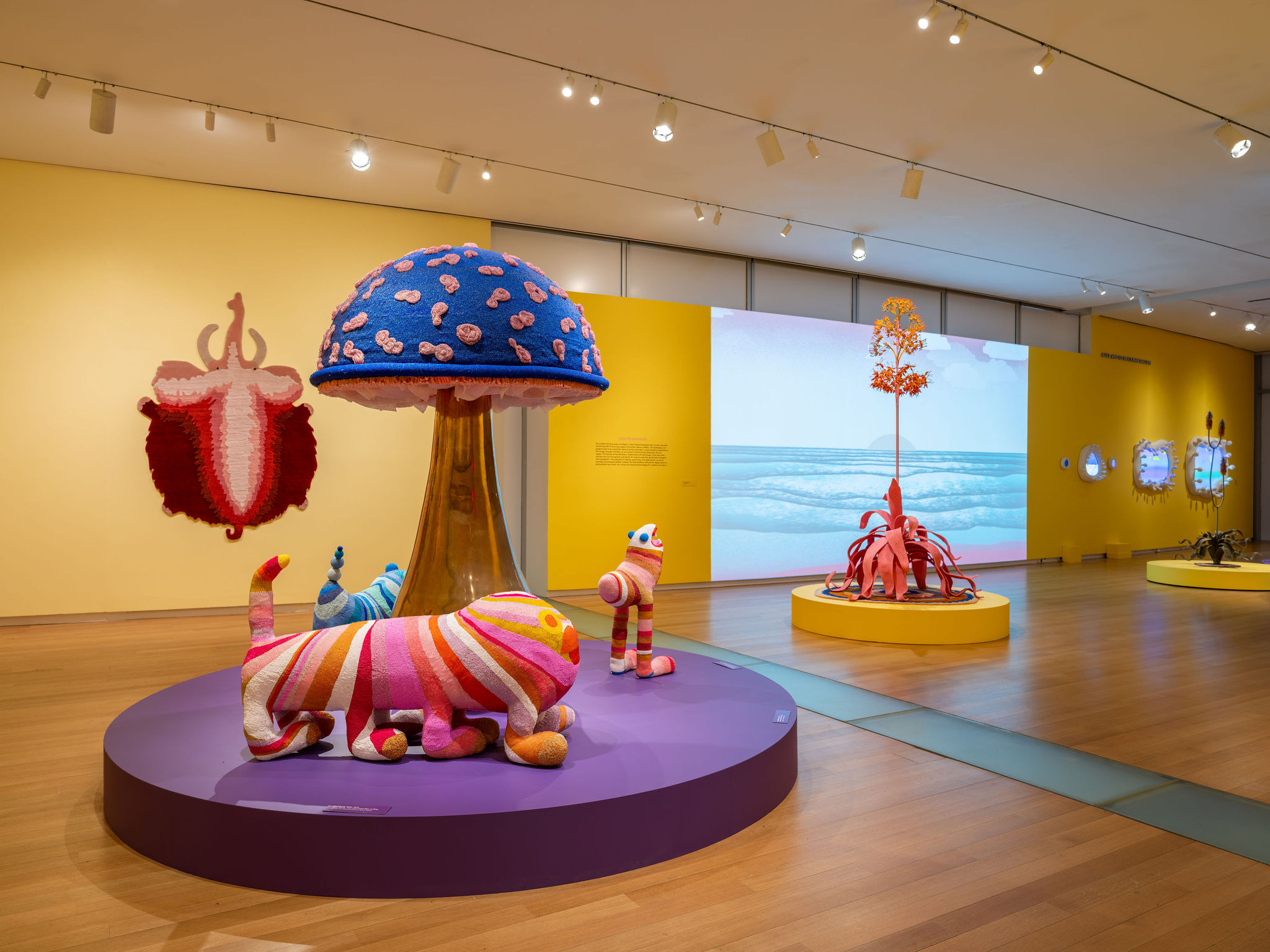
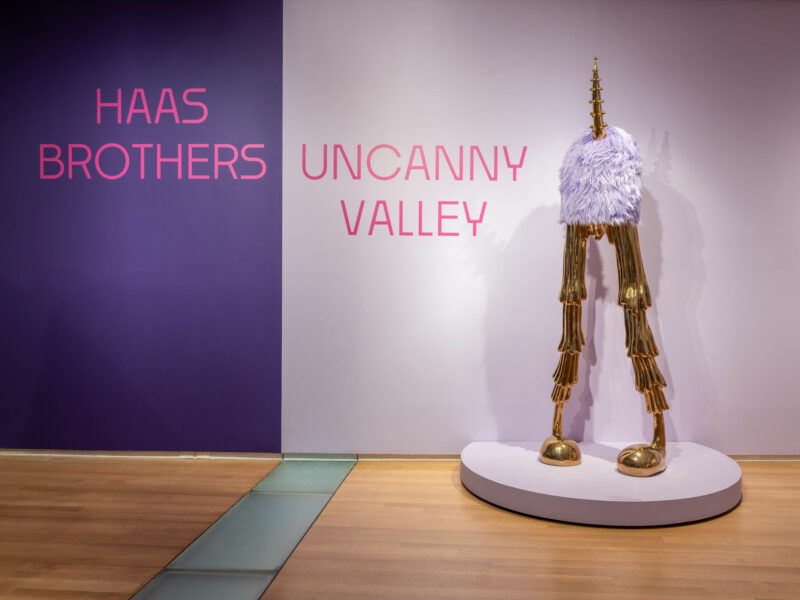
For over a decade and a half, the Los Angeles-based duo Nikolai and Simon Haas have operated in a creative dimension that defies traditional taxonomy. Their output—a dizzying array of surreal, anthropomorphic creatures, functional furniture that seems to breathe, and meticulously beaded sculptures—occupies the liminal space between collectible design, fine art, and pure, unadulterated play. This spring, that evolving practice reaches its most significant milestone yet: Haas Brothers: Uncanny Valley, the largest museum exhibition dedicated to the pair to date, currently on view at New York City’s Museum of Arts and Design (MAD).
Curated by Laura Mott of the Cranbrook Art Museum, the exhibition serves as a definitive survey of the brothers’ partnership. Spanning 85 works created between 2014 and 2025, the show offers a comprehensive look at how two siblings managed to disrupt the rigid hierarchies of the design world, replacing sterile minimalism with a vibrant, often unsettling, sense of humanity.
The Core Narrative: Navigating the Uncanny
The exhibition’s title is more than a clever moniker; it is a profound psychological anchor. The "uncanny valley"—a concept derived from robotics—describes the unsettling feeling people experience when an object or a humanoid robot looks almost human, but not quite, triggering a cognitive dissonance that shifts empathy toward revulsion.
Simon Haas, reflecting on the duo’s 15-year trajectory, notes that the theme emerged organically as they looked back on their body of work. "The ‘uncanny valley’ generally refers to robotics, where empathy for a robot increases the more human you make it—up to a point," Simon explains. "When the robot becomes too human, empathy switches to revulsion. The solution for this is to add cuteness. Looking at our 15-year career from a bird’s eye view, the ‘uncanny valley’ came into focus as a core theme."
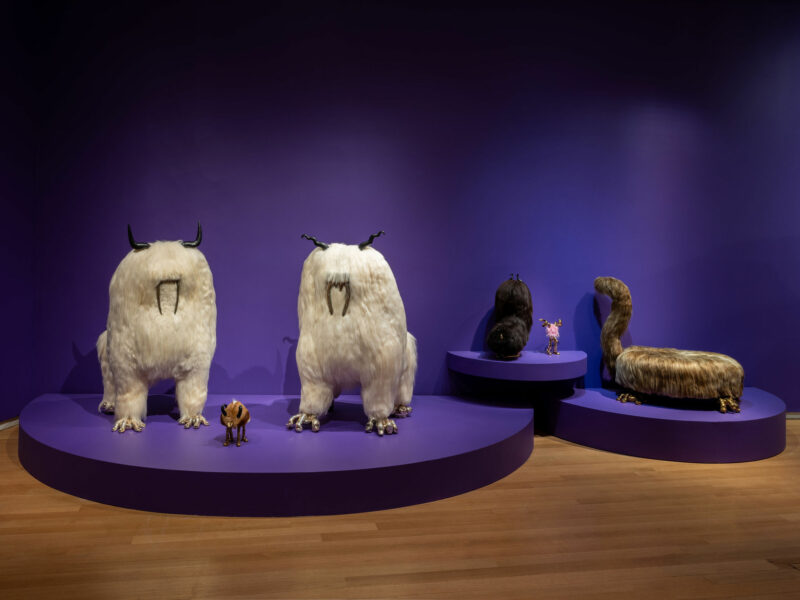
This realization explains the "Haas aesthetic": the fusion of the grotesque and the adorable. By imbuing their biomorphic, often alien-looking forms with textures like lush fur or vibrant beads, they bridge the gap, inviting the viewer to touch and engage rather than recoil.
A Chronology of Creative Evolution
To understand the significance of Uncanny Valley, one must trace the studio’s progression from its inception in 2010.
The Formative Years (2010–2014)
When Nikolai and Simon first established their LA studio, they were outsiders to the traditional gallery-represented design world. Their early work was marked by a relentless pursuit of "biomorphism"—forms inspired by living organisms. They began with high-end furniture, but quickly introduced elements that challenged the viewer’s perception of what a chair or a table should look like.
The Rise of the "Accretion" (2014–2018)
The exhibition highlights the 2014–2018 period as a pivot toward material experimentation. The Accretion ceramic series, inspired by the slow, organic growth patterns of coral reefs, demonstrated the brothers’ ability to harness natural processes. These works, which mimic the accumulation of matter over time, represented a shift toward a more process-heavy practice.
The Digital Frontier (2018–2025)
In the most recent half-decade, the Haas Brothers have pivoted toward the digital. The exhibition showcases algorithmically generated landscapes and self-generating sculptural forms. This era marks the studio’s formal engagement with the dialogue between traditional craft—such as the labor-intensive application of thousands of antique Venetian glass beads—and the precision of computational design.
Technical Mastery and Supporting Data
Haas Brothers: Uncanny Valley is not merely an aesthetic experience; it is an exercise in technical virtuosity. The exhibition features a wide array of mediums:
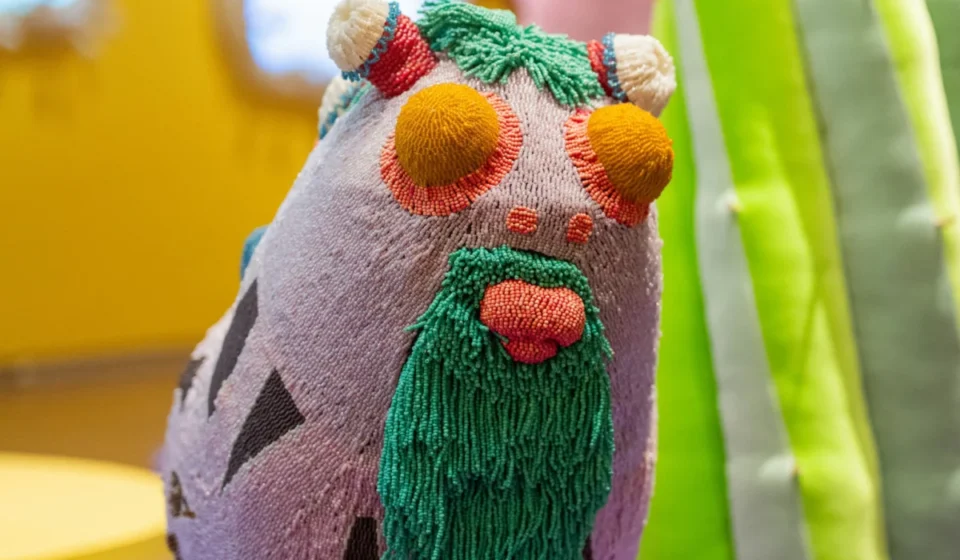
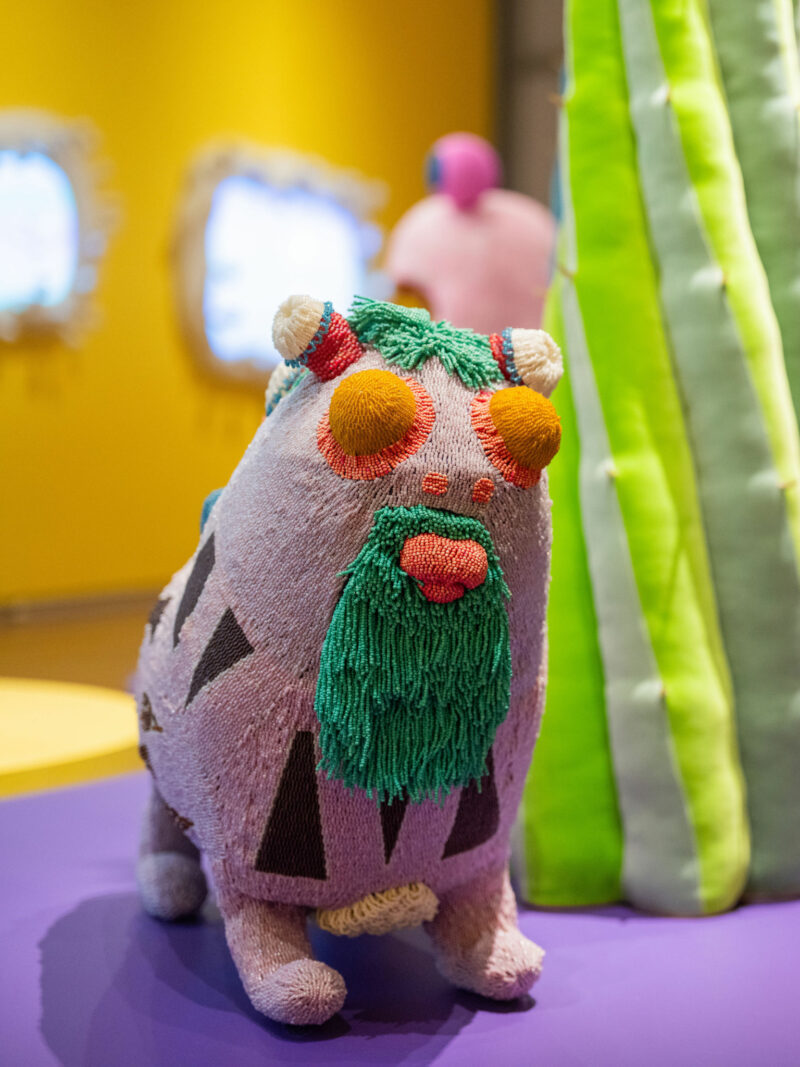
- Beadwork: The studio is renowned for its botanical sculptures, which utilize thousands of antique glass beads. This process is a slow, manual labor of love, often requiring months of collaborative effort.
- Ceramics: The Accretion series utilizes specialized firing techniques to create the illusion of biological growth, blurring the line between ceramic art and evolutionary biology.
- Process Studies: By including sketches and prototypes, the exhibition offers a rare glimpse into the brothers’ working methodology, where mathematical algorithms often dictate the initial form, which is then softened and "humanized" by hand-finishing.
The exhibition’s scale—85 works—provides the data necessary to see the consistency in their evolution. From their early experiments with metal and wood to their more recent forays into textile-heavy, character-driven design, the "Haas DNA" remains consistent.
Official Perspectives and Curatorial Vision
Laura Mott, the curator of the exhibition, has emphasized that Uncanny Valley is designed to challenge the museum visitor’s expectations of a "design show." By placing functional pieces alongside pure sculpture, the exhibition dissolves the boundaries that typically separate the decorative arts from contemporary fine art.
"The Haas Brothers are masters of tension," says a spokesperson for the Museum of Arts and Design. "They occupy a space that is intentionally difficult to categorize. By embracing the tension between beauty and humor, and function and fantasy, they force the visitor to confront the objects in front of them with fresh eyes. This is not a show about furniture; it is a show about the human desire to populate our spaces with creatures that feel alive."
Implications: The Future of Collectible Design
The significance of this exhibition extends far beyond the gallery walls. For the design industry, the Haas Brothers represent a shift away from the austerity of mid-century modernism and toward a more "emotional design" movement.
1. The Humanization of Technology
The studio’s successful integration of algorithms into their creative process suggests a future where technology is not used to create sterile, mass-produced items, but to generate organic, unique, and "character-filled" objects. They prove that AI and digital manufacturing can be tools for whimsy rather than dehumanization.
2. Redefining "Functional Art"
By creating furniture that possesses its own personality, the Haas Brothers have influenced a generation of designers to prioritize "narrative" over pure utility. The implication is clear: in an increasingly digital world, there is a growing hunger for physical objects that possess a sense of soul, humor, and, yes, even a touch of the uncanny.
3. The Traveling Legacy
The fact that this exhibition will travel to the Blanton Museum of Art in Austin and the Mint Museum in Charlotte suggests that the "Haas phenomenon" is a nationwide movement. It signifies a cultural appetite for art that is accessible and fun, without sacrificing technical complexity or conceptual rigor.
Conclusion: A World of "Living" Objects
As visitors walk through the halls of MAD, they are greeted by a cast of characters that seem to inhabit their own ecosystem. Whether it is a gold and white furry sculpture standing on a pedestal or a brightly colored, yarn-covered creature staring back with exaggerated eyes, the Haas Brothers succeed in creating an atmosphere of wonder.
Haas Brothers: Uncanny Valley is a testament to the idea that the best art doesn’t force you to choose between being serious and being playful. It asks you to hold both in your mind simultaneously. As the exhibition prepares to travel across the country, it leaves behind a clear message: in the space between the human and the artificial, there is room for a great deal of imagination.
Exhibition Details:
- Current Location: Museum of Arts and Design, New York City
- Closing Date: August 16, 2026
- Future Stops: Blanton Museum of Art (Austin, TX); Mint Museum (Charlotte, NC)
Editorial Transparency: This article was developed with the assistance of AI tools, which may have been used for research, outlining, editing, or copy refinement. Reporting, fact-checking, and editorial decisions were made by the Design Milk editorial team.