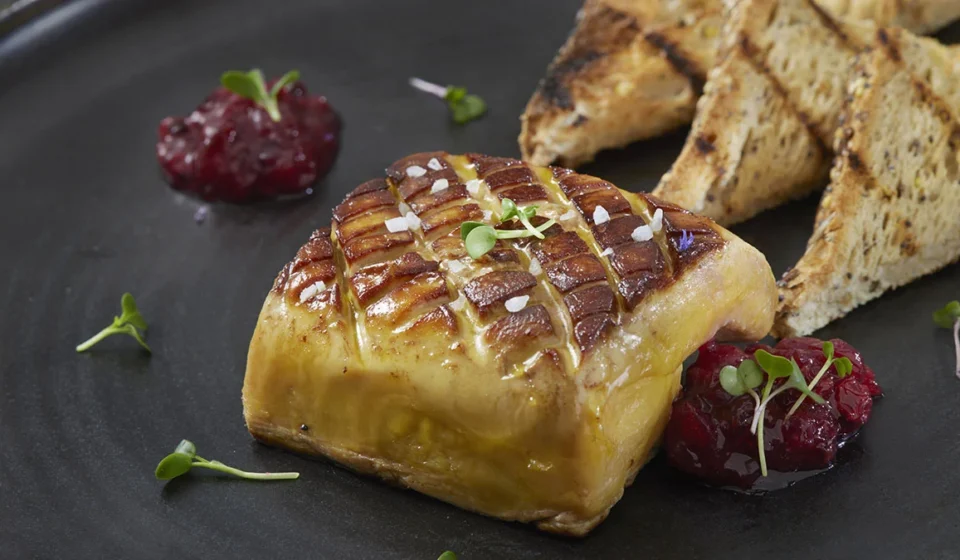

For centuries, the very mention of foie gras—the rich, buttery, and controversial delicacy made from the livers of fattened ducks and geese—has been inextricably linked to the gastronomic identity of France. It is a symbol of Gallic culinary heritage, protected by law, celebrated in haute cuisine, and historically dominated by French producers. However, the crown of the world’s leading foie gras producer is slipping, and the challenger is an unlikely one: China.
Driven by rapid industrial scaling, state-backed agricultural subsidies, and an evolving domestic palate, China has surged to the forefront of the global foie gras market. This seismic shift represents more than just a change in trade statistics; it is a fundamental transformation of a luxury food industry, mirroring China’s previous successful incursions into the high-end caviar market. As French producers scramble to protect their traditional status, the global foie gras landscape finds itself at a historic crossroads.
The State of Play: A Statistical Power Shift
The numbers, reported by Reuters and The Wall Street Journal, paint a startling picture of a changing global order. In 2025, China’s domestic production reached 14,000 tons, a staggering 30 percent year-over-year increase. During that same period, France—the long-standing champion of the industry—saw its output contract slightly to 15,044 tons.
China now accounts for approximately 45 percent of the global supply of foie gras. While the gap in total tonnage remains narrow, the velocity of the trend is what has rattled the French establishment. Fabien Chevalier, the chair of the French foie gras industry group CIFOG, admitted the industry’s vulnerability in a recent interview: "It’s worrying that they’re developing so quickly. We didn’t see them coming like that."
The disparity in production methods is equally stark. The average French farmer produces roughly 10 tons of foie gras annually, adhering to long-standing, artisanal, and small-scale practices. Conversely, Chinese firms such as Changhao Biotechnology are achieving economies of scale that were previously unimaginable. Changhao alone projects an output of 500 tons for the current year, leveraging large-scale, state-of-the-art agricultural facilities that drastically reduce the cost per unit, making the delicacy far more accessible to the average consumer than its French counterpart.
A Chronology of the Chinese Incursion
To understand how China arrived at this position, one must look at the strategic evolution of its agricultural policy over the last two decades.
- 2005–2010: The Experimental Phase. China begins importing breeding stock from Europe, specifically targeting French duck varieties known for high-quality liver production. Small-scale trials are conducted in rural provinces to test viability.
- 2011–2018: State-Backed Infrastructure. Recognizing the potential for rural economic development, the Chinese government begins providing substantial subsidies to agricultural corporations. This period sees the construction of large-scale, climate-controlled farming facilities designed to optimize the fattening process.
- 2019–2023: Domestic Consumption Explosion. As the middle class in major Chinese cities grows, so does the demand for luxury food. Foie gras begins appearing in non-traditional formats—mixed into fried rice, served in hot pots, and even incorporated into ice cream.
- 2024–2025: The Industrial Leap. Chinese producers hit a critical mass in efficiency. Production volume skyrockets, and the industry shifts from a niche experimental sector to a dominant global supplier.
- 2026 and Beyond: The Export Pivot. Having secured the domestic market, Chinese producers begin targeting international hubs like Dubai and Macao, signaling the beginning of an aggressive global export strategy.
Supporting Data: The Efficiency Gap
The competitive advantage of the Chinese model is predicated on industrialization. While French producers focus on the "terroir" and the heritage of the product, Chinese firms utilize high-tech, industrialized environments that mitigate risks such as avian disease and weather variability.
Furthermore, the price elasticity of the product is shifting. In France, the traditional, labor-intensive nature of foie gras production keeps prices high, often insulating it as a "luxury-only" item. The Chinese model, by contrast, has democratized the delicacy. By producing on a massive scale, these firms have driven costs down to a point where the product is becoming a staple in middle-class Chinese households, effectively decoupling the dish from its elitist historical roots.
Official Responses: The French Defense
The French reaction to this encroachment has been a mix of professional concern and regulatory protectionism. CIFOG and other trade groups are lobbying the European Union to implement stringent labeling requirements. The goal is to ensure that "foie gras" cannot be sold in Europe without clear indicators of origin, effectively using the "made in France" label as a marketing shield against the incoming wave of Chinese imports.

French officials argue that the quality standards and animal welfare regulations in France are superior, suggesting that the "industrial" nature of the Chinese product cannot replicate the nuanced flavor profile of a traditionally raised French duck. However, this argument has historical precedents that prove shaky. When Chinese caviar producers began dominating the market, they were initially dismissed as "inferior," yet they eventually achieved such high quality that world-renowned chefs like Thomas Keller began using their product, specifically under the Regiis Ova label. The fear in France is that history is repeating itself.
Implications: A Market Under Pressure
The rise of Chinese foie gras carries profound implications for global culinary culture, international trade, and the ethics of the industry.
The Regulatory Wall
The European Union is preparing for a wave of Chinese imports by fortifying its regulatory barriers. Beyond labeling, the E.U. is looking at import quotas and sanitary inspections that could effectively throttle the entry of Chinese products. This, however, risks sparking a trade dispute with Beijing, which is increasingly sensitive to what it views as discriminatory practices against its high-value agricultural exports.
The Ethical Battleground
While the trade war brews in the boardrooms of Europe and China, the product faces a different, existential threat in the United States. Animal-rights activists have long targeted foie gras, citing the gavage (force-feeding) process as inhumane. California’s long-standing prohibition, combined with the ongoing, stalled efforts to ban the product in New York City, creates a fractured American market.
Even if Chinese foie gras succeeds in capturing the global market, it may find the American market virtually impenetrable. The legal challenges in the U.S. serve as a significant headwind, effectively turning the American foie gras market into a boutique, high-risk sector that may not be worth the effort for Chinese exporters who can move their product more easily in Asian and Middle Eastern markets.
The Future of Gastronomy
Ultimately, the challenge to France’s hegemony is a testament to the globalization of luxury. Foie gras, once a regional treasure of Southwest France, is now a commodity subject to the same pressures of efficiency and scale as any other food product.
If China continues its current trajectory, the world may soon find itself in a reality where the "gold standard" of French cuisine is, in fact, an industrial product from the rural plains of China. For the traditionalists in the Périgord region, this is an existential crisis. For the global consumer, it represents a shift toward a more affordable, more widely available, and perhaps more controversial iteration of a delicacy that has defined indulgence for centuries.
As we look toward the remainder of the decade, the question is no longer whether China can produce foie gras, but whether the world is ready to accept a new champion for a dish that has, until now, been exclusively, stubbornly, and proudly French.