
The Future of Event Management: How AI Concierges Are Solving the Registration Bottleneck

In the high-stakes weeks leading up to a major conference, trade show, or product launch, the event operations team is often buried under a mountain of repetitive, time-sensitive emails. The inquiries are familiar and incessant: What is included in the VIP pass? Are there group discounts for my team? Where exactly is the venue, and is there parking? Can I transfer my ticket to a colleague if I can no longer attend?
For a lean event team—already juggling venue logistics, speaker management, sponsorship activations, and community outreach—these inquiries represent a massive drain on productivity. Every minute spent drafting a manual response to a basic FAQ is a minute lost on high-value strategic work. However, the landscape of event technology is shifting rapidly. According to the EIN AI Report 2025, produced in partnership with EventMobi, over 70% of event professionals now view artificial intelligence as a primary driver for how they will plan and deliver events in the coming years. Among these innovations, the AI event registration concierge has emerged as a transformative tool, designed to automate support while simultaneously boosting conversion rates.
The Problem: The "Registration Friction" Phenomenon
The core issue facing modern event organizers is "registration friction." When a potential attendee visits a registration page, their intent to purchase is at its peak. However, that intent is fragile. If they have a specific question about session availability, accessibility, or speaker credentials and cannot find an immediate answer, they are likely to leave the site.

Traditional static FAQ pages often fail to bridge this gap. They require the user to hunt for information, and they rarely account for the nuance of follow-up questions. When a visitor has to send an email and wait 24 hours for a response, the momentum of the purchase decision is lost. This, in turn, creates a measurable, yet often overlooked, revenue leak.
How the AI Concierge Works: A Technical Evolution
Unlike legacy chatbots, which relied on rigid, manual decision trees and required hundreds of hours of script maintenance, the modern AI event registration concierge utilizes Large Language Models (LLMs) to provide dynamic, real-time, and context-aware assistance.
The technology works through a process known as "indexing." Rather than being "trained" in the traditional machine learning sense—which would require deep data science expertise—the concierge is connected to the event’s existing ecosystem. It crawls the event’s public website, ingests ticketing metadata, and processes uploaded documents such as internal SOPs, sponsor decks, and speaker bios.
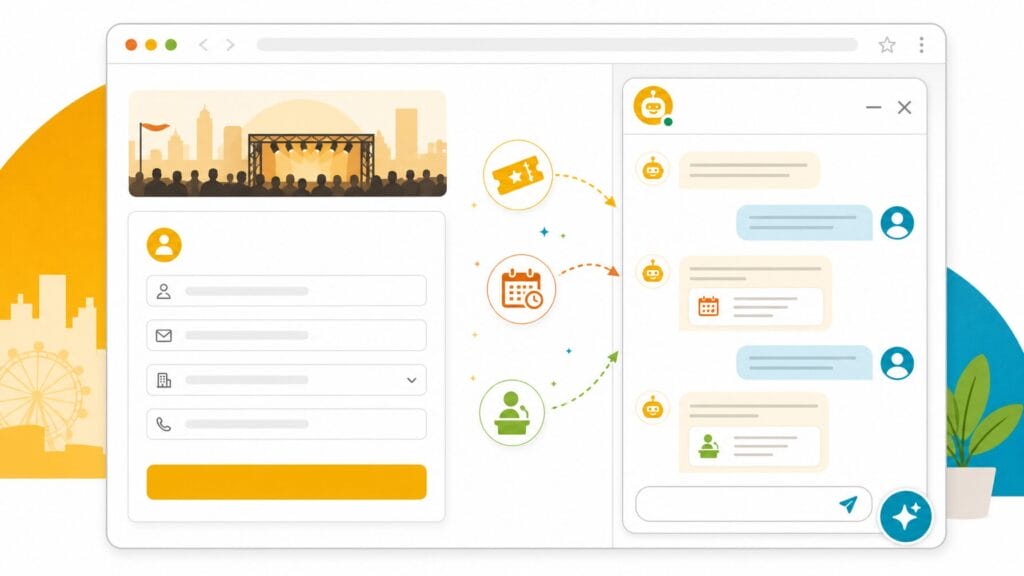
Because it is constrained to the event’s own data, the system avoids the "hallucination" issues common in general-purpose AI. It functions as a specialized librarian, pulling precise information from the uploaded corpus to answer queries in natural language, 24/7, across every time zone.
The Three-Step Implementation Chronology
For event teams, the transition from manual support to an AI-driven model is surprisingly efficient. The typical deployment follows a three-stage chronology:
1. Data Connection (Minutes to Hours)
The team provides the AI with "read" access to the registration platform and public-facing site. Through API integrations or automated site crawling, the assistant pulls in ticket tiers, session descriptions, and speaker lists. No manual data entry is required, and the system is immediately capable of answering foundational questions.
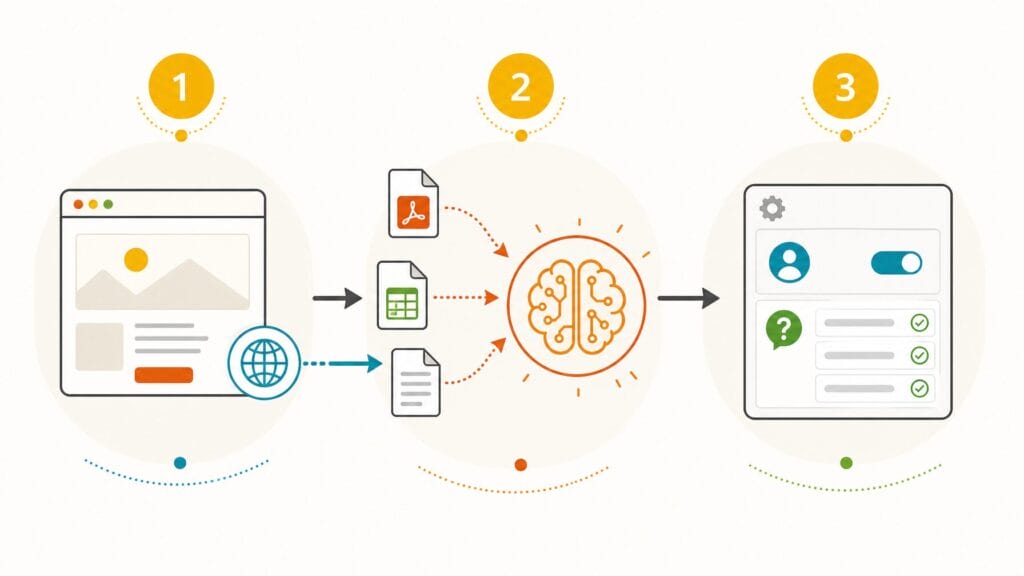
2. Document Enrichment (Hours)
To ensure the concierge can handle operational nuances, organizers upload supplementary files. This includes PDFs of venue floor plans, Excel sheets containing logistical schedules, or Word documents detailing speaker arrival times. The AI uses OCR (Optical Character Recognition) to parse these documents, adding depth to its knowledge base.
3. Experience Configuration (Final Polish)
Finally, the organizer defines the "persona" of the concierge—whether it should be strictly professional, friendly, or brand-aligned. They also configure the "fallback" behavior. If a question falls outside the scope of the provided data, the system is programmed to offer a graceful exit, such as providing a specific support email address or a lead-capture form.
Data-Driven Insights and Strategic Implications
The true power of the AI concierge lies in its role as an analytics engine. For the first time, event planners can see exactly what is stopping visitors from registering.
By reviewing the "unanswered queries" report, organizers gain a clear roadmap for where their website content is failing. If hundreds of users ask about "dietary restrictions at the gala," it is a signal that this information should be moved from a sub-page to the primary registration landing page. This feedback loop allows for continuous, data-backed optimization of the event’s messaging.
Improving Sponsor and Speaker Satisfaction
The concierge is not just for attendees. Sponsors and speakers, who often juggle multiple event opportunities, value responsiveness. By providing an instant, 24/7 channel for sponsors to ask about audience demographics or for speakers to confirm A/V requirements, the organizer projects a level of professionalism and efficiency that helps secure long-term partnerships.
Comparing Solutions: Purpose-Built vs. Generic Chatbots
Event professionals are often tempted to use generic, multi-purpose chat tools like Intercom or Drift. However, these tools were designed for general customer support and often require extensive "flow-building." If a user asks a question that wasn’t hard-coded into the chatbot’s decision tree, the conversation dies.
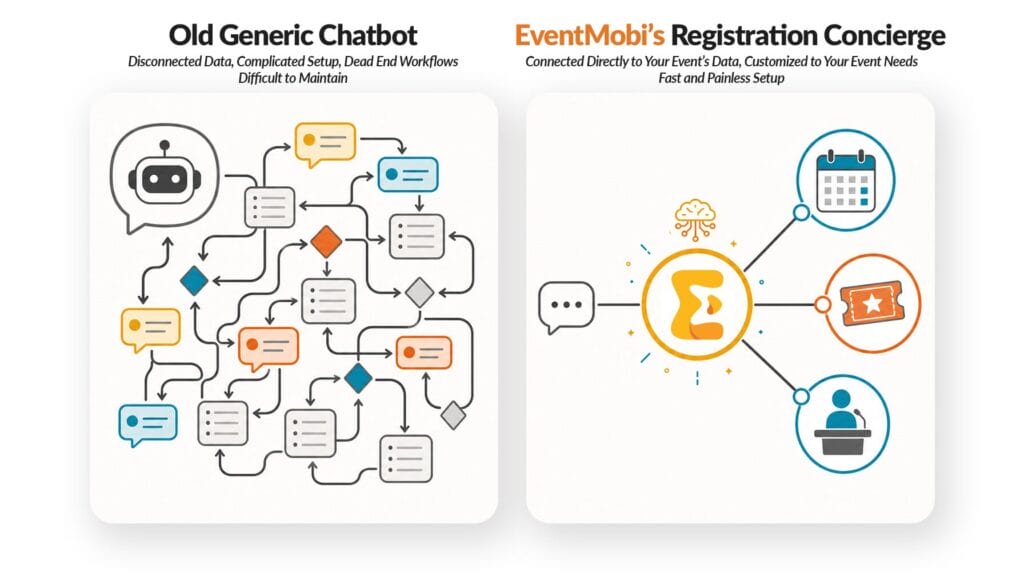
A purpose-built AI registration concierge is inherently different. It is engineered with specific "guardrails" that keep the conversation relevant to the event. It is designed to understand that "transferring a ticket" is a registration-specific action, and it knows how to handle that request by referencing the event’s specific cancellation policy. This reduces the need for a dedicated team member to act as a "chatbot maintainer," freeing them to focus on high-value creative and logistical work.
Supporting Data: The ROI of Automation
The ROI (Return on Investment) for an AI concierge is twofold: cost savings and revenue growth.
- Cost Savings: By calculating the total hourly wage of staff members spent answering registration emails, teams can quickly see the financial drain. For a mid-sized conference, replacing 20 hours of manual email labor per week with an AI assistant can save thousands of dollars in operational costs over a single event cycle.
- Revenue Growth: Even a marginal improvement in conversion rate—say, 1–2% more of the visitors who land on the registration page actually completing their purchase—can result in tens of thousands of dollars in additional revenue, particularly for events with high-priced VIP tiers or sponsorship packages.
The Privacy and Security Mandate
As with any AI implementation, governance is paramount. When evaluating vendors, event organizers must ask critical questions:

- Data Persistence: Are the source documents stored, or are they deleted after the event?
- PII (Personally Identifiable Information): Does the system automatically redact sensitive user data?
- Security: Does the vendor support encryption at rest and in transit, and do they comply with GDPR or other regional data privacy regulations?
These technical requirements should be part of the initial vendor evaluation checklist. A robust, enterprise-grade solution will provide transparency regarding their data handling and, if necessary, offer private-cloud or on-premise deployment options for organizations with strict compliance policies.
The Bottom Line: A Standard, Not a Differentiator
As we look toward the 2026 event season, AI registration concierges are rapidly moving from a "nice-to-have" innovation to a "table stakes" requirement. Just as event apps and digital ticketing became standard, the expectation of instant, intelligent support will become the norm for all attendees.
For organizers, this is an opportunity to reclaim their time. By automating the routine, they can refocus on the human elements of their work: creating networking experiences, designing compelling content, and building the community that makes events truly meaningful. The AI does not replace the human touch; it ensures that when human interaction is necessary, it is reserved for the complex, strategic problems that only a person can solve.
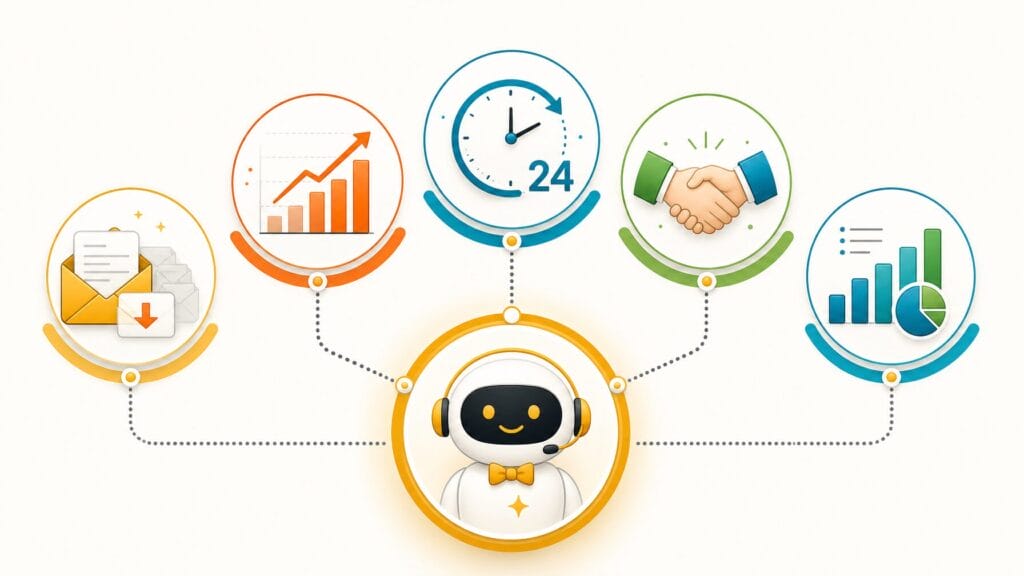
The message to event teams is clear: the technology is ready, the setup is straightforward, and the benefits—in both saved time and increased revenue—are immediate. The only remaining question is how much more productive your team could be if they weren’t answering the same five questions all day long.
Related posts: