
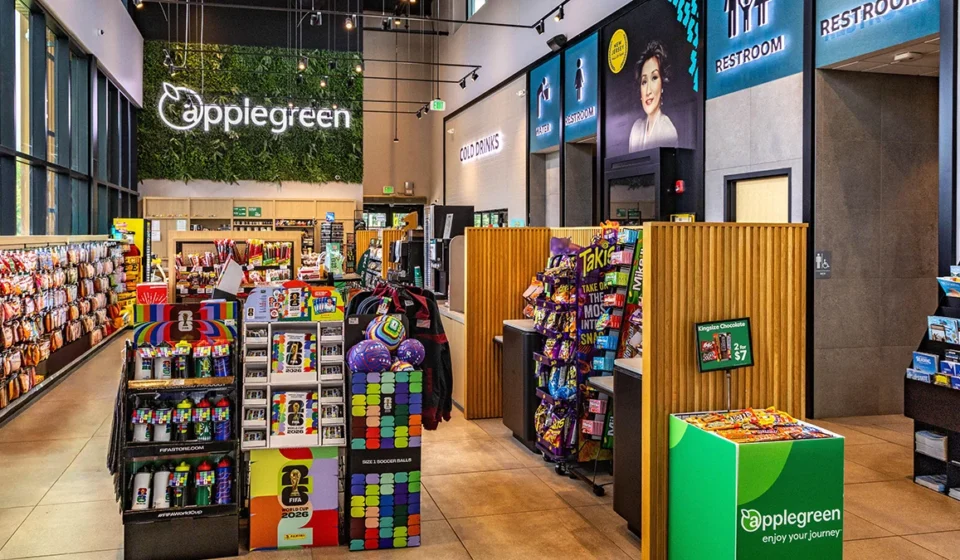
A New Standard for Roadside Hospitality: Applegreen’s Record-Breaking July 4th on the New York State Thruway

The American road trip has long been a cornerstone of summer culture, but for the millions of travelers traversing the New York State Thruway this past Independence Day, the experience was markedly different. Ireland-based retail giant Applegreen, the operator of the Thruway’s service plazas, recently announced that it served a record-shattering 800,000 customers during the July 4th holiday week. This milestone serves as the first major stress test for the newly completed $450 million modernization project that has overhauled the infrastructure of one of the nation’s busiest transportation corridors.
Main Facts: A Historic Surge in Traffic and Transactions
The sheer scale of the holiday travel period underscores the vital role these service areas play in the American economy. Across the 27 designated service areas—spaced roughly 40 to 50 miles apart along the Thruway—Applegreen processed more than 360,000 individual guest transactions.
This data point is particularly significant: it indicates that approximately one in every two travelers who pulled into an Applegreen facility made a purchase, highlighting the effectiveness of the modern retail and dining mix integrated into the new sites. To manage this influx, Applegreen deployed a workforce of 2,000 employees who collectively logged 54,000 hours of labor throughout the holiday week, ensuring that the facilities remained operational, clean, and stocked under peak pressure.
Chronology: From Concept to Completion
The current state of the Thruway’s service areas is the result of a multi-year, intensive public-private partnership. The trajectory of this project reflects a significant shift in how transportation agencies approach traveler convenience.
The Foundation (2019–2021)
The partnership between the New York State Thruway Authority and Applegreen was formalized with the intent to replace aging, mid-20th-century facilities with modern, sustainable structures. The ambitious $450 million redevelopment project began with the goal of completely reimagining the "roadside stop" concept.
The Phased Reopening (2022)
The first wave of rebuilt service areas opened to the public in 2022. These initial openings allowed the Thruway Authority and Applegreen to gather user feedback and refine the operational model, specifically regarding food service flow, parking lot management, and the integration of new technology like EV charging stations.
Final Delivery (November 2023)
The project reached its climax last November, just ahead of the Thanksgiving travel surge, when the final sites were completed. This marked the end of a process that saw 23 entirely new service areas constructed from the ground up and four existing facilities undergoing substantial renovations to bring them up to modern standards.
The July 4th Milestone (2024)
The Independence Day holiday period served as the definitive "proof of concept" for the network. Having handled 41 million visitors since the start of 2025, the July 4th week proved that the new infrastructure could withstand extreme volume while maintaining a high level of customer satisfaction.
Supporting Data: Infrastructure and Economic Impact
The transformation of the Thruway service areas is not merely aesthetic; it represents a fundamental change in the functionality of the highway system. The project was executed entirely through private investment, meaning the $450 million cost was borne by the operators rather than New York State taxpayers.
Infrastructure Highlights:
- Capacity: 27 service areas now provide uniform, high-capacity facilities across the state.
- EV Readiness: As the automotive industry shifts toward electrification, the inclusion of robust EV charging stations at these sites has become a critical utility.
- Trucking Support: Recognizing the importance of the Thruway to national logistics, the new designs feature enhanced facilities for commercial truckers, including improved parking and rest areas.
- Diverse Amenities: Beyond basic fuel and food, the sites now offer nursing stations, pet walking areas, and modern climate-controlled interiors.
Local Integration:
Through the "Taste NY" program, Applegreen has acted as a gateway for regional commerce. Each of the 27 convenience stores now hosts products from nearly 30 local New York food and beverage vendors. This strategy creates a symbiotic relationship between global retail operations and small-scale local producers, turning a standard rest stop into a showcase for state-specific goods.
Official Responses: Aligning Government and Industry
The success of the initiative has been lauded by both public officials and private sector executives as a model for future infrastructure development.
Frank G. Hoare, Executive Director of the Thruway Authority, emphasized the necessity of the public-private model. "Welcoming a record number of customers during the recent Independence Day holiday week demonstrates the value of the private investment that was made in modernizing all 27 Thruway service areas over the last five years," Hoare noted. He reiterated Governor Kathy Hochul’s sentiment that government should act as an enabler for the people, stating that the project provides a "prime example of that commitment in action."
For Applegreen, the focus remains on the "hospitality" aspect of the business. Matthew Scally, VP of Operations at Applegreen, expressed satisfaction with the operational outcome. "Our goal with the New York Thruway investment program was to radically improve the service area product for our guests, and to provide them with a world-class roadside hospitality experience," Scally said. "We have delivered modern, comfortable, and sustainable areas across the Thruway and we were delighted to welcome so many travelers to our 27 Thruway sites for the July 4th week."
Implications: The Future of Roadside Travel
The success of this project carries significant implications for the broader U.S. infrastructure landscape. As the U.S. continues to age its mid-century highway systems, the Applegreen-Thruway partnership offers a roadmap for how state governments can upgrade critical assets without relying on public debt or tax increases.
Sustainability and Modernization
The transition to sustainable materials and energy-efficient building designs in the new service areas reflects a long-term commitment to environmental stewardship. By centralizing services, the Thruway reduces the need for travelers to exit the highway system to find fuel or food, which in turn reduces congestion on local municipal roads.
The Economic Engine
Applegreen’s presence in the U.S. has grown aggressively since 2014. With more than $1 billion invested in the market and a staff of 8,000 during peak periods, the company’s success on the Thruway is part of a larger trend of international investment in American infrastructure. The 181 sites currently managed by the company—including 300 branded food outlets—demonstrate that there is a high market demand for premium, reliable roadside services.
A New Baseline
Travelers now expect more than just a gas pump and a vending machine. The inclusion of nursing stations, pet areas, and diverse food options suggests that the "service plaza" of the 21st century is evolving into a multipurpose hub. For the New York State Thruway, the high transaction numbers during the July 4th holiday confirm that the public is not only willing to use these facilities but is actively seeking out the convenience and quality they provide.
As the summer travel season continues, the performance of the 27 service areas will remain under scrutiny, but early indicators suggest that the $450 million investment has successfully transitioned the Thruway into a modern, customer-centric corridor. By prioritizing high-volume efficiency alongside diverse amenities, the project sets a high bar for transportation infrastructure projects nationwide. The result is a more resilient, traveler-friendly, and economically productive highway network that stands as a testament to the effectiveness of strategic public-private collaboration.