Lowering the Barrier to Entry: How Meetup’s New ‘Starter’ Plan Aims to Cultivate the Next Generation of Community Leaders

In the rapidly evolving landscape of digital social platforms, the challenge for community-building tools has always been balancing robust functionality with accessibility. For years, Meetup has served as the gold standard for connecting individuals through shared interests, physical gatherings, and local hobbyist groups. However, the barrier to entry—the administrative and financial commitment required to launch a group—has historically been a hurdle for aspiring organizers.
In a strategic shift aimed at democratizing community management, Meetup has officially introduced "Meetup Starter," a streamlined, entry-level tier designed to invite a new generation of organizers into the ecosystem. By offering a lightweight, cost-free environment, the platform is attempting to lower the stakes for individuals who have the passion to lead but may be intimidated by the full suite of professional tools.
Main Facts: What is Meetup Starter?
The introduction of Meetup Starter represents a fundamental shift in how the platform views the "organizer lifecycle." Previously, potential organizers were faced with a singular, comprehensive path that required a subscription to initiate a group. With the new Starter plan, the barrier is essentially removed.
Core Principles of the Starter Plan:
- Zero-Cost Entry: The primary objective is to remove financial friction, allowing users to test their community-building concepts without initial capital investment.
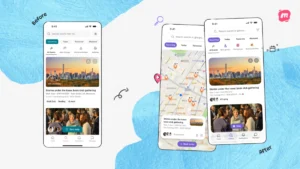
- Streamlined Dashboard: The user interface for Starter organizers is stripped of the complex backend management tools required for multi-group networks, focusing instead on event creation, member communication, and basic group maintenance.
- "Sandbox" Environment: It serves as a testing ground for community concepts. If an organizer realizes their group needs more reach or advanced administrative tools, the path to upgrading to a Standard plan is integrated directly into the dashboard.
The Chronology: A Shift in Strategic Direction
The rollout of Meetup Starter did not occur in a vacuum. It is the culmination of a multi-year effort to refine the user experience (UX) based on feedback from the global organizer community.
Phase 1: Identifying the "Organizer Gap" (2022–2023)
Data analytics from 2022 indicated that a significant percentage of potential organizers would sign up for an account, explore the dashboard, and subsequently abandon the process before creating their first event. Interviews revealed that the primary deterrent was the combination of a paid subscription requirement and the perceived complexity of managing a "full" Meetup group.
Phase 2: Pilot Testing and Feedback (Early 2024)
Meetup initiated a series of beta tests in selected geographic markets. The goal was to determine if a "lightweight" version of the platform would lead to a higher conversion rate of active, long-term organizers. The results showed that users who started with a "lite" experience were 40% more likely to eventually upgrade to a paid tier once their community reached a critical mass.
Phase 3: The Official Launch (October 2024)
As of October 11, 2024, Meetup officially debuted the Starter plan to its global user base. This launch marks a pivot toward a "freemium" model, intended to increase the total number of events hosted globally by empowering casual or new organizers to test the waters.

Supporting Data: Comparing the Tiers
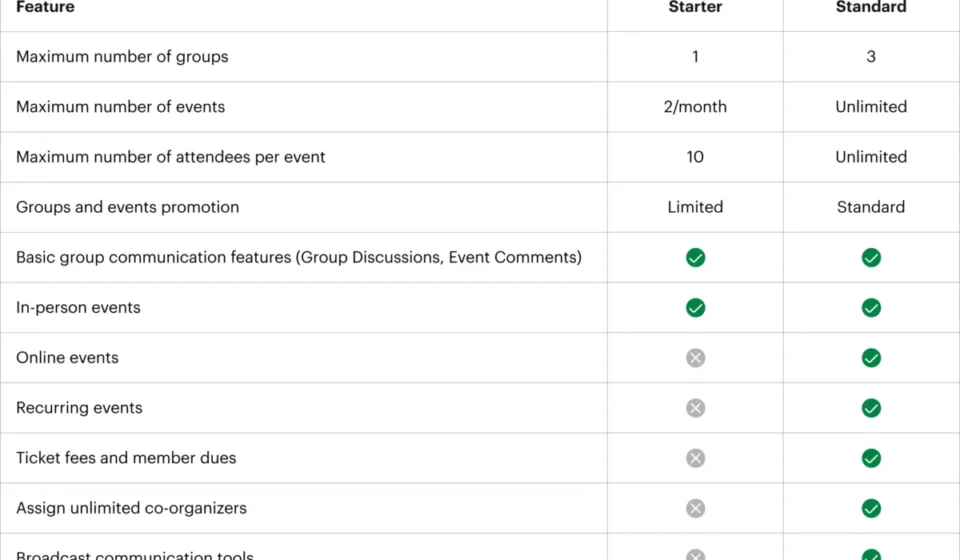
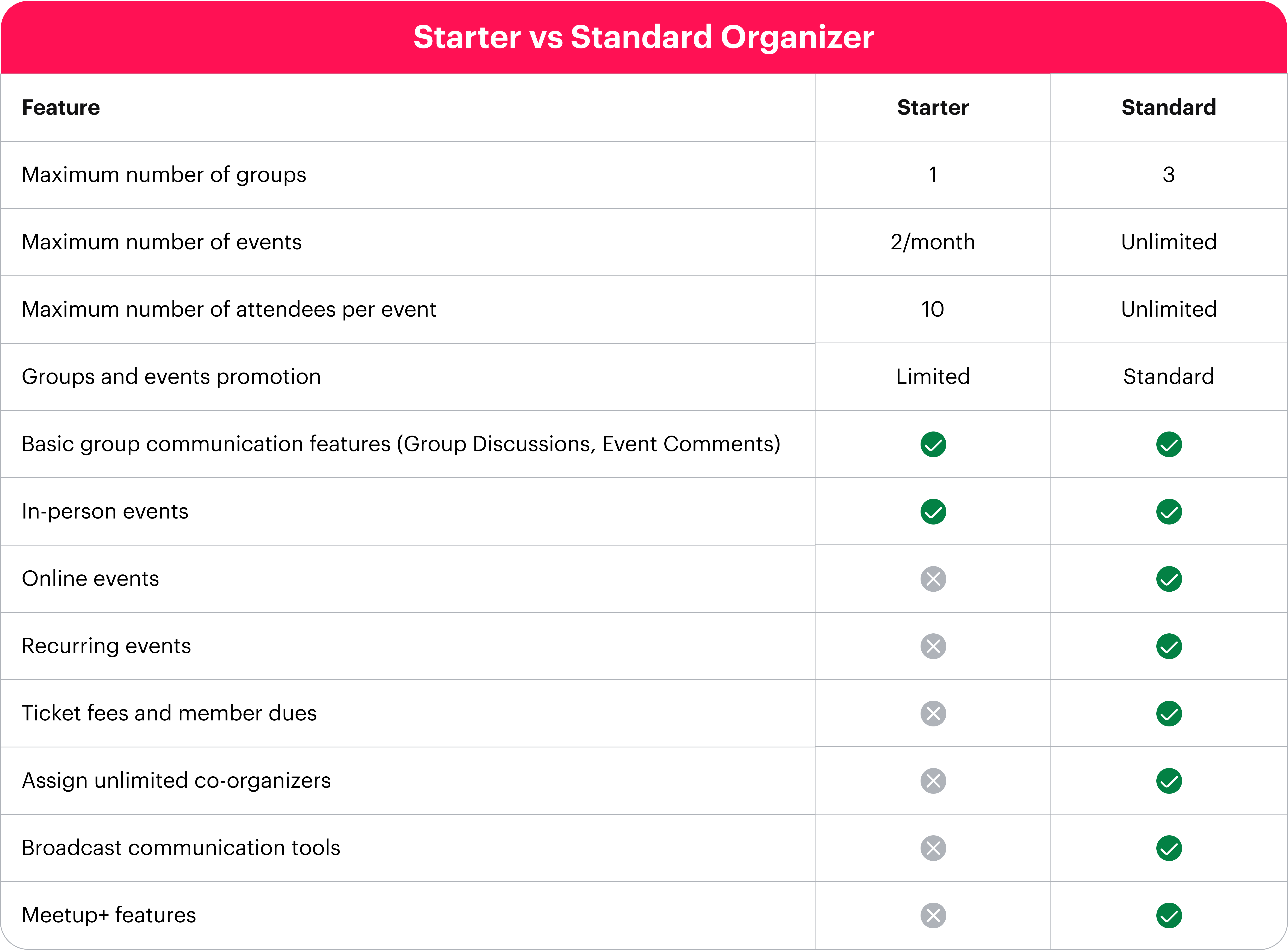
To understand why a user might choose one plan over another, it is essential to look at the functional breakdown between the Starter, Standard, and Pro tiers.
The Starter Tier (The Entry Point)
Designed for the "first-time organizer," this tier focuses on the essentials:
- Core Event Management: Creating and managing single events.
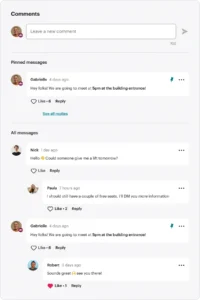
- Basic Communication: Ability to reach out to members who RSVP.
- Visibility: Full inclusion in Meetup’s discovery engine, ensuring that local users can find the group via organic search.
The Standard Tier (The Professional Foundation)
For those who have validated their group concept and are ready to scale, the Standard plan provides the tools for "power users":
- Multi-Group Management: The ability to host and manage up to three different groups under one subscription.
- Unlimited Event Capacity: No caps on the frequency of events, making it ideal for clubs or professional networking groups that meet weekly.
- Advanced Analytics: Access to deeper insights regarding member growth, RSVP patterns, and traffic sources.
The Pro Tier (The Enterprise Solution)
Meetup Pro remains the benchmark for large-scale organizations, non-profits, and corporate entities. It includes:
- Branding Customization: Advanced styling to align Meetup pages with corporate or organizational branding.
- Member Data Export: Critical for businesses that need to integrate Meetup data with CRM systems.
- Priority Support: Dedicated account management for high-volume networks.
Official Responses: The Philosophy of Connection
The Meetup Team, in their official announcement, emphasized that this decision was rooted in a desire to foster a "richer, more diverse ecosystem." By making the platform more accessible, they aim to lower the threshold for niche hobbies, grassroots activism, and local social clubs to find a home.
"We believe that community management is a learned skill," a spokesperson for the platform noted. "By providing new organizers with a simplified option, we are essentially building a nursery for future community leaders. We don’t want the technical or financial burden of our most advanced tools to be the thing that prevents someone from starting a book club, a hiking group, or a coding collective."
The leadership at Meetup has underscored that the primary goal is not just user acquisition, but "community health." A more diverse range of groups—covering everything from hyper-local neighborhood gardening to specialized niche tech interests—creates a more vibrant platform for all participants.
Implications: The Future of Grassroots Community Building
The implications of the Meetup Starter rollout are significant for both the platform and the broader digital social landscape.
1. Increased Competitive Pressure
By offering a free entry point, Meetup is directly challenging other community-building tools that have historically occupied the "free but basic" space, such as Facebook Groups or Discord. By integrating the professional discovery and event management infrastructure of Meetup into a free tier, they are effectively making a strong case for users to migrate their communities to a platform specifically engineered for in-person and hybrid engagement.
2. A Shift in Organizer Demographics
Analysts expect to see a surge in younger, more diverse organizers—specifically students, freelance hobbyists, and community activists who previously found the barrier to entry prohibitive. This will likely lead to a wider variety of "micro-communities" that prioritize local, high-frequency, low-cost interactions.
3. The "Conversion Funnel" Evolution
For Meetup, the business model is no longer about immediate subscription revenue at the point of sign-up. Instead, it is about long-term customer lifetime value (CLV). By allowing organizers to fail, succeed, or grow at their own pace, Meetup is nurturing a pipeline. The organizers who find success with the Starter plan will naturally graduate to the Standard plan as their groups grow, ensuring that the platform’s revenue growth remains tied to the success of its community leaders.
4. Impact on Local Economies
Local events are often the heartbeat of local economies. Whether it is a coffee shop hosting a gaming night or a park authority managing a fitness group, the ability to organize these events easily directly correlates to foot traffic and local social cohesion. A wider net of organizers means more events, which ultimately results in more people leaving their homes to interact with their communities.
Conclusion: A New Chapter for Meetup
The launch of Meetup Starter is more than just a pricing adjustment; it is a fundamental re-evaluation of what a community platform should provide to its most important asset: the organizer.
By separating the "tools of the trade" from the "act of organizing," Meetup is acknowledging that leadership is a journey. It begins with an idea, grows through a few successful events, and scales through the use of sophisticated management tools. By supporting that entire journey—from the very first free, simplified meeting to large-scale, professional organizations—Meetup is positioning itself to remain the definitive platform for human connection in an increasingly digital world.
As the platform moves forward, the success of the Starter plan will be measured not just in user growth, but in the vibrancy of the thousands of new groups that are expected to emerge as a result of this initiative. For the aspiring organizer, the path has never been clearer, and the barrier to entry has never been lower. Whether you are looking to host a small gathering of neighbors or build a multi-group network, the tools are now waiting for you—ready to be picked up at your own pace.