A Historic Shift in Florida Aviation: Palm Beach International Becomes President Donald J. Trump International Airport

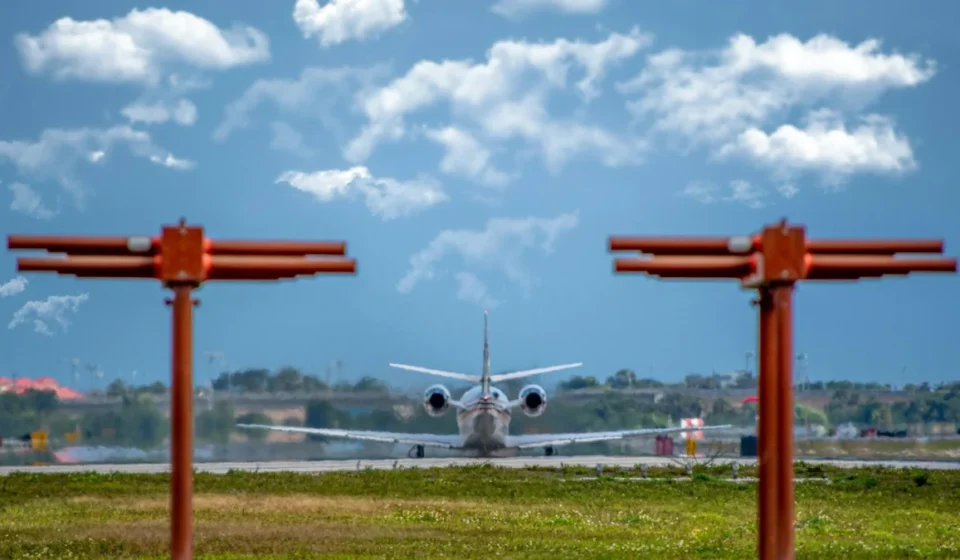
In a move that marks a significant milestone in American civil aviation and political branding, Palm Beach International Airport has officially been renamed "President Donald J. Trump International Airport." This transition, which concluded a 78-year tenure under its previous moniker, establishes a unique precedent: it is the first airport in the United States to be named after a sitting president.
The rebranding effort, which officially took effect on Friday, signals a new chapter for the transit hub located just a few miles from the former president’s Mar-a-Lago estate. While travelers may still encounter legacy signage during a transitional period, the transformation represents a bold intersection of state legislation and national political symbolism.
The Chronology of a Rebranding
The journey to rename the airport began in earnest earlier this year. In February, the Florida state legislature passed a bill authorizing the change, which was promptly signed into law by Governor Ron DeSantis. The legislative process moved with relative speed, reflecting the influence of the state’s political leadership in steering the identity of its infrastructure.
Following the signing of the bill, airport administrators began the complex logistical task of updating the facility’s identity. Airport officials noted that a transformation of this magnitude cannot occur overnight. In a statement released via social media, the airport informed the public that travelers would see a mixture of "classic look" branding and the new "President Donald J. Trump International" elements coexisting throughout the terminal over the coming weeks.
While the name change is effective immediately, the technical infrastructure will follow a slightly different timeline. The airport’s iconic three-letter identification code, PBI, is slated to remain in place until August 18, at which point it will be officially updated to "DJT," aligning the airport’s digital and navigational identity with its new name.
Financial and Operational Implications
The administrative and physical overhaul required for such a transition is substantial. According to estimates provided during the legislative phase, the cost of replacing signage, updating administrative databases, and executing the broader rebrand could reach as high as $5.5 million.
This cost covers more than just exterior signage; it involves a comprehensive update to airport security systems, air traffic control documentation, and marketing materials. For a hub that serves as a vital gateway for South Florida, the change represents a significant investment in institutional rebranding.
Despite the cost, the airport continues to operate as a critical hub for the region. Currently, JetBlue Airways holds the largest share of operations at the facility, followed closely by Delta Air Lines and American Airlines. These three carriers alone account for approximately two-thirds of the total passenger traffic. While the airport primarily serves domestic routes, it maintains international connectivity through carriers such as Air Canada, Porter Airlines, and Bahamasair, which facilitate travel to Canada and The Bahamas.
Political Context and Official Perspectives
The renaming of the airport was championed by Governor Ron DeSantis, who viewed the move as both a tribute to a Florida resident and a celebration of presidential history. During a signing event in Tampa, DeSantis remarked, "The Legislature passed it and he’s a friend of mine. He’s a sitting President from Florida. The first one we’ve ever had from Florida. And so I thought it was appropriate."
DeSantis emphasized that the decision was rooted in the former president’s long-standing connection to Palm Beach, citing his residence at Mar-a-Lago and his broader impact on the local community. For supporters of the former president, the renaming serves as a permanent recognition of his influence on the region and the state.
However, the decision has not been without controversy. Representative Lois Frankel, a Democrat whose district encompasses much of West Palm Beach, has been a vocal critic of the process. In a public statement, Frankel argued that the renaming bypassed the very people most impacted by the change.
"The renaming of Palm Beach International Airport should have reflected the will of the community—not political dictates from the state," Frankel stated. "No one asked the people of Palm Beach County. This decision was made in Tallahassee, overriding the voices of the residents, businesses, and travelers who use it every day. Palm Beach County deserved a real opportunity to be heard. It never got one."
This friction highlights a deeper political divide. While the airport is owned and operated by Palm Beach County—a region that saw a razor-thin margin in the 2024 Presidential election—the mandate for the name change originated at the state level, effectively superseding local municipal oversight.
Historical Precedents in Airport Naming
Naming an airport after a president is a storied tradition in the United States, yet the specific timing and circumstances of this renaming set it apart. Historically, airports are named for former presidents who have completed their terms, or as memorials to those who have passed away.
Airports Named for Former Presidents
Several major U.S. airports honor former presidents who were still living when the name change occurred:
- George Bush Intercontinental Airport (IAH): Houston’s major hub honors the 41st President.
- Gerald R. Ford International Airport (GRR): Grand Rapids, Michigan, honors the 38th President.
- Ronald Reagan National Airport (DCA): Washington, D.C.’s closest airport, renamed in 1998.
- Bill and Hillary Clinton National Airport (LIT): Little Rock, Arkansas, recognizes the 42nd President and his wife.
Memorial Naming
Many other facilities serve as memorials, such as John F. Kennedy International Airport (JFK) in New York, which was renamed in 1963 shortly after the president’s assassination. Similarly, the Dwight D. Eisenhower National Airport in Wichita was named in 2014, some 45 years after the 34th president’s death.
The Dynamics of Legacy and Renaming
The practice of renaming airports for public figures is not without its own historical turbulence. In 2021, Las Vegas renamed its major airport from McCarran International to Harry Reid International. The change followed a unanimous vote by the Clark County Commission, which sought to distance the facility from Senator Pat McCarran due to long-standing allegations of anti-Semitism and racism.
Similarly, San Diego’s facility, once known as "Lindbergh Field" in honor of aviator Charles Lindbergh, was rebranded to simply "San Diego International Airport" in 2003 to better reflect its status as a major municipal hub. These examples demonstrate that an airport’s name is often a reflection of the evolving social and political values of the community it serves.
Looking Ahead: The Future of the "DJT" Hub
As Palm Beach International transitions into the "President Donald J. Trump International Airport," the aviation industry and the local community will be watching how the change impacts day-to-day operations.
For the millions of passengers who transit through the facility annually, the change will likely become a point of conversation and curiosity. For the airport’s management, the focus now shifts to the logistical completion of the rebrand by mid-August.
The renaming underscores a broader trend of public infrastructure being used to cement political legacies. Whether viewed as an appropriate honor for a former president or a controversial top-down mandate, the shift is an indelible mark on the landscape of Florida. As the signage changes and the "DJT" code takes effect, the airport remains a testament to the complex, and often polarized, nature of modern American public life.
With the transition well underway, the newly named airport stands as a symbol of the unique political geography of South Florida, ensuring that the name of the 45th President will be the first thing visitors see upon arrival in Palm Beach for generations to come.