Through the Lens of Truth: Robert Irwin Champions Authentic Wildlife Photography in the Age of AI

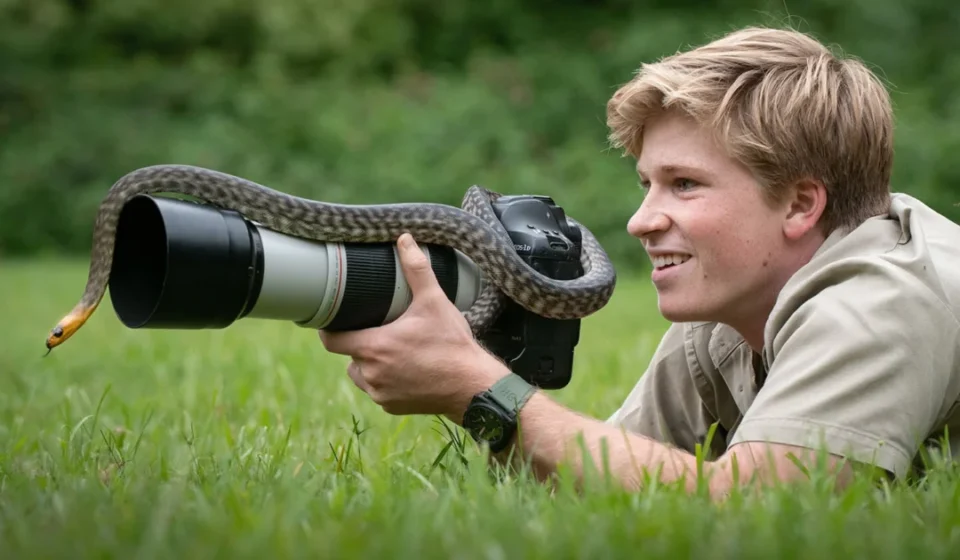
In an era where the boundaries between reality and digital fabrication are increasingly blurred by the rapid ascent of generative artificial intelligence, one of the world’s most recognizable wildlife conservationists is taking a firm stand. Robert Irwin, the 22-year-old photographer, television personality, and scion of the legendary Irwin family, is using his platform to advocate for the preservation of authenticity in wildlife imagery.
In a recent, expansive interview with Parade, Irwin discussed his lifelong dedication to the craft of photography—a pursuit he describes as the "most formative part" of his identity. Amidst his various professional ventures, including his celebrated turn on Dancing With the Stars and his ongoing conservation work at the Australia Zoo, Irwin’s commitment to the lens remains a pillar of his mission. His message is clear: while AI technology may be capable of creating visually striking, surreal, or "ridiculous" imagery, it ultimately threatens to dilute the visceral, emotional impact that only genuine, real-world photography can provide.
The Formative Power of Photography
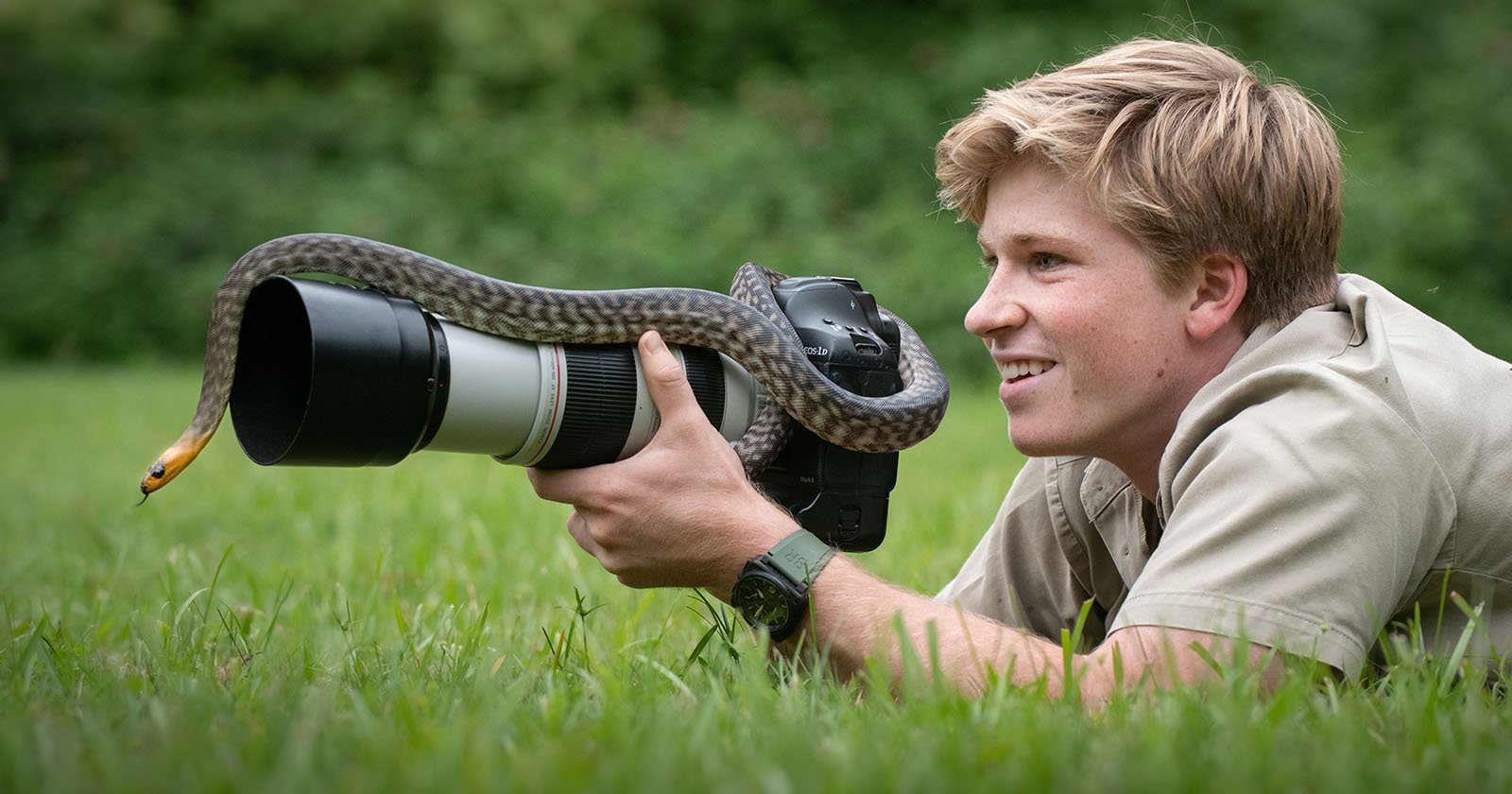
For Robert Irwin, photography is not merely a hobby or a professional skill; it is a fundamental language of conservation. Having spent the better part of his life documenting the natural world, Irwin views the camera as a tool for storytelling and advocacy.
"This has been a passion project of mine and ours for a very long time," Irwin stated in his interview. "A lot of people might not realize this, but there’s this part of my life that’s been really probably the most formative part of my life and really created the person I am today, which is photography."
Since PetaPixel first profiled the young conservationist in 2023, his career has continued to evolve. Yet, regardless of the accolades or the media spotlight, Irwin consistently returns to the field. His approach to photography is deeply rooted in the philosophy instilled in him by his father, Steve Irwin: that by capturing the beauty of the natural world, one can inspire the public to protect it. For the younger Irwin, the act of holding a camera is a bridge between the wild and the observer, a way to foster empathy for species that are often misunderstood or overlooked.
The AI Challenge: Diluting the Real
One of the central themes of Irwin’s recent discourse is the encroaching influence of generative AI on the photography industry. While acknowledging that technological advancement is an inevitable facet of human progress, Irwin cautions that we often overlook the unintended consequences—both environmental and artistic.
"With AI, I think not only does it take away from the artistry of photography, but it also dilutes what is impressive," Irwin remarked. He points to the phenomenon of "AI hallucination," where platforms generate bizarre, composite imagery—such as an eagle riding an elephant—that some audiences mistakenly believe to be real.
Irwin argues that this influx of synthetic imagery creates a "numbing" effect. When audiences are constantly bombarded with spectacular, AI-generated fabrications, the genuine, often painstaking work of a wildlife photographer becomes less impactful.
"We don’t realize that what is real and, that’s more amazing because it’s real, you know?" he emphasized. For Irwin, the "amazing" nature of a photograph is inextricably linked to the truth of the moment. The patience, the travel, the environmental risks, and the split-second decision-making required to capture a snow leopard or a Komodo dragon in its natural habitat are what imbue a photograph with soul. AI, he argues, lacks this pedigree of truth, and therefore, it lacks the ability to spark genuine conservationist sentiment.
A Bucket List of the Wild
Despite his extensive travels and the thousands of hours spent behind a viewfinder, Irwin remains, at his core, a student of the natural world. He is quick to dispel the myth that he has "seen it all." In his conversation with Parade, he shared a "mile-long" list of creatures he has yet to encounter in their native environments.
The Unfinished Journey
Irwin’s aspiration list reads like a dream itinerary for any wildlife enthusiast:
- The Sloths of South America: A region he has yet to explore, South America remains a primary target for his future expeditions.
- The Galápagos Islands: A bastion of biodiversity that holds a legendary status in the photography world.
- Komodo Dragons: While he has worked with these apex predators in captivity, photographing them in the wild remains a top priority.
- Snow Leopards: Widely considered the "pinnacle" of mountain wildlife photography due to their elusive nature and the extreme terrain they inhabit.
- Polar Bears: An encounter he admits would likely leave him "squealing with excitement."
These ambitions underscore a vital truth: photography is an endless pursuit of discovery. By continuing to hunt for these shots, Irwin is not just filling a portfolio; he is documenting the ongoing health and status of the planet’s most vulnerable ecosystems.
Championing Authenticity: The Crikey! Magazine Competition
To counter the rise of synthetic imagery, Irwin and the Australia Zoo are redoubling their efforts to promote ethical, authentic wildlife documentation. A key component of this initiative is the 10th anniversary of the Crikey! Magazine Photography Competition.
The competition, which accepts entries until August 31, 2026, serves as a global platform for photographers to showcase nature as it is "intended." It is a rejection of the digital "meddling" that AI represents.
"I’m looking for storytelling that shows nature as it’s intended. You’re not meddling with anything. You’re letting nature take its course, and you’re photographing it in its true and raw state," Irwin explained. He is explicit about the competition’s stance on generative technology: "In our competition at least, there is no room for AI, that’s for sure. It ain’t happening."
The competition is designed to be inclusive, inviting both seasoned professionals and budding enthusiasts—perhaps a child picking up their first camera—to share their unique perspectives. By focusing on the "visceral feeling" that comes from a raw, honest image, Irwin hopes to encourage a new generation of photographers to find value in the struggle and reward of real-world photography.
The Implications for Future Conservation
The broader implications of Irwin’s stance on AI and photography extend far beyond the artistic community. In the realm of environmentalism, imagery is the primary currency. Public support for conservation initiatives is often driven by the emotional connection created by a powerful photograph. If the public loses the ability to distinguish between a real, endangered animal and a fake, AI-generated creature, the urgency of conservation may diminish.
The Risks of Digital Deception
- Erosion of Trust: As fake images become more sophisticated, the public may grow skeptical of all wildlife photography, leading to a "crying wolf" scenario where legitimate documentation of environmental disasters or endangered species is dismissed as a digital manipulation.
- Environmental Apathy: If the public can satisfy their visual curiosity through AI-generated "nature," the perceived need to support physical travel, wildlife parks, and conservation research may decline.
- Artistic Devaluation: The technical skill required to master light, composition, and animal behavior is being bypassed by software. Protecting the integrity of the craft ensures that wildlife photography remains a respected and viable profession.
Conclusion: The Resilient Nature of Reality
Robert Irwin’s perspective is a refreshing call to action in an increasingly artificial world. By centering his philosophy on the "true and raw state" of nature, he is fighting to maintain a connection between humanity and the environment that is rooted in honesty.
As he prepares for his next expedition—whether it be to the frozen reaches of the Arctic or the dense forests of South America—Irwin continues to embody the spirit of his family’s legacy. He reminds us that while technology may offer shortcuts, it cannot replace the experience of being in the presence of a wild creature. That experience, preserved through the shutter of a camera, remains the most powerful tool we have to protect our planet.
For those inspired by his journey, the Crikey! Magazine Photography Competition offers more than just a prize; it offers a chance to join a movement that values the authentic, the difficult, and the undeniably real. In a world of synthetic wonders, Robert Irwin reminds us that nothing is more amazing than the truth.