The Architecture of Awareness: How "Pointing-and-Calling" Can Revolutionize Your Personal Productivity

In the high-stakes environment of the Japanese railway system—widely considered the gold standard for punctuality and safety in global transit—a peculiar ritual unfolds thousands of times a day. As a train operator prepares for departure, they do not simply rely on the automation of their machinery or the muscle memory of their daily route. Instead, they engage in a rigorous, multi-sensory protocol: pointing at signals, calling out the speedometer, and verifying the timetable with audible declarations.
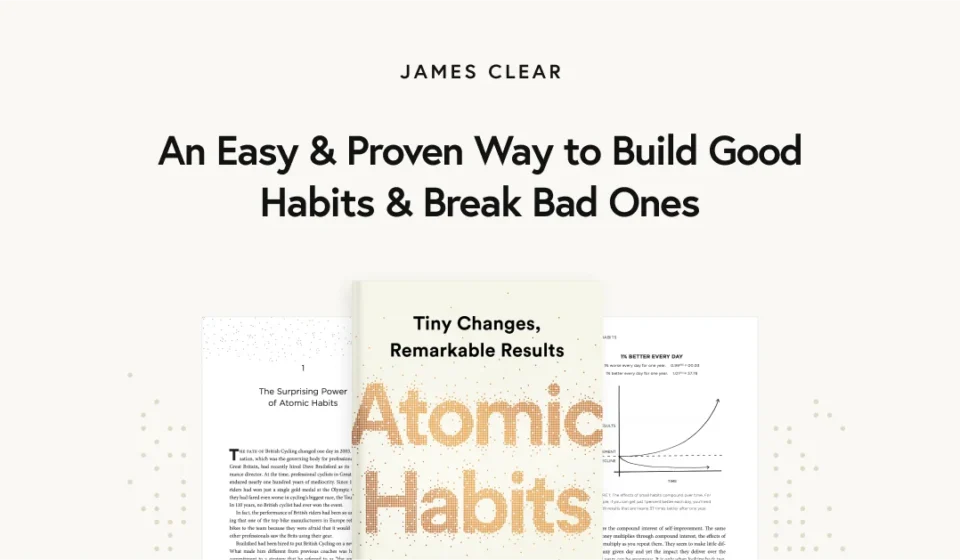
This practice, known as Shisa Kanko or "Pointing-and-Calling," is far more than a ceremonial quirk. It is a sophisticated psychological safety system that has fundamentally altered the trajectory of workplace performance and error reduction. As detailed in James Clear’s bestselling work, Atomic Habits, this methodology offers a profound lesson for individuals looking to master their personal routines. By bridging the gap between nonconscious habit and conscious awareness, we can transform how we approach our daily lives, productivity, and long-term goal attainment.
The Mechanics of Precision: The "Pointing-and-Calling" Phenomenon
The core philosophy behind Pointing-and-Calling is the mitigation of human fallibility. In environments where tasks are performed repeatedly, the human brain naturally seeks efficiency, eventually relegating complex actions to the "autopilot" of the subconscious. While this conserves cognitive energy, it also breeds complacency.
The Chronology of Implementation
The system was not born in a vacuum; it evolved from a necessity to combat the dangers of routine-induced lapses.
- Early Adoption: The Japanese railway system integrated the practice to ensure that operators remained mentally tethered to their tasks, regardless of how many times they had traversed the same tracks.
- Standardization: Over the decades, it became a mandatory safety standard. Staff were required to point at the platform edge to verify it was clear, call out signal changes, and audibly confirm speed metrics.
- Global Adaptation: Recognizing the efficacy of these results, the Metropolitan Transportation Authority (MTA) in New York City piloted a "point-only" version of the system. The results were immediate and statistically significant.
Supporting Data: A Statistical Case for Mindfulness
The efficacy of this system is backed by hard data. In Japan, the implementation of Pointing-and-Calling has been credited with reducing operational errors by as much as 85 percent and cutting the incidence of accidents by 30 percent. When the NYC subway system adopted a modified version of this, incidents of "incorrectly berthed" trains—a common source of delay and danger—dropped by 57 percent within two years.
These numbers illustrate a fundamental truth: we are far less aware of our actions than we believe. By forcing a physical, visual, and auditory interaction with our environment, we break the cycle of automaticity, compelling the brain to re-engage with the present moment.
From Railway Safety to Personal Habit Management
While the stakes on a subway platform involve human life, the stakes in our personal lives involve the quality of our future. When we perform a behavior—like reaching for a smartphone upon waking or grabbing a sugary snack during an afternoon slump—we are often acting on "autopilot."
The "Habitual Autopilot" Trap
The more frequently we perform an action, the less likely we are to consciously evaluate its utility. We develop "habit blindness," where the repetition of a behavior masks its consequences. As James Clear notes, many of our failures in performance are not due to a lack of willpower, but a profound lack of self-awareness. We simply stop questioning whether the action serves our long-term objectives.
To combat this, Clear proposes the "Habits Scorecard." This tool acts as a personal version of the railway’s Pointing-and-Calling system. By writing down our daily habits and assigning them a status—positive, negative, or neutral—we externalize our behavior, allowing us to view our daily routines from an objective, observational distance.
Developing the Habits Scorecard: A Systematic Approach
Creating a Habits Scorecard requires a departure from subjective judgment. It is an exercise in data collection about the self.
How to Build Your Scorecard
- Cataloging: Write down every habit you perform throughout a typical day, from the moment you wake up to the time you go to bed.
- Classification: For every item on your list, label it with a symbol:
- (+) for a good habit: Behaviors that align with your long-term goals and identity.
- (-) for a bad habit: Behaviors that detract from your progress or health.
- (=) for a neutral habit: Behaviors that are neither inherently harmful nor transformative.
- Contextual Analysis: It is essential to recognize that "good" and "bad" are not universal; they are contextual. A bagel with peanut butter may be a "bad" habit for someone looking to shed weight, but a "positive" habit for an athlete in a bulking phase.
The Identity Lens
If you find yourself struggling to categorize a habit, ask the "Identity Question": Does this behavior help me become the type of person I wish to be? This question shifts the focus from the act itself to the identity you are casting a vote for. Every time you engage in a habit, you are essentially casting a vote for a specific version of your future self.
Implications for Long-Term Behavioral Change
The transition from a life of unconscious repetition to one of deliberate action is the defining characteristic of high performers.
The Role of Non-Judgmental Observation
One of the most critical aspects of the Habits Scorecard is the requirement for neutrality. When you observe your daily actions, you are instructed to withhold internal criticism. If you notice you are wasting hours on social media or indulging in poor dietary choices, the goal is not to experience shame. Rather, it is to experience recognition.
By approaching our habits with the clinical curiosity of a scientist observing a specimen, we remove the emotional baggage that often triggers a "shame-spiral," which in turn leads to further bad habits. You are not "failing"; you are gathering data on your current system.
Why Habits Are Ultimately "Effective" or "Ineffective"
It is helpful to reframe our understanding of "good" vs. "bad." In reality, there are no inherently good or bad habits—only habits that are effective at solving problems. Smoking may be "effective" at temporarily lowering stress, while checking email at 6:00 AM may be "effective" at providing a sense of control. The issue is not that these habits are "evil"; it is that they are often ineffective in the long run. They solve a short-term problem while creating a long-term deficit.
Conclusion: The Path Forward
The Japanese railway system serves as a powerful metaphor for human potential. Just as a train operator must acknowledge the speed and the signal to ensure a safe journey, we must acknowledge our own cues and responses to navigate our lives effectively.
By implementing a personal "Pointing-and-Calling" system—whether through a formal Habits Scorecard or simple verbal verification of our daily choices—we reclaim our agency. Awareness is the prerequisite for all change. You cannot improve what you do not notice.
As you move forward, remember that the goal is not to overhaul your entire life in a single day. The goal is to bring the hidden, automatic scripts of your existence into the light of conscious thought. Once you see your habits clearly, you will find that the choice to change them is no longer an insurmountable challenge—it becomes a logical, inevitable, and manageable step in the pursuit of the person you intend to become.