
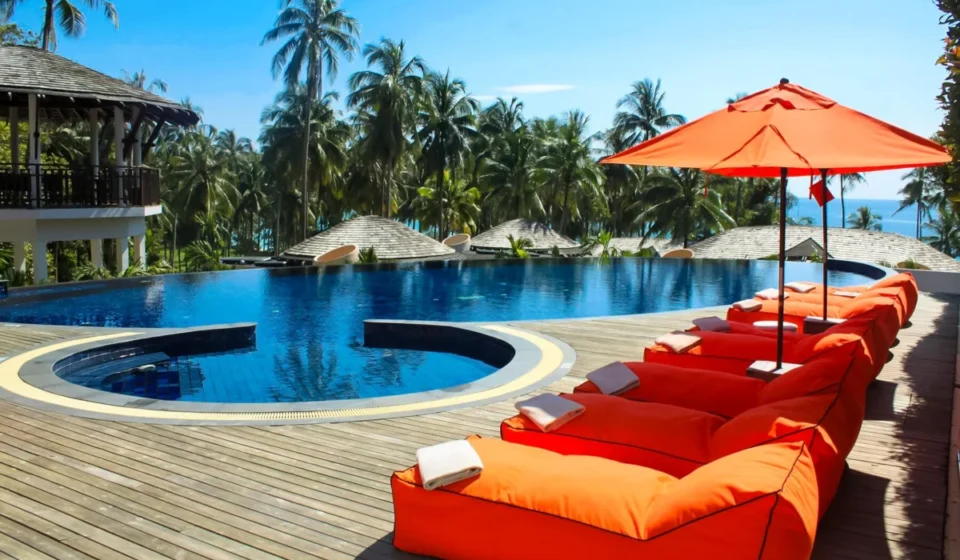

In the high-stakes theater of modern vacationing, few conflicts are as pervasive—or as polarizing—as the "morning deck chair sprint." It is a scene played out daily at resorts and cruise lines worldwide: as the sun crests the horizon, vacationers emerge from their rooms with towels, paperbacks, and sunscreen in hand, embarking on a tactical mission to "claim" a prime slice of poolside real estate.
For many, this is a calculated necessity. For others, it is a breach of vacation etiquette that threatens the tranquility of the resort experience. As the debate over unattended pool loungers intensifies, travelers and hospitality experts alike are forced to reckon with a fundamental question: In an era where amenities are often oversubscribed, who has the right to the perfect spot under the sun?
The Anatomy of the Conflict: A Global Phenomenon
The urgency to secure a lounger is so culturally ingrained that the Germans have coined a specific term for it: morgendlicher Liegestuhl-Sprint—the "morning deck chair sprint." While the term originated in German travel culture, the behavior is universal. Guests feel that since they have paid a premium for a resort stay, they are entitled to secure the amenities they intend to use.
From the guest’s perspective, the logic is sound: If a resort lacks a formal reservation system, the burden falls on the individual to ensure they aren’t left standing on the pool deck at noon. However, this "survival of the fittest" approach often leads to empty chairs sitting unclaimed for hours, draped with lonely towels while other guests are left to hunt for space in the heat.
The Legal Precedent: When Policy Meets Litigation
The controversy is not merely a matter of social friction; it has moved into the realm of legal precedent. Earlier this year, a German tourist made headlines after winning a monetary settlement from a resort in Greece. The guest argued that the lack of available pool loungers constituted a failure of the resort to provide the promised facilities.
Because the guest had booked through a German tour operator, German consumer protection laws were applicable, which are notoriously rigorous regarding "traveler expectations." The court ruled in the guest’s favor, acknowledging that the resort’s failure to manage or provide adequate seating diminished the value of the vacation package. Had the guest booked directly with the Greek property, the outcome might have been different, as Greek law offers less protection regarding the availability of specific poolside amenities. This case serves as a warning to the hospitality industry: when management ignores the "chair hog" phenomenon, they may be creating a liability that extends beyond mere guest dissatisfaction.
The Role of Management: Who Owns the Space?
The core of the issue lies in the tension between private expectation and public utility. Resorts and cruise lines provide accommodations for exclusive use, yet pool decks are communal spaces. Unlike a hotel room, which is guaranteed to the guest, pool furniture is a shared resource subject to variable demand.
Proactive Management: The Cruise Industry Model
Cruise lines, including giants like Carnival, Royal Caribbean, Celebrity, and Norwegian, have become the industry leaders in regulating this behavior. Faced with thousands of passengers vying for limited deck space, these companies have implemented strict "pool deck etiquette" policies. Staff members are tasked with monitoring chairs; if a lounger remains occupied solely by personal items for 30 to 45 minutes, staff will remove the belongings and place them in a secure location, effectively "resetting" the chair for the next guest.
The Hybrid Approach: Premium Reservations
Some resorts have opted for a tiered, fee-based solution. The Royal Hawaiian in Waikīkī, for example, allows guests to rent premium cabanas or reserved beach chair sets. While some critics argue this creates a two-tier guest experience, proponents see it as a pragmatic compromise. It provides those who value certainty with a guaranteed spot, while simultaneously reducing the "sprint" for the remaining free, first-come-first-served chairs.
Case Study: The "Unattended" Policy at JOIA Aruba
At properties like the JOIA Aruba by Iberostar, management takes a firm stance on the 45-minute rule. According to Rudolfo Dirksz, the hotel’s marketing and brand experience director, staff are actively empowered to clear chairs that are left unattended for excessive periods.
However, a recurring issue is communication. Many guests arrive at properties unaware that such policies exist, leading to confusion when they return from breakfast to find their belongings missing. This highlights a critical failure in the guest journey: if a policy is not communicated at check-in, it is often perceived as an arbitrary enforcement by staff rather than a standard operating procedure.
The Impact of Architecture and Design
The intensity of the "lounger war" is often a direct reflection of a property’s design. In many historic coastal hotels, pool decks were an afterthought, as early developers assumed guests would prefer the ocean. Today, the rise of "Instagrammable" travel has shifted the demand toward the pool.
Modern luxury properties are now addressing this at the architectural level. By increasing the ratio of space per guest—or, in the case of the Sonesta Ocean Point Resort in Sint Maarten, by incorporating swim-out suites and diverse off-pool entertainment—hotels can naturally dilute the demand for communal deck space. When a guest has a private terrace or an engaging alternative activity, the need to "claim" a public chair vanishes.
Strategies for the Savvy Traveler
For travelers hoping to avoid the stress of the morning sprint, the solution often begins at the booking stage.
1. Researching the "Five-Star" Standard
High-end brands like the Four Seasons, St. Regis, and The Ritz-Carlton typically prioritize service-heavy solutions. At the Four Seasons Resort Maui at Wailea, for instance, staff actively manage and set up loungers, ensuring a seamless experience. When browsing potential hotels, look for mentions of "pool service" or "attendant-assisted seating" in reviews.
2. Reading Between the Lines of Reviews
Online reviews are the most reliable barometer for potential issues. If a resort has a recurring problem with chair availability, it will appear in the "complaints" section of platforms like TripAdvisor or Google Reviews. If multiple travelers mention that they had to wake up at 6:00 a.m. to secure a chair, believe them.
3. Communicating with Staff
If you find yourself at a resort where the chair situation is chaotic, do not suffer in silence. Bringing the issue to management’s attention is the only way to trigger a policy change. If the hotel advertises a pool as a key amenity, they are contractually obligated to provide reasonable access to it.
The Future of Poolside Etiquette
Is it morally acceptable to save a chair? The consensus among hospitality professionals leans toward the "middle ground." Saving a chair for a quick 20-minute breakfast run is generally accepted as common courtesy. Claiming a chair at 7:00 a.m. only to return at 2:00 p.m. is widely regarded as a social faux pas.
Ultimately, the burden of resolution lies with the resorts. As the industry evolves, properties that prioritize transparency, clear communication of policies, and adequate investment in guest infrastructure will rise to the top. Until then, the "morning deck chair sprint" remains an unfortunate, yet inevitable, feature of the travel landscape. For the weary traveler, the best defense remains a combination of savvy research, early intervention, and a willingness to advocate for the value of their vacation.
As Matthew, a consultant who frequents resorts, aptly puts it: "I do hate when resorts turn a blind eye to it. That I am absolutely adamant about." When the rules are ambiguous, the tension thrives. When management leads, the vacation returns to what it should be: a time for relaxation, not a race for a place to sit.