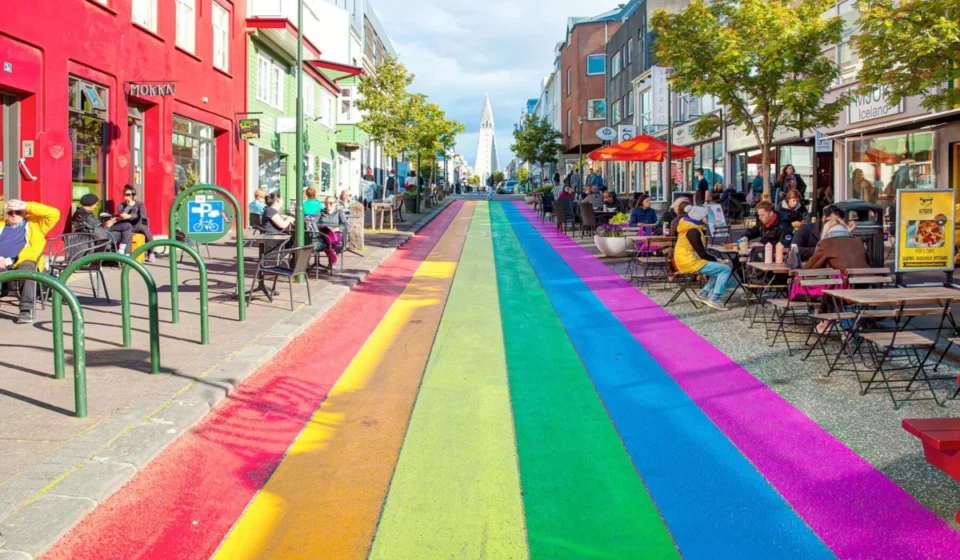

While Iceland is globally synonymous with the raw, volatile power of its geological wonders—from the thundering cascades of Gullfoss to the ethereal dance of the Aurora Borealis—a quieter, more intricate phenomenon is unfolding within the capital city. Reykjavík, a city defined by its colorful corrugated iron houses and deep-seated maritime history, has quietly evolved into a global powerhouse for contemporary art, music, and design.
For many travelers, the "Land of Fire and Ice" is a bucket-list destination for nature enthusiasts. However, those who venture beyond the Ring Road and into the curated galleries and experimental studios of the capital discover a deeper narrative. The artistic output of Iceland is not merely a hobbyist pursuit; it is a vital pillar of the nation’s contemporary identity, forged by a community that treats creativity as a survival mechanism in the harsh, subarctic climate.
The Foundations of Icelandic Creativity
To understand the Icelandic art scene, one must first understand the Icelandic mindset. The country’s history is defined by a culture of "collective survival." Living on a geologically active island where the elements are perpetually unforgiving, early Icelanders relied on cooperation to endure. This necessity for unity has bled seamlessly into the creative sphere.
In Reykjavík, the artistic community is famously tight-knit. It is not uncommon for a musician to collaborate with a sculptor, or for a filmmaker to seek input from a poet. This cross-pollination of disciplines is the lifeblood of the city’s creative output. Unlike in major global metropolises where the art world can feel siloed or commercialized, the Reykjavík scene feels intimate, accessible, and profoundly authentic.
Chronology: A Season of Cultural Awakening
The cornerstone of this artistic calendar is the Reykjavík Arts Festival (Listahátíð í Reykjavík). This year, the festival—which ran from May 30 to June 14—served as a masterclass in global and local cultural exchange.
- Late May 2025: The festival opened with a series of installations aimed at challenging traditional perceptions of "Icelandic art." Organizers emphasized the importance of using the festival as a platform for voices that are often marginalized in global discourse.
- Early June 2025: Throughout the fortnight, the city became a living gallery. Performances, pop-up exhibitions, and sensory-focused installations were held in non-traditional spaces, reinforcing the theme of breaking down the barriers between the creator and the audience.
- Mid-June 2025: The festival concluded, but the momentum it generated did not dissipate. It successfully transitioned the city into its summer exhibition cycle, which is currently ongoing.
- Current Status (Summer 2025 – September 2025): The legacy of the festival continues through several high-profile solo exhibitions that have cemented Reykjavík’s position as a hub for cutting-edge contemporary art.
Supporting Data: Must-See Exhibitions
While the main festival has concluded, the city remains a vibrant destination for art lovers through the end of the summer. Three key exhibitions are currently drawing international acclaim and represent the diversity of the scene:
1. Karin Sander: 1957-2057
Hosted at the Reykjavík Art Museum, this exhibition is a conceptual marvel. Sander, a German artist known for her minimalist and often invisible interventions, challenges the viewer to reconsider the passage of time and the physical space that art occupies. It is an exploration of the "long view" of human existence.
2. James Merry: Metamorphlings
James Merry’s work is perhaps the most visceral representation of the interplay between the organic and the artificial. Metamorphlings explores the intersection of biology and technology, utilizing embroidery and sculptural forms to suggest a future where the line between the human body and the natural environment is blurred. His work resonates deeply with the Icelandic landscape, which itself feels like a living, breathing entity.
3. Björk: Echolalia
Perhaps the most famous cultural export of Iceland, Björk’s retrospective Echolalia at the National Gallery of Iceland is a sensory immersion. It showcases her journey as an artist who constantly defies genre, blending music, visual arts, and technology. The exhibition provides a rare, intimate look at the evolution of an icon who, despite global fame, remains deeply rooted in the soil of her homeland.
Official Perspectives and Cultural Strategy
The Icelandic government and local municipal authorities have recognized the immense soft-power potential of the arts. By fostering institutions like the Reykjavík Art Museum and supporting the Arts Festival, the city aims to diversify the tourist economy.
"Our goal is not just to sell the landscape," says a spokesperson for the local cultural initiative. "We want to invite visitors into the hearts and minds of the people who live here. The art is the bridge between the visitor and the Icelandic spirit. When you look at an installation by a local artist, you are seeing the way we process our environment, our isolation, and our connection to the rest of the world."
The strategy is clear: transition Iceland from a "passive viewing" destination (where tourists look at waterfalls) to an "active engagement" destination (where tourists participate in the intellectual life of the nation).
The Implications: A New Era of Cultural Tourism
The shift toward an art-centric tourism model has significant implications for both the local economy and the visitor experience.
Economic Impact
By promoting the arts, Reykjavík is extending the "tourist season." While the summer months remain the busiest, the existence of world-class exhibitions provides a compelling reason for travelers to stay longer, visit during the shoulder seasons, or return for specific cultural events. This, in turn, supports local businesses, galleries, and independent creators, ensuring that the arts community remains economically viable.
The "Deep Travel" Trend
Travelers today are increasingly seeking "deep travel"—experiences that provide a sense of place and emotional resonance rather than just a photo opportunity. Reykjavík’s art scene provides the perfect environment for this. It demands that the visitor slow down, observe, and interpret. It transforms a trip into an intellectual journey, fostering a deeper connection to the country.
A Global Mirror
Finally, the Reykjavík art scene serves as a mirror to the world. In an age of digital disconnection, the emphasis on tactile, sensory, and communal art in Iceland feels like a revolutionary act. By hosting international creators alongside local talent, the city is fostering a global dialogue, proving that even a small, isolated nation can act as a center for the most pressing conversations in contemporary art.
Conclusion: Looking Beyond the Horizon
If your journey to Iceland begins and ends with the Northern Lights, you have seen the surface of a profound and complex country. But if you take the time to step into the white-walled galleries of the capital, or to sit in a coffee shop and listen to the debates of local poets and musicians, you will find the true heartbeat of the island.
The arts in Reykjavík are not a distraction from the nature that defines the country; they are a direct extension of it. The wind, the volcanoes, and the long, dark winters are not just backdrops—they are the materials from which the Icelandic people build their creative identity.
As you plan your next visit, consider prioritizing the creative pulse of the city. Whether you are exploring the conceptual timelines of Karin Sander or immersing yourself in the ethereal soundscapes of Björk, you are not just watching an exhibition—you are participating in a culture that, much like its landscape, is constantly shifting, evolving, and demanding to be felt.
Reykjavík is more than just a gateway to the wild; it is a destination of profound human achievement. Make sure your itinerary reflects the depth of the place. After all, the aurora may fade, but the art, the ideas, and the stories of Iceland will remain long after you’ve returned home.